As an Amazon Associate we earn from qualifying purchases.
Assign the two jobs before choosing a model
A standard can opener can work well for a left-handed cook who likes to hold the handles with the left hand and turn with the right. If you want to turn with the left, check that the knob is accessible while the head sits on the rim as directed. A top-button electric model is a third option when removing the crank solves the problem. Start with the hand roles you use now. If the existing tool cuts cleanly and each hand reaches its job comfortably, a different label alone gives you little reason to replace it.
The word ambidextrous can describe a centrally placed control or a manual design with a way to operate from either side. Find out what a seller means for the model you are considering. Ask which hand holds the body, which hand turns or presses and how the lid is lifted afterward. A centered button can improve reach while the housing still needs to face a particular way. The left-handed opener guide gives additional examples. The products below illustrate working positions described in the instructions. We did not measure force or test them in handedness trials.
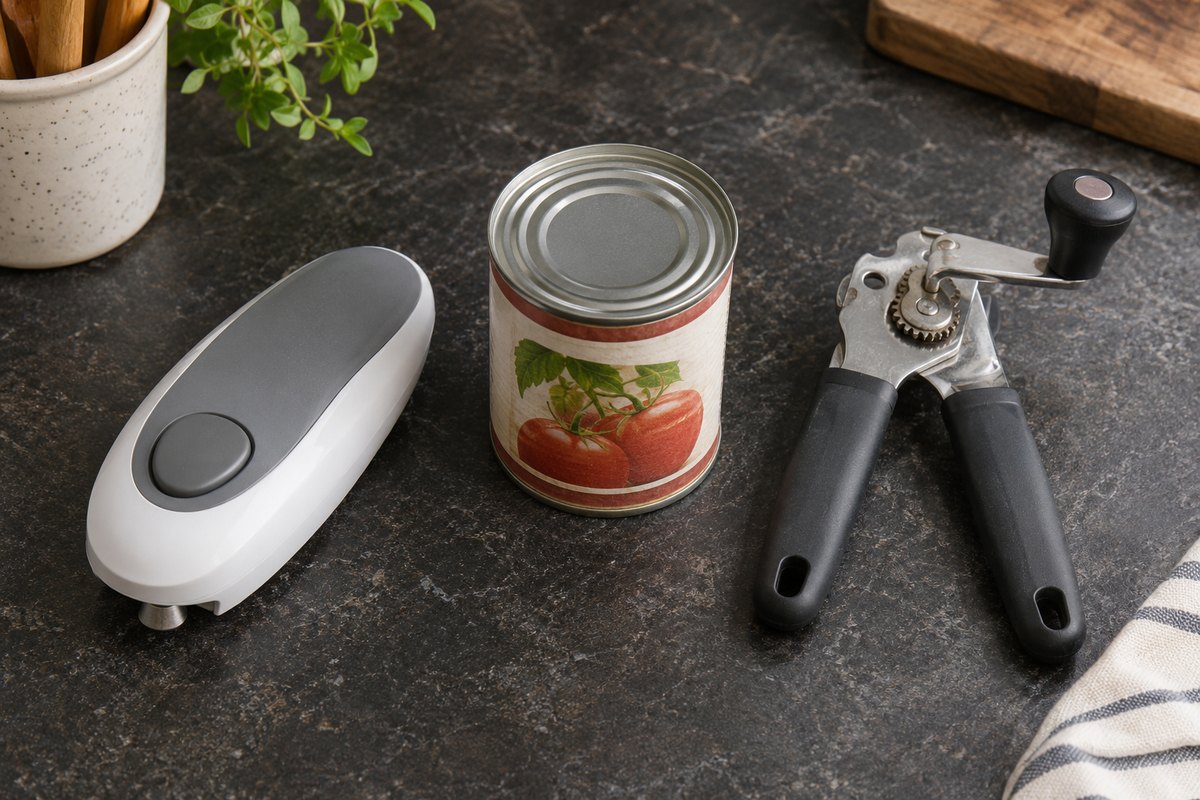
Put the wheel in the right position before comparing grips
Take a closed tin and put it on the worktop where you normally cook. Imagine the head attached as shown in the maker's diagram. Put one hand close to where the handles would sit and the other hand where the knob would be. Watch for wrists that cross, a hand that has to bend around the opener, or a knob too close to the counter. Then plan where the lid goes after the cut. The view while the tool is standing on a display shelf cannot show whether that motion works for your tin.
If two people share the kitchen, ask each to choose the hand that will do the turn. A right-handed cook and a left-handed cook may like the same arrangement for different reasons. One might want their dominant hand on the knob. The other might care more about keeping a stable grip with the left. Test a short and tall closed can. Make space for the crank and for the detached lid from each working side. See the left-handed setup tutorial for the preparation sequence.
A photo of a cook using their right hand can still answer a useful question. Look at the position of the head, how the rim runs through it and where the knob ends up. Then check the directions before deciding whether the same tool can be approached from the left. Avoid trying to change which way the cutter faces or reversing the required rotation. If the proper orientation places the control out of reach, look at a design that documents left-hand access or choose a top control.
Compare three different operating layouts

OXO Soft-Handled for a familiar two-hand crank: OXO Good Grips Manual Can Opener And Bottle Opener Soft Easy-Grip Handle
Try it if you can comfortably close the handles and reach the turning knob in the required orientation.
View on Amazon (opens in a new tab)The Soft-Handled OXO review describes the padded grip and conventional cut. A left-handed cook who already clamps with the left and turns with the right may like this approach. Check how the handles feel both open and closed. A wide grip may be pleasant once it is around the rim yet awkward to place. On a shallow tin, look at the room around the knob as well. If you have to move your hand sharply sideways before turning, try another tool or a different clear spot on the counter.

OXO Smooth Edge for an outer-seam cut and lid pliers: OXO Good Grips Smooth Edge Manual Can Opener No Sharp Edges Soft Grip
The side-cut model uses a manual turning knob and separate pliers. Check the two motions separately.
View on Amazon (opens in a new tab)The OXO product page and manual describe the cut below the edge and the built-in lid pliers. Compare this if you want a different lid-removal method. It changes where the head meets the rim and how you pick up the separated metal. It does not tell you whether your left hand will reach the knob comfortably. Use the exact orientation and try the reach before you decide. The cutting-path comparison shows why side cutting and a less directional grip are different features.
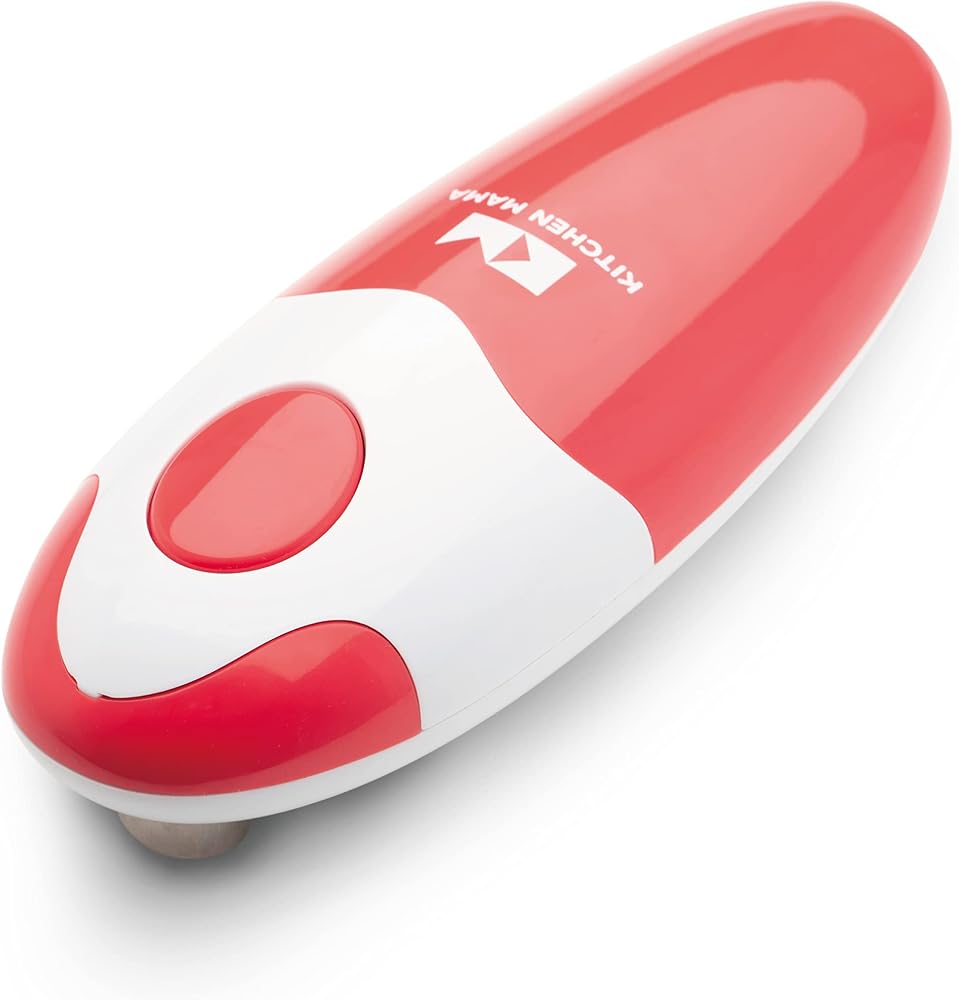
Kitchen Mama Auto for a top control and powered cutting: Kitchen Mama Auto Electric Can Opener Battery Operated Red
The original handheld model needs one press to start and another to stop. Check placement and release before buying.
View on Amazon (opens in a new tab)The original Auto review covers the button sequence and battery needs. This layout removes the repeated crank. Put the tin where you can see the rim and reach the top control a second time. Plan where you will place the housing when the cut ends. If the tool will live in a drawer, leave room for your left hand to get around it rather than pinching the housing from above. Compare other stop arrangements in the compact electric guide if the second reach is the part you want to avoid.
When a dedicated left-handed tool earns a place
If you want a manual knob specifically for your left hand, ask the seller for the operating diagram or a clear picture showing it on a can. Find out which hand turns in the specified cutting position. For one cook, a dedicated manual layout may be a better fit than a powered tool. In a household with different preferences, a centered control or a familiar crank may be more convenient. Choose based on who opens cans regularly and how they approach the tool. A left-handed label is useful when you can see the movement it changes.
Use the same can height when comparing two samples. Check the grip at placement, while turning and at the release, rather than holding one sample at a convenient angle and testing the other in its real working position. If you are buying online, check the return terms and keep the setup diagram. The first can you try should be intact and supported by the instructions. If you keep having to change hands before the cut is finished, that is information about the layout. Check the same movement again with your shortest usual tin.
Check how you will clean and store the eventual choice. A different cutting head may need a different arrangement at the sink. A tool used by two cooks is helpful when both can find its directions. Keep the lid tray where each person can reach it before starting. Rehearse that last reach with the counter arranged for a normal meal. Give the storage or cleaning advantage less weight than an awkward grip in the middle of a cut, but use it to break a tie between tools that both suit your reach.
If you already use a standard tool, check which part of the turn makes you want a different layout. A short interruption often comes from the board or a wall limiting the travel of the knob hand. Try moving the unopened can to a clear section of counter while keeping the cutting orientation unchanged. If the turn still puts your wrist at an uncomfortable angle, a different model may be worth buying. If moving the workspace solves it, your current tool may already suit the way you prefer to distribute the work.
If a person wants an opener as a gift, do the reach check together rather than buying on the assumption that both left-handed cooks use the same grip. Ask them to show the first and last movement with an unopened tin. Someone who likes using the left to hold the opener steady may want a conventional knob. Someone who wants their left hand turning may prefer to inspect a model specifically documented for that use.
The OXO Soft-Handled product diagrams show a conventional handle and knob arrangement. The Smooth Edge page shows a change in the cutting path and lid pliers. It does not identify the crank as a mirrored left-hand layout. The original Auto manual shows a top-start control, which removes the crank from either side. If the household shares one tool, ask both users to describe which hand takes each job before treating a listing as evidence of an ambidextrous fit.
Frequently asked questions
Can a left-handed person use a standard crank?
Yes, if the working grip and knob reach are comfortable in the required cutting orientation.
Does a side cut make a tool ambidextrous?
Side cutting describes the wheel position. Check the knob and release separately.
What can a top button change?
It may let you approach from either side. Check placement and how the lid is removed too.
What should two cooks check when sharing one tool?
Check whether both can seat it, reach the control and move the separated lid as the instructions show.
The verdict
Keep a standard crank if its hand roles already work. Seek a documented left-hand layout if you want to turn with the left. Pick a powered top control if eliminating the crank is the change that would make the work easier.