As an Amazon Associate we earn from qualifying purchases.
Pick the mechanism before the brand
A conventional two-handle opener is a good starting point if you already like the usual squeeze-and-turn movement. The OXO Soft-Handled offers broad grips and a large knob in that layout. Choose a side cutter when you want the lid to separate at the rim instead. The GoodCook Safe-Cut gives you a short reverse release. The OXO Smooth Edge adds a separate pair of lid pliers. Decide which difference matters to you before comparing price. If holding the handles closed and turning are both difficult, consider a different control rather than buying another conventional crank.
Three manual designs to compare
The recommendations below come from manufacturer directions and product descriptions. We did not measure turning force or durability. The main differences we can document are the grip layout, cutting path and method of releasing the lid.
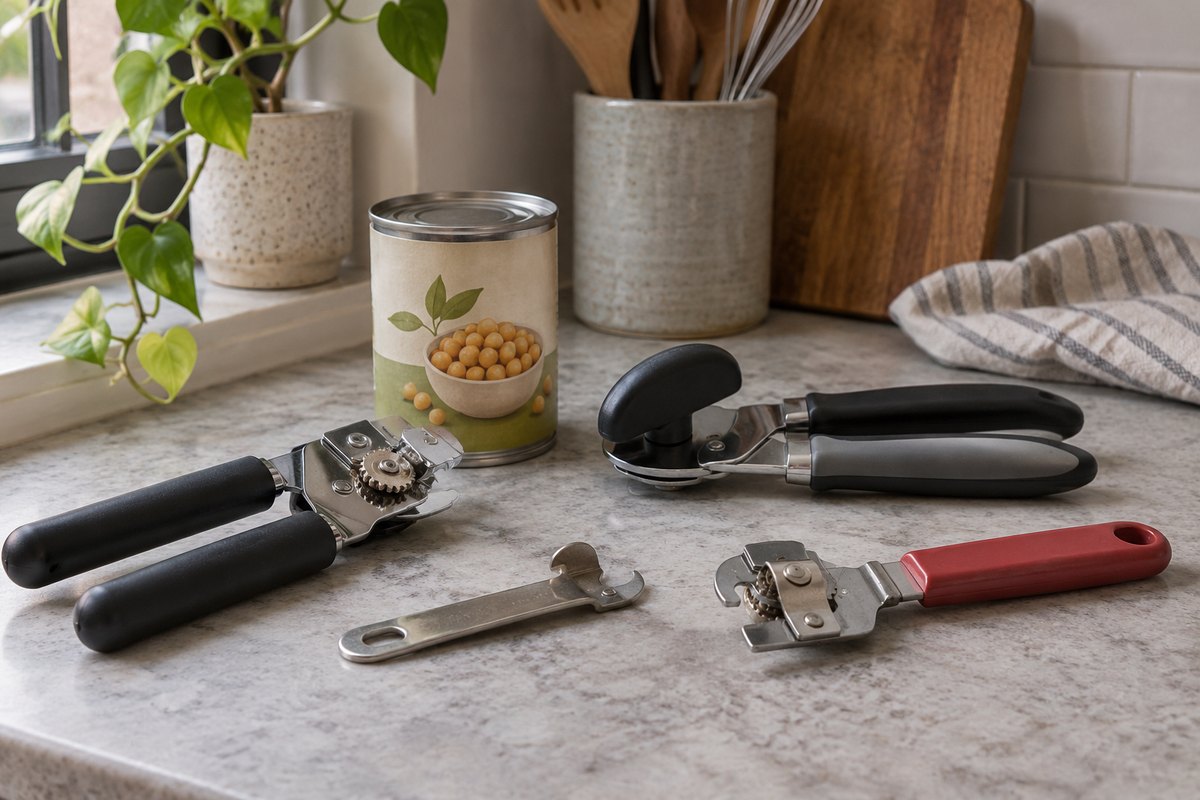
| Model | Type | What to compare |
|---|---|---|
| OXO Soft-Handled | Conventional rotary | Cushioned handles and knob clearance |
| GoodCook Safe-Cut | Side-cut | Level starting position and quarter-turn release |
| OXO Smooth Edge | Side-cut with pliers | Reverse release and lid grip |

For a familiar crank: OXO Good Grips Manual Can Opener And Bottle Opener Soft Easy-Grip Handle
The maker describes a stainless steel wheel, cushioned handles and a large turning knob. Consider it if you already have a comfortable way to remove a traditionally cut lid but want more surface to hold. You still close the handles and turn the knob.
View on Amazon (opens in a new tab)
For a short reverse release: GoodCook Safe-Cut Can Opener With Easy Turn Knob Black
The 11834 directions tell you to position the tool level on the rim and use the specified quarter-turn reverse motion after the cut. Choose it if you want a manual side cutter and prefer that release sequence. Learn the starting position before you first rely on it.
View on Amazon (opens in a new tab)
For a dedicated lid grip: OXO Good Grips Smooth Edge Manual Can Opener No Sharp Edges Soft Grip
The model 1049953 directions call for a reverse turn, opening the handle and lifting the lid with the pliers. Consider it if picking up a loose lid is the part you want to change. The pliers are a separate control to locate and operate.
View on Amazon (opens in a new tab)Buy for the part of opening that bothers you
Imagine one opening from start to finish. You bring an unopened tin to the counter, fit the wheel to its rim, turn it, release the tool and move the lid. Which action would you change? For someone who can close a pair of handles but dislikes a narrow knob, a larger one is a sensible feature to compare. If the problem is maintaining pressure on the handles, a wider grip may not remove that requirement. If the lid is what troubles you, compare how the cutter leaves it and how the instructions say to take it away.
The same tool can feel different on a short tin and a taller one. Put a closed can you actually buy on your worktop. Look for a photo or drawing of the opener attached to a similar rim. See how much room the controls would take in your usual position and where your other hand would go. A catalog photograph of the opener alone cannot show how wide the grip will be when it is fitted to the can. The OXO and KitchenAid comparison explains why the handle span and knob position deserve separate checks.
If you already have a hand tool and suddenly dislike it, check what has changed before you order one. A new shape of tin can stop the wheel engaging even though the old opener still works on the rest of the pantry. A stiff hinge on several familiar cans may be worth inspecting according to the manual. Our rim-grip checklist covers the first problem, and the manual maintenance guide covers cleaning and wear. Replacement makes more sense once you can identify the movement the current tool cannot do.
Look at the finish, not just the first turn
A side cutter travels around the outside of the rim. The layout can differ from the conventional wheel you already use, so find the placement diagram before trying to make the first cut. Check what signals the end and what frees the tool. The GoodCook and OXO examples above call for different reverse movements. Put the instructions with the opener if several people will use it. The smooth-edge operating guide shows the differences in placement and release for these models.
Plan where you will move the detached lid before starting. If the can is beside a mixing bowl and there is no clear counter on either side, change the layout. With a tool that has lid pliers, leave room to position that part and put the lid aside without moving it across your food. A traditional crank is fine if you are comfortable with its release and have a reliable place for the lid. Our traditional versus side-cut comparison explains what each cutting path changes.
Think about the kitchen the opener will live in
For a small apartment, check that the tool can be lifted out of its drawer by the handle. A wide knob can give a good turning grip without being easy to retrieve from the wrong slot in a shallow organizer. A simple tray or dedicated space lets you pick it up without reaching around other tools. Measure the height of the drawer closed and leave clearance for the head. Choosing where the opener will go before buying is a useful way to keep a compact kitchen workable.
For a shared cook box or camping kit, choose a design someone in the group already knows how to use. A traditional tool does not need power, but it still needs a level place for the can and room to turn. If the only person who can operate the tool will be elsewhere when the food is prepared, bring an easy-open backup meal. See our campsite opening guide for examples that use a hand crank or a pull tab.
Compare the exact variant if you have a fixed budget. Check that it includes the mechanism you want, rather than buying another color or version with a similar title. The under $15 guide lists lower-cost manual examples by cutting path. If your can is unusually tall or wide, confirm its fit before relying on a tool marked heavy duty. Our large-can guide explains which dimensions to record before you look for a replacement.
- OXO Soft-Handled product details.
- GoodCook 11834 operating directions.
- OXO Smooth Edge placement and release diagrams.
Try the shortlist against two meals
Start with an ordinary meal you make at least once a week. Set the unopened can and the bowl or saucepan on the worktop. If you usually stand with a cutting board on one side, see whether there is still room to position the opener and turn the knob without shifting the can. For a two-handle model, check where your other hand will close the grip. If both positions feel familiar and you already have a routine for removing the lid, the conventional model is likely to meet that need.
Next, imagine the meal that makes your present opener awkward. It might use a short tin that is difficult to see beneath the head or a wide one with a lid you do not want to lift by hand. Compare the exact directions rather than switching to an unfamiliar cutter for that meal straight away. If the issue is lid removal, look for the picture showing the pliers or the specified release motion. If the issue is a poor view of the rim, a different handle position may be more useful than a different lid feature.
When shopping for someone else, describe the opening sequence and ask which motion they would most like to change. A model with a more substantial grip can be a good replacement for a tool they already know, but a side cut gives them a different starting position to learn. If both tools are available to look at in person, compare their closed handle spacing and knob access. The first impression you get lifting a tool out of a display is different from the grip you use with the head positioned against a tin.
Keep the first successful setup in mind for the next use. Store the opener where you can retrieve it by the handle and keep the model directions available if another cook shares it.
Frequently asked questions
Which manual design should I try first?
Start with a conventional model if you already like the squeeze-and-turn motion. Check handle span and knob clearance on a representative tin.
Does a side cutter remove the need to turn a knob?
No. The GoodCook and OXO side cutters here are both hand-operated. The cut location changes, but you still turn the mechanism.
What is the main difference between the two side cutters?
Their manuals describe different release steps. The OXO also uses a separate pair of lid pliers.
Can I expect one tool to fit all cans?
Check the rim and dimensions against the exact model. A side-cut or heavy-duty label is not a compatibility specification.
Is a manual opener a useful backup?
It works without an outlet or batteries if you can operate the controls and it fits the cans you plan to use.
The final decision
Keep the conventional layout if it suits your hand and you are comfortable removing its lid. Choose the GoodCook for a manual side cut with the documented shorter reverse motion, or compare the OXO Smooth Edge if you want a separate lid grip. If cranking is what you want to avoid, move to a different control instead of switching between two manual versions of the same job.