As an Amazon Associate we earn from qualifying purchases.
Choose by the part of opening that takes the most effort
If you can hold and turn a manual cutter but dislike narrow metal handles, compare the OXO Soft-Handled. If lifting a heavy tin is the problem, start with a handheld electric model such as the original Kitchen Mama Auto. If you can lift the can but would rather take your hand off the control once the cut starts, compare the Cuisinart CCO-50BKN. These are three ways to change how an everyday task feels. They are not ranked by measured force. The best match depends on what happens in your hand when you use a tool on a real can.
The Mayo Clinic guide to protecting hand joints discusses larger grips and electric can openers as ways to change kitchen tasks. The choices here are based on documented controls and placement. We did not evaluate arthritis symptoms or conduct comparative force tests. For an opening sequence you can try with a tool you already own, use the hand arthritis opening walkthrough. This guide is for deciding what to buy when the tool itself is the obstacle.
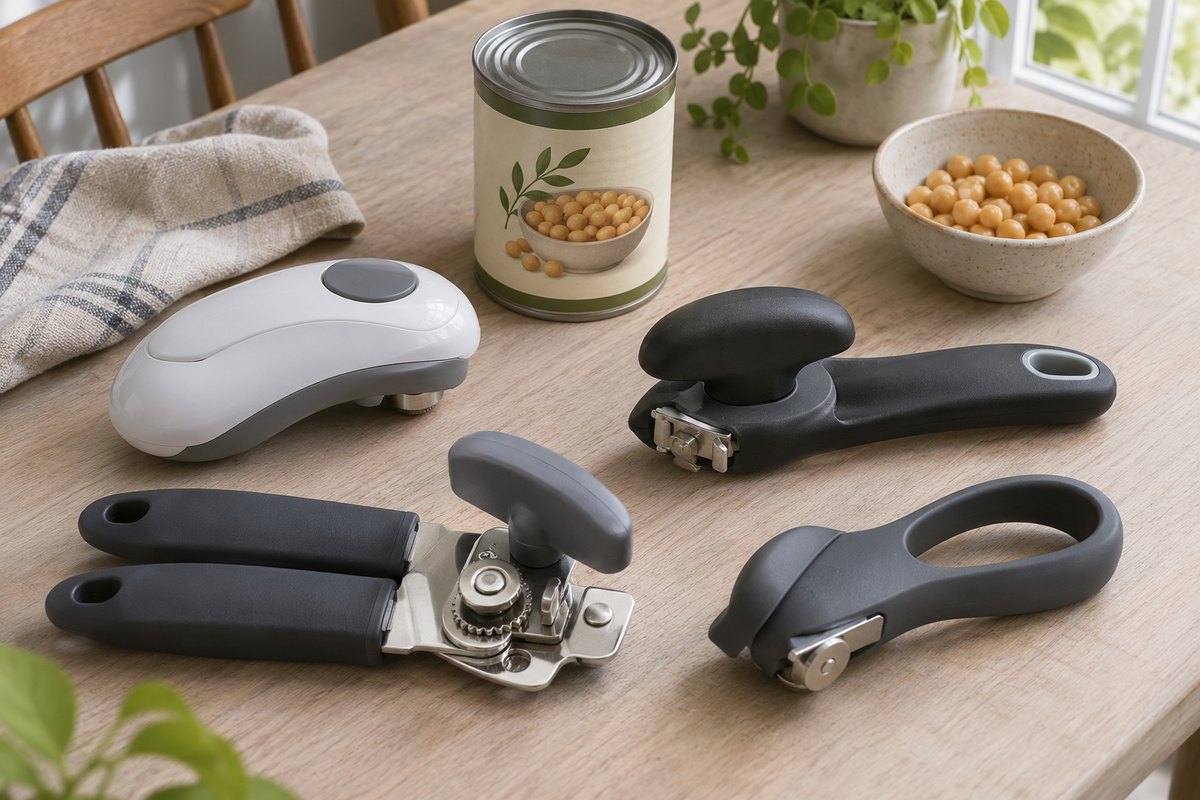
If the handle presses into your palm
The OXO Soft-Handled specification lists padded grips and a large knob. Padding addresses where the handle bears against your palm, while the crank still has to turn. The Kitchen Mama Auto instructions show where the can sits and when to press again. For a fixed head, the CCO-50BKN specification identifies automatic stop. These documents establish the actions each model requires. They provide no comparable squeeze force, turning torque or pain scores.

OXO Soft-Handled for a familiar crank with more padding: OXO Good Grips Manual Can Opener And Bottle Opener Soft Easy-Grip Handle
The handles are cushioned and the knob is oversized. One hand still closes the grip while the other turns.
View on Amazon (opens in a new tab)The Soft-Handled review explains the standard top cut and hand-wash care. This pick makes sense when the rough contact of your current opener is the problem and you are comfortable with the turning motion. Check how far the handles open, then imagine where they will rest in your hand around a can rim. A handle may feel good when you pick the tool up off a shelf but require a wider grip while the head is being fitted. Compare that working position, especially if you find the space between your thumb and fingers hard to maintain.
Give the crank room to turn above your usual cans. A short tuna tin places the knob close to the worktop, and a deep chopping board can obstruct your turning hand. If your existing tool works comfortably at the right height and the whole movement is manageable, you may get more from moving the board than from buying a new opener. Read the manual and electric comparison if you want to decide whether changing the whole mechanism would help more than changing the grip surface.
When comparing manual models, notice whether the awkward feeling occurs immediately or after several turns. A sharper change in pressure at the beginning may come from where the opener seats. If the head slips, stop and check the rim rather than squeezing harder. If the first turn is manageable and the later turns are the issue, think about how many tins you usually open in one session. The same tool can be practical for a single tin and inconvenient when stocking a pot with several ingredients. Give more weight to the workload you repeat at home.
If turning or raising the tin takes too much effort
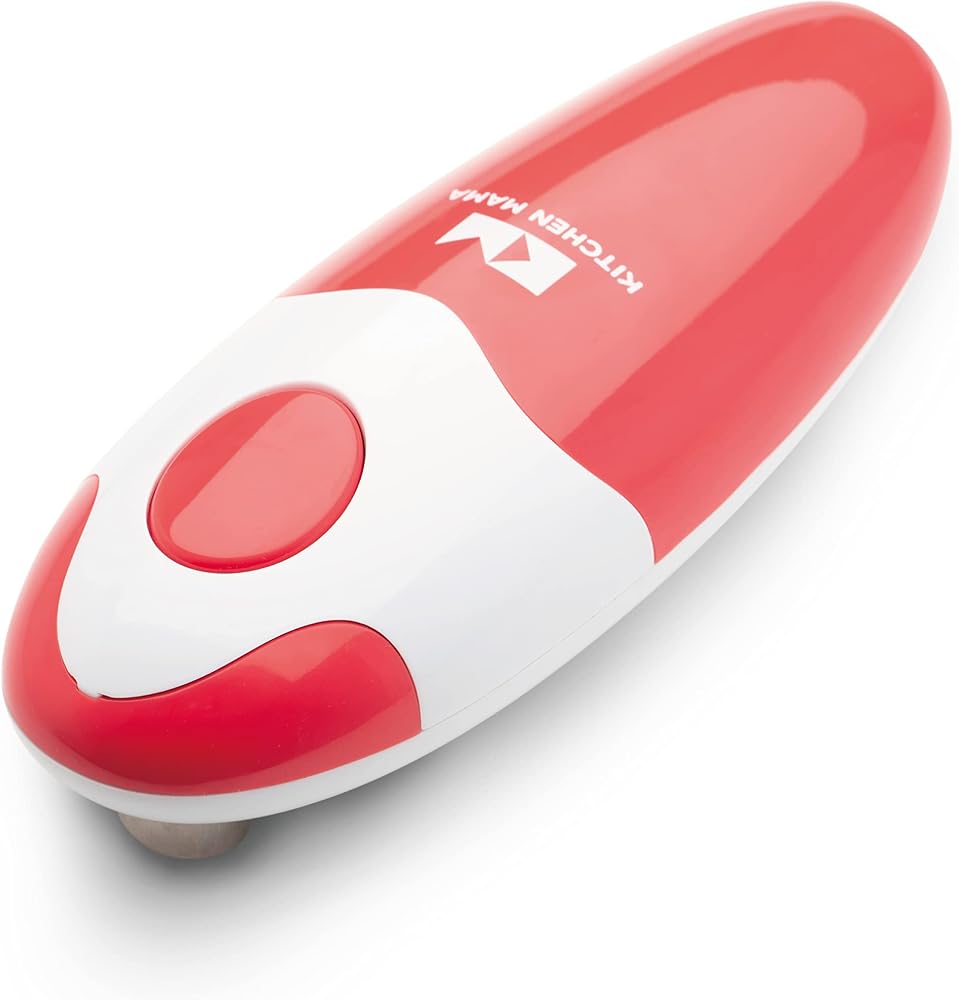
Original Kitchen Mama Auto for a tin that stays on the worktop: Kitchen Mama Auto Electric Can Opener Battery Operated Red
A battery-powered cutter that comes down to the can. It requires a separate start and stop press.
View on Amazon (opens in a new tab)The original Auto review explains its top button and four AA alkaline batteries. You avoid the repeated crank and can keep a full can on the counter. In exchange, you have to retrieve and position the housing and reach the button again to stop the motor. Check that you can pick it up from where you plan to store it. A shell squeezed between other utensils may be awkward to lift even if the control is comfortable. Put the opener beside the work area so you can approach the can without lifting the tin first.
Some people prefer a fresh set of batteries over running a cord to the counter. Check how the battery door comes off and whether you can use it comfortably. Keeping a matching set near the tool can make a replacement easier. A rechargeable alternative changes that routine and can also change the stop behavior, depending on the model. The battery versus rechargeable guide compares those choices. Give each feature its own line in your notes. A different battery system does not tell you whether the cutter needs a second press.
If you prefer a lever that stays in one place

Cuisinart CCO-50BKN for automatic stop at a fixed head: Cuisinart Deluxe Electric Automatic Can Opener CCO-50BKN
Raise the can to the head. The motor stops when the cut is done after you release the lever as directed.
View on Amazon (opens in a new tab)The black Deluxe review explains the magnetic holder and detachable lever. Choose this layout if you want to release the lever after engagement and can support the can during placement and removal. Work out where the full can goes after the cut. Leave room for a lid that does not stick to the magnet. The exact instructions describe how to lower the can and remove the lid. A motor that stops on its own helps with the control, while the tin still has the same weight before and after opening.
A countertop appliance can stay near an outlet, or it can be stored and carried out each time. Decide which of those routines you would actually use. If it stays under a low cabinet, check the approach for a tall tin and room to raise the lever. If you will take it from a cupboard, make sure you can pick it up and set it down without reaching around the cutting head. See the small-kitchen guide for how to separate storage dimensions from clearance while the tool is working.
Consider cleanup where the tool will be used. The control may be easy to get to in the shop, while washing the cutter in your kitchen requires reaching around a crowded sink. For a powered tool, read what to do before cleaning and which pieces can come off. For a manual tool, inspect where food might collect around the wheel. If somebody else normally washes the opener, ask them to look at the directions before deciding where to store it. A tool that is hard to clean or retrieve may stay unused even if the cut is comfortable.
Compare the last movement before you order
Pick an unopened tin and set a clean bowl, lid tray and the tool you have on the counter. Walk through the places where the can and the tool would go. If you usually pour soup or drain beans, include the move from the cutter to the bowl. Consider whether you can support the can while taking the tool away. When someone helps, wait until the opener stops and set the can down before the handoff. The caregiver guide explains how to assign the stages when two people share the work.
Finally, consider the lid edge. If you can handle a cut comfortably but dislike the loose disk from a top cutter, compare a side-cut tool on compatible intact tins. Check both the wheel position and the directions for removing the lid. The side-cut and traditional guide explains why those two details matter independently. Put the feature that changes your hardest action first. Give secondary features such as a cap lifter or a particular finish less weight unless they solve another problem you regularly face.
If the opener is a gift, let the recipient try the reach with the kind of tin they already buy. Give them a chance to pick the setup without an opened can on the counter. The useful question is which movement they want to do themselves and which they prefer to share. Buying a bigger machine can be a good choice if it changes that movement; a simpler tool can be just as useful if it addresses the same obstacle.
Frequently asked questions
Do padded handles remove the need to squeeze?
You still hold the handles shut on a standard crank. Padding changes the contact surface.
Which style avoids lifting the full can to the head?
A compatible handheld opener comes to the tin on the worktop.
Does pressing once always mean automatic stop?
Check the manual for the exact model. The original Auto needs a separate press to stop.
Can an opener guarantee a pain-free task?
Choose by the movements that are comfortable for you, and pause or get help when a step is difficult.
The verdict
Compare a padded crank when you can comfortably turn it, a handheld motor when moving the full tin is difficult, and a fixed-head automatic model when the lift is manageable. Judge the purchase by the grip, lift or release you want to change.