As an Amazon Associate we earn from qualifying purchases.
The short answer
Choose a handheld cordless opener if you want to bring the tool to a can that is already on the counter, or if you prep in more than one place. Choose a plug-in countertop model if you can give it a permanent spot and prefer to bring each can to the same opening head. Before choosing either, see how high you need to lift a full can and how much room you have to move the lid away. Those two checks can decide the purchase before you get to batteries or price.
Walk through your usual counter setup
Start with the spot where you open a can today. In some kitchens it is next to the chopping board. In others the ingredients are laid out on a table because the counter is too narrow. A plug-in opener fits the first sort of setup when there is an outlet and the appliance can stay where you use it. It can be awkward in the second if you keep moving the opener, the cans and the bowls between two surfaces. Watch where the food goes after the lid comes away. There should be enough room to put everything down in the same area.
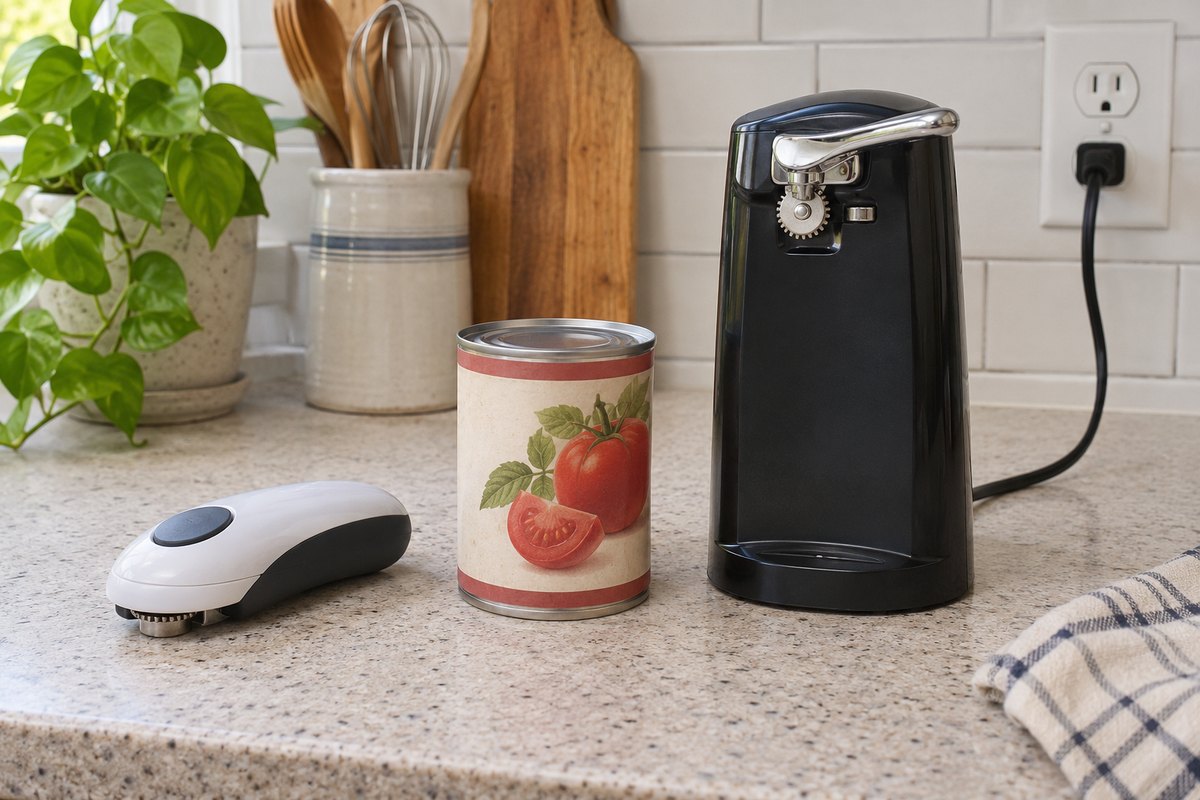
Measure the place you would give a countertop opener. Include enough space in front to bring your usual can to the opening head. Check upward clearance beneath a wall cabinet, especially if you need to lift the lever to seat the can. Then look at where the cord would exit. A spot that fits the base can still be awkward if the cord would run past the chopping area or the sink. An outlet close to a machine matters only if the path to it also works.
For a handheld opener, do the opposite: keep the can where it starts and see where the tool has to go. You need room around the rim rather than clear space under a head. A tall saucepan or a crowded row of pantry jars can block your view when you line up the cutter. Put the can where you can see the top and reserve a clear patch for the tool after the cut. If storing the opener in a drawer means reaching past sharp utensils, give it a separate compartment. Drawer storage is useful only if the tool is easy to take out.
Compare three examples
We compared the manufacturers' descriptions of operating controls, cutting mechanisms and cleanup. The examples show what you will have to do with a can in front of you. They do not establish that either power system cuts faster or lasts longer. Follow the manual for the exact model number, especially when a retailer lists several versions on one page.
| Model | Position | Control to check |
|---|---|---|
| Kitchen Mama Auto | The tool goes to the tin | Start and stop with separate presses |
| Cuisinart CCO-55 | Bring the tin to the opening head | Single-touch activation and lever removal |
| Hamilton Beach Smooth Touch | Bring the tin to the opening head | Hold the lever through the cut on 76606ZF |
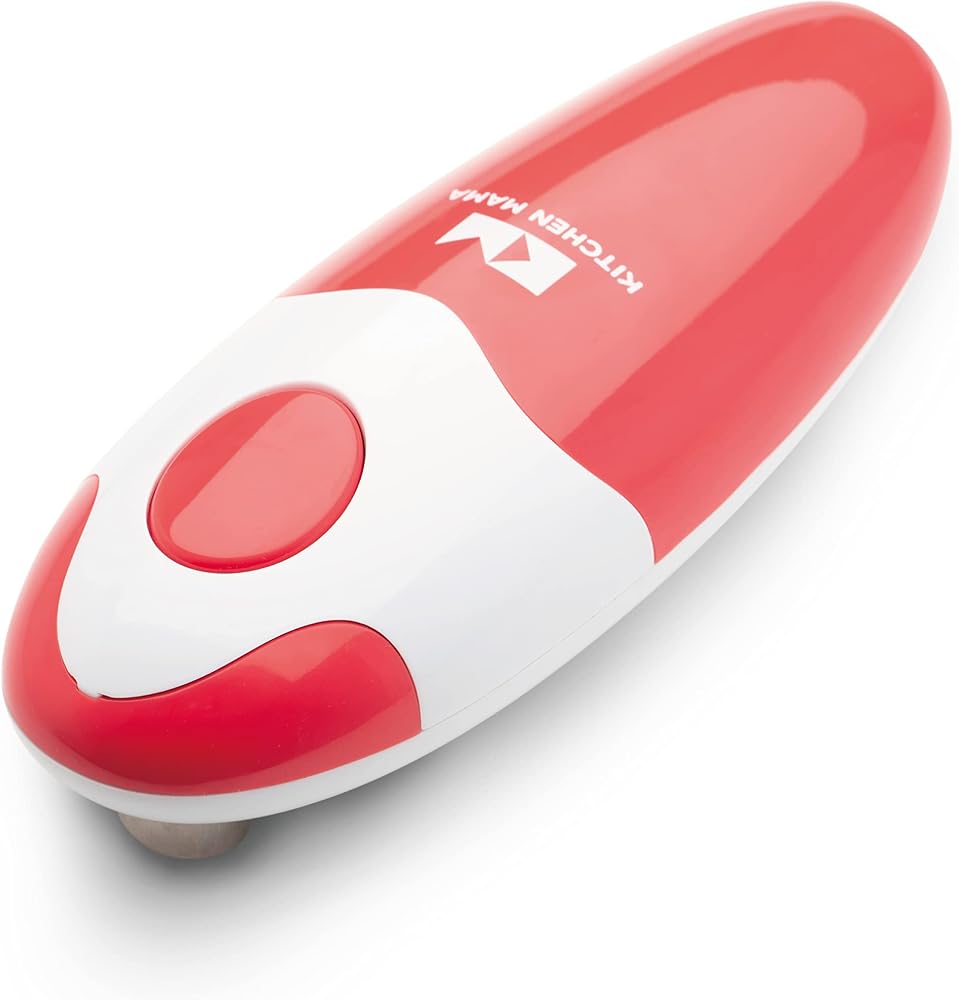
Handheld cordless example: Kitchen Mama Auto Electric Can Opener Battery Operated Red
The Kitchen Mama Auto uses four AA alkaline batteries and a press to start and another to stop. Place it on the can at worktop level. It suits a small kitchen where you want the tool out of the way after dinner.
View on Amazon (opens in a new tab)
Countertop with a removable lever: Cuisinart CCO-55 Deluxe Chrome Electric Can Opener Silver
The Cuisinart CCO-55 lists single-touch operation and a removable activation lever. It is worth comparing when you have a permanent outlet location and want to clean the lever separately as instructed.
View on Amazon (opens in a new tab)
Countertop with a hold-down lever: Hamilton Beach Smooth Touch Electric Can Opener With Easy Push Down Lever
Hamilton Beach describes the Smooth Touch 76606ZF as requiring the user to hold the lever down through the cut. That is a different control routine from a single-touch design. Check the suffix on the retailer listing before assuming its directions match.
View on Amazon (opens in a new tab)- Kitchen Mama Auto product instructions and power requirements.
- Cuisinart CCO-55 specifications and cleaning directions.
- Hamilton Beach 76606ZF instructions for the lever.
Check the motion and the power separately
The main benefit of a fixed opener is that you know where the head is every time. You do not have to find a spot to put a handheld motor on the lid. That can help if you regularly open several standard-size tins in the same place. But it moves the handling work to the can itself. Try lifting a full tin to roughly the height shown in the product instructions. If you would need a second hand or would rather leave the jar or tin on the counter, a handheld arrangement may suit you better. Our guide to opener controls for weaker hands compares these motions in more detail.
Battery power keeps you independent of the outlet while you open the can. It also hands you a maintenance job: opening the battery door, putting in the specified cells and keeping replacements available. A cordless label can cover replaceable cells or an internal rechargeable battery. The power specification for the exact model settles that question. For a removable-cell model, see the battery-powered opener guide for what to look for in the door and stop control. If the charging lead or battery door is hard for you to access, the lack of a mains cord may not be much of an advantage.
Avoid deciding based on how the cutter starts alone. A top button, a single-touch lever and a lever held down through the cut all look straightforward in photos. Read the stop and release steps in order. If you use one hand, consider where the tool and the detached lid will go separately. The one-handed guide shows how to work through that sequence at home.
Three kitchens, three decisions
In an apartment with a narrow counter, give priority to prep space. A handheld opener can live on a shelf or in an organizer and come out when needed. In a kitchen that already has an appliance station with easy access to outlets, a fixed model may save you from fetching and putting away a tool several times a week. Neither setup helps if you have to move a kettle or unplug something you use at the same time just to open a tin.
In a camper or temporary kitchen, first decide where you can put a can on a firm surface. Cordless operation lets you work away from the outlet, but if you will be away for several nights you still need the correct cells or another way to prepare the meal. An easy-open alternative can be more useful than carrying a second powered tool. See our camping and RV opener guide for storage and backup ideas.
For a shared kitchen, walk through what happens after use. If you leave a fixed machine on a counter, keep the cutting head accessible and follow the maker's directions for removing washable parts. If the opener goes into a drawer, make sure it is clean and dry before it goes beside other food utensils. Our electric opener cleaning guide covers the questions to ask before cleaning the lever, blade or housing.
For a renter, the best spot for a countertop appliance may change when the kitchen changes. If the new counter has an outlet behind another appliance, check whether there is still a clear route for the cord and room to operate the lever. A tool that fits a cupboard shelf is easy to put away, but pulling a countertop machine out for every tin also means lifting it, finding an outlet and clearing a place for it. If you usually open one can during dinner prep, that setup can matter more than the time the cutter takes.
Before replacing a working opener, write down why you reached for a different tool on the last few meals. Running out of cells suggests a power problem. Struggling to see the rim, or running out of space beside a full can, points to the layout. An opener with a different power source may still leave the same work for your hands. Fix the counter arrangement first if it is the part that makes the job awkward.
Frequently asked questions
Does cordless always mean rechargeable?
No. Some cordless models use replaceable cells. Read the power specification for the exact variant.
Will a corded model be easier if my hands tire quickly?
It depends on whether lifting the can and using the lever are easier for you than positioning the handheld cutter.
Do all countertop openers use the same lever routine?
No. Check whether the lever must be held through the cut and how the machine releases the lid.
What should I measure under a cabinet?
Measure the appliance footprint, room for the lever to travel, head clearance for your tallest tin and the cord path.
Can a cordless opener replace a countertop model for every can?
Check the rim and can-size compatibility in the instructions. Power source does not establish what a particular blade will fit.
Our verdict
A handheld model makes the most sense if it lets you keep the can on a clear worktop and put the opener away afterward. Choose a corded model if you have a dedicated place, can bring your usual tins to the opening head and prefer an outlet to changing or charging batteries. Check the release step before deciding. That is when the differences between a fixed machine and a tool you lift away become most obvious.