As an Amazon Associate we earn from qualifying purchases.
The short answer
Choose the Hamilton Beach Smooth Touch if you want a plug-in opener that cuts around the side of the can and you can bring your usual tins to a fixed head. The use-and-care booklet covering 76606ZF tells you to hold the lever through one rotation. The motor does not stop automatically. You lift the separated lid afterward. Those details matter if you are replacing a countertop machine that stops on its own or if you expect a single press to leave your hand free. If lifting the can is the difficult step, start with a compatible handheld design instead.
What we checked and which model it covers
Hamilton Beach publishes the 76606ZF model and lists dimensions of 10.2 inches high, 4.67 inches wide and 5.01 inches deep. A shared use-and-care booklet covers that model and several other suffixes. Our catalog has a Smooth Touch Amazon listing; confirm that listing's suffix before applying any model-specific dimension or instruction. The comparison below is based on published documentation. We did not measure force, cut speed or ability to handle unusual rims.
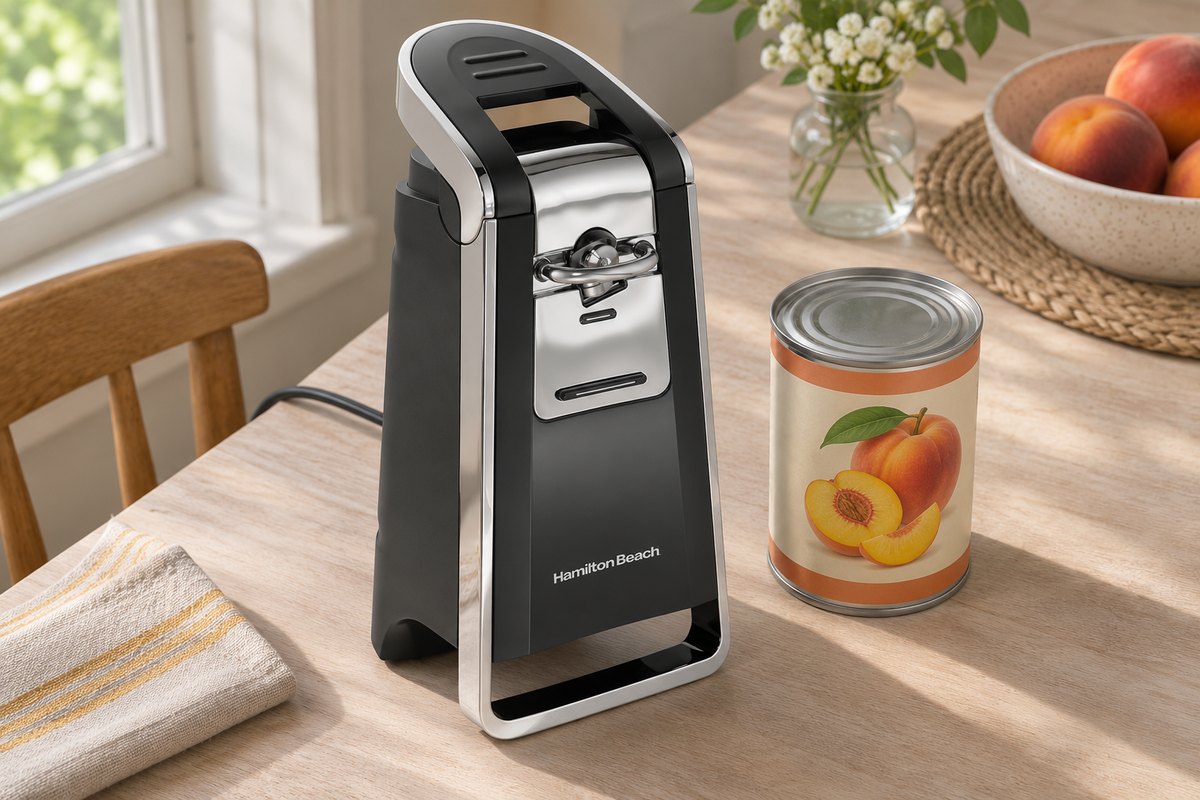

Main pick: Hamilton Beach Smooth Touch Electric Can Opener With Easy Push Down Lever
Choose this family if you can bring your can to the fixed head and want a countertop side cut. Confirm the suffix on the box and read the matching operating instructions. On 76606ZF the lever is held through one rotation, and the lid comes off afterward by hand as directed.
View on Amazon (opens in a new tab)A fixed machine is appealing if you open several ordinary cans at the same prep spot. You will not have to find a place on top of each tin for a portable housing. The trade-off is where the can must travel. A full tin starts on the worktop, moves up to the cutting head and has to return to a place where it can be supported. If that route is awkward, a larger lever cannot make it easier to lift. See the countertop versus handheld comparison for the two working positions.
How the lever changes the cut
The booklet shows the lever raised to unlock the head before positioning the rim. Bring a compatible intact can to the head as shown, and keep your hands clear while the can turns. The 76606ZF booklet asks you to hold down the lever until the can has completed one rotation, then release it. It also describes a change in motor pitch near completion. Use the instructions and the rotation together. Keep watching the can rather than expecting the motor to stop itself. If the head fails to engage, stop and use the rim-grip checks before another attempt.
| Stage | What changes | What to verify |
|---|---|---|
| Seat | Bring rim to fixed head | Can clearance |
| Cut | Hold lever for one rotation | Watch the can move normally |
| Release | Stop with lever and remove lid | Clear a place for can and lid |
If you hear a motor but do not see the can travel normally, stop and consult the release instructions. Leaving the control down longer cannot correct a slip or an incorrectly seated rim. The manual specifies one rotation to reduce the chance of metal slivers. If a lid has separated unevenly or the cut stopped in the middle, leave your fingers off the rim and use the incomplete-cut guide. A different sound is useful information about the cut. It is not a reason to pull on a partly attached lid.
Check whether you can see the can turn from your usual working height. A person opening a can from a seated position may have a good view of the lever but a poor view of the point where the rim meets the head. Before plugging in a new machine, set a closed tin in front of it and look at the approach from the position you normally use. Try reaching the lever without leaning across the tin. If there is room to move the machine closer, do that before deciding the lever is the problem. If the pitch change is hard to hear in your kitchen, do not use sound alone to judge the end of the cut.
Removing the lid after the side cut
The manufacturer describes the blade cutting along the side instead of into the top of the lid. The booklet says the machine does not lift the lid for you. Clear a place beside the machine for the can and another place for the lid. When the lever is released and the can is ready to remove, follow the instructions for lifting the separated lid. Keep your fingers off the cut metal. A low-effort start and a convenient removal step are separate features. See the comparison of cutting paths if the edge is the reason you want to replace a traditional cutter.
The 76606ZF product page includes regular and pop-top cans in its description. The manual also describes exceptions, including some microwaveable can designs. Use a familiar compatible tin the first time and check an unusual rim against the exact directions. The stated appliance height does not establish the can clearance. For an especially wide or tall tin, check how to measure and support a full can before assuming a countertop model is the right setup.
Set up a place for it and read the care page
Mark the machine footprint near a suitable outlet before ordering. Leave space in front for a full can to approach upright. Check that the cord will reach without crossing your prep area. The 76606ZF dimensions describe the body, so allow additional space above and beside it for the lever and the work. If it will sit below a cabinet, try the approach with an unopened tin at the planned station. A place that fits the body exactly can still put the lever too far back for comfortable use.
The use-and-care booklet describes unplugging the unit and wiping its exterior with a damp cloth. Follow your exact booklet if the instructions differ. A removable lever on another brand does not show you how to clean this one, and the care instructions do not call for oiling the permanently lubricated motor. If you cannot reach residue using the stated method, contact the manufacturer rather than pulling off an unspecified part. Our cleaning guide describes how to verify what can be removed or washed.
Give the setup a trial on the day you actually need it. If you normally drain beans into a colander, put that colander within reach first. A machine tucked beside the sink may save a walk, but a can still needs a dry, clear landing spot. The same check matters if someone else shares the worktop and moves the opener between uses. Choose a repeatable location where the lever faces you and you can put the opened can down without reaching around the cord. That is an easier layout to judge before ordering than a shopping photo that shows only the front of the appliance.
Two alternatives if this sequence does not suit you

Fixed-head alternative with automatic stop: Cuisinart CCO-55 Deluxe Chrome Electric Can Opener Silver
The Cuisinart CCO-55 series booklet describes stopping automatically when the can is open. Consider it if the sustained lever pressure is the problem and you can bring a full can to the head. It has a different cutting and lid-removal routine.
View on Amazon (opens in a new tab)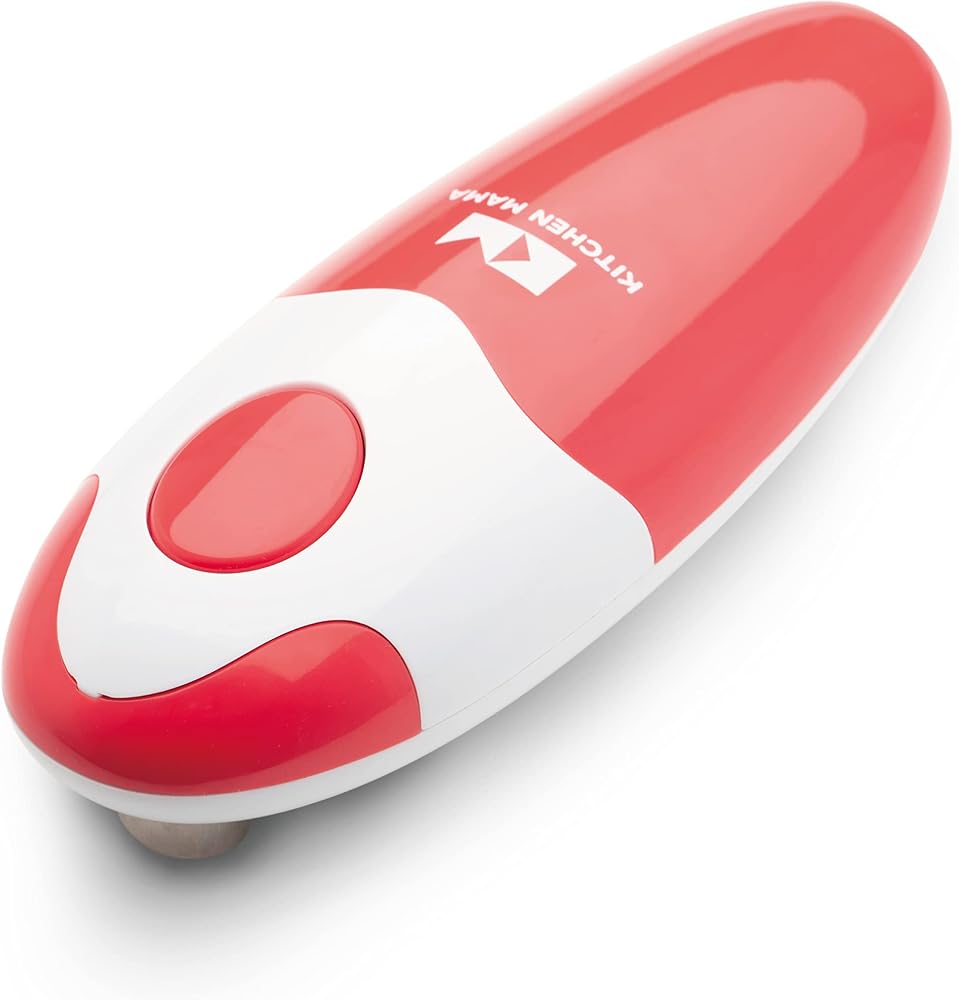
Handheld alternative that keeps the can down: Kitchen Mama Auto Electric Can Opener Battery Operated Red
The original Kitchen Mama Auto is battery-powered. It approaches the can on the worktop and requires a second press to stop. It changes the lift and lever motion without providing automatic stop.
View on Amazon (opens in a new tab)Think about which part of the Smooth Touch sequence you would replace. If it is the sustained lever hold, compare the CCO-55 operating sequence. If it is the lift to the head, the electric opener roundup distinguishes handheld and fixed designs. When buying for somebody else, give them a chance to read the stop and lid-removal directions and try the approach with a closed tin. The right alternative depends on the movement they find difficult.
- Hamilton Beach 76606ZF dimensions and product details.
- Hamilton Beach use-and-care booklet covering 76606ZF.
- Cuisinart CCO-55 series instructions and Kitchen Mama Auto product details.
For a replacement purchase, write down the last three cans you opened and the point where your old tool gave you trouble. For example, if you can already hold a standard tin steady but struggle to turn a small knob, a plug-in lever model may solve the problem you encounter most often. If a full tin is already difficult to move from the pantry, give the handheld option a closer look. This short list is a better starting point for comparing the three cards than the number of features on their boxes.
Frequently asked questions
Does this machine stop automatically?
The 76606ZF booklet says the motor does not stop on its own. Hold the lever through one rotation and stop as instructed.
Does it lift the lid after cutting?
The booklet says it does not. Follow the removal directions for the separated lid.
Can it open pop-top cans?
Hamilton Beach lists pop-top and regular cans for the 76606ZF. Check the instructions for exceptions and for your exact suffix.
Can I remove and wash the lever?
Follow your exact booklet. The 76606ZF care instructions describe unplugging the unit and wiping the outside with a damp cloth.
What if I cannot lift the can to the head?
Consider a compatible handheld opener that comes to the can on the worktop.
Our verdict
Choose Smooth Touch when a fixed-head side cutter fits your can sizes and you can hold and release the lever. Confirm which suffix you are buying. Give the end of the operation as much attention as the start: one rotation, stop with the lever, then remove the lid as the manual shows.