As an Amazon Associate we earn from qualifying purchases.
Best options at a glance
For a kitchen that regularly opens tall tins, put the Edlund #1 11100 on the shortlist first. Compare the #2 12100 if all of your cans fit its shorter working range and the busiest day stays within the supplier's stated volume. Consider the stainless S-11 if your closing routine calls for a removable machine with a documented dishwasher cleaning procedure. All three are mounted manual units. The purchase still depends on the exact base, the tins in your inventory and the space staff have around the bench.
Count your busiest day and busiest prep window
Start with the day when you open the most tins, rather than averaging a quiet week. Count how many the opener must handle and note whether they come in one rush or are spread over several hours. A lunch prep station may use most of its cans before service. A second station may open only an occasional tin but need to work with one particularly tall package. Those situations put different constraints on the tool. If the station is already a bottleneck, note whether it is the cutting motion, the time spent walking to the station, or the space needed to clear away empty cans.
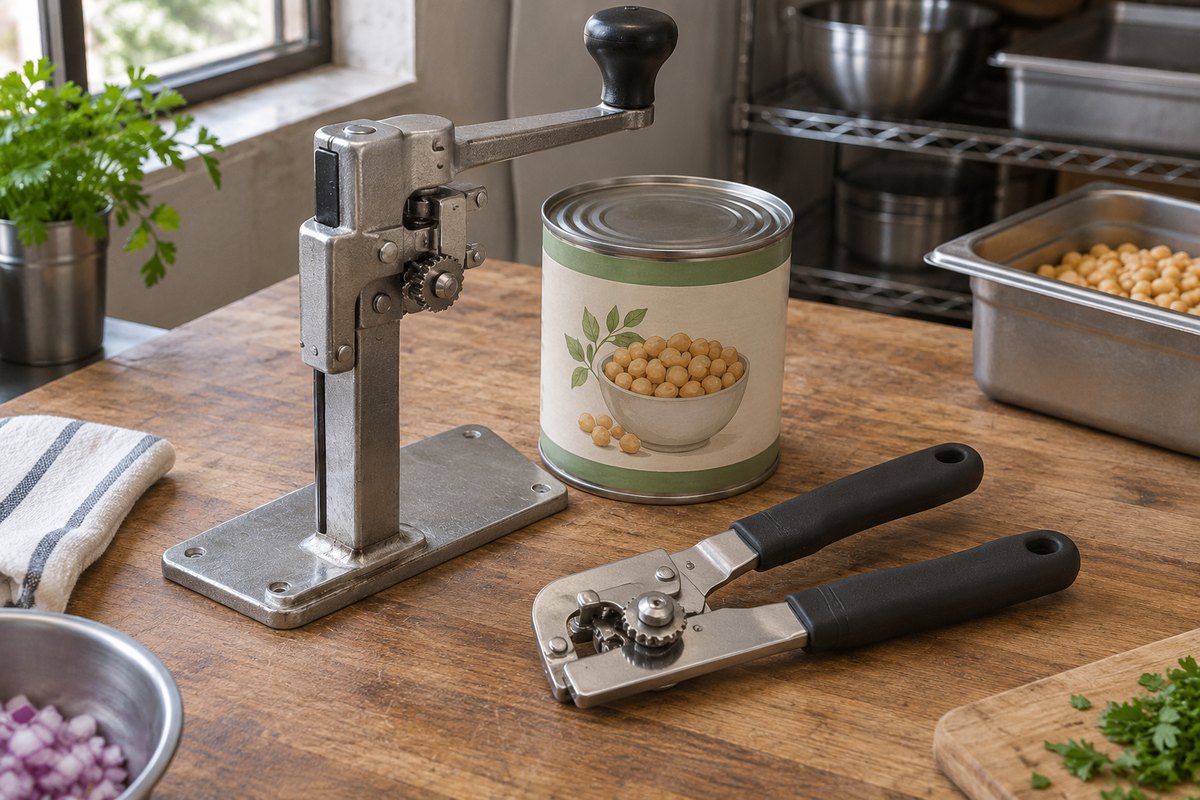
KaTom lists up to 50 cans per day for the #1 and up to 15 for the #2. Treat those figures as supplier selection guidance, not as a promise of output at your station. If you approach or exceed the stated volume, speak to a foodservice supplier about a suitable model and configuration. Buying a taller manual tool alone does not solve a queue. Observe how staff bring a full can in, remove the lid and move the contents out. Our guide to supporting large cans covers the space and handling checks common to any station.
| Model | Published selection criteria | Buying check |
|---|---|---|
| #1 11100 | Supplier lists up to 11 in. and 50 cans per day | Check rim and bench space |
| #2 12100 | Supplier lists up to 7 in. and 15 cans per day | Check tallest can and peak workload |
| S-11 | Stainless, NSF Certified, model-specific cleaning instructions | Match base and bar to listing |
Compare the exact Edlund configurations
These choices use published specifications and use-and-care information. We did not measure throughput or perform a durability test. A number or name in a listing can refer to more than one package. Match the seller's model number and base to the documentation before using the figures in the table.
Edlund #1 11100 for taller tins: Edlund 11100 #1 Old Reliable Manual Can Opener
Foodservice suppliers list the 11100 for cans up to 11 inches tall. Edlund describes a replaceable base insert on the #1 and #2 series. Check the plated base, available handle travel and parts that match the exact unit.
View on Amazon (opens in a new tab)Edlund #2 12100 for a shorter, lower-volume setup: Edlund 12100 #2 Old Reliable Manual Can Opener
The 12100 supplier listing gives a 7-inch can-height limit. Choose it only if your tallest recurring tin fits and the busier shifts stay within the supplier's usage guidance. A single tall ingredient can make the smaller option impractical.
View on Amazon (opens in a new tab)Edlund S-11 for a documented stainless care routine: Edlund S-11 Stainless Steel Manual Can Opener
Edlund lists the S-11 as stainless steel, NSF Certified and dishwasher safe. Use the manual for the cleaning procedure and confirm the exact base configuration. A reseller identifies this ASIN as S-11, so check the package against the model you intend to buy.
View on Amazon (opens in a new tab)Decide where the opener will live
Find a firm work surface at a height the staff can reach. Give the handle enough space through its full travel and leave room to stand a closed full can upright before bringing it to the cutter. Check the undersurface before choosing a clamp version. A counter with a deep front lip, rails or a drawer can leave no usable place for the clamp. If the instructions specify a screw-down base, confirm that the mounting location and material can support the intended fasteners. Follow the model's installation directions rather than applying hardware from another opener.
Place a closed example beside the proposed spot and work through the approach and transfer without cutting. Think about the bowl or pot that will receive the contents and where the lid will be set aside. A bench with room for the opener but no landing area for a heavy can is still a poor work station. If you regularly handle #10 containers or unusually tall tins, check what the published height figure actually measures and verify the rolled rim separately. See the large-can buying guide for the differences between handheld, fixed and household clearance.
Fit the maintenance routine to a real shift
Before purchasing, read both the operating booklet and the parts diagram. Identify who cleans the tool, when it comes off the bench and where any approved removable pieces will dry. The S-11 service manual describes cleaning daily or after extended use and gives a specific procedure. That is a different decision from seeing a general dishwasher-safe claim in a listing. Use the instructions for your model and the kitchen's cleaning procedures. Do not use the S-11 directions on a plated #1 or #2 or assume the same parts can be washed the same way.
Ask where the supplier stocks the matching knife, gear, base insert or other parts the manual says can be replaced. Record the part identifiers with the model rather than waiting until a piece wears. Agree who takes the unit out of service if the head stops gripping or the tool leaves an incomplete cut. Keep the replacement or service information nearby. Our manual opener maintenance guide covers wheel and handle checks, while the incomplete-cut guide explains what to do if the cut stops before the lid has released.
Make the order specific
Write down the maximum daily count, the dimensions of the tallest intact can and the type of surface you will mount to. Ask the supplier to confirm the model, base, height limit, parts support and care booklet. Two machines in the same series can look identical in a product photo while being sold with different bases or bars. For a shared or temporary prep space, verify whether a removable clamp is part of the configuration instead of assuming that it comes with the unit.
If you only need an opener for a few ordinary household tins, a dedicated commercial station may use space that could be better spent on prep. The five-step selection guide provides a shorter assessment for a home kitchen. If you already have equipment that will not latch, check the exact model and rim in the rim-grip troubleshooting guide before ordering a larger replacement. A different bar height will not resolve a rim the wheel cannot engage.
- Edlund #1 and #2 documentation and supplier height and volume comparison.
- Edlund S-11 product information and S-11 service and care manual.
A menu change can be a useful stress test for the purchase. Take the tall tomato tin out of the inventory and suppose that next month only the shorter brand is available. Would the same mounting location still work? Then put the tallest recurring ingredient back on the list. If that one item accounts for most of the reason to choose a taller bar, get its size and rim confirmed before buying. If there is a second opener in the kitchen, specify which sizes each station handles so staff can move a closed tin to the appropriate place before starting.
Check the cost of keeping the station available, including parts and the time needed to clean it. A replacement insert on hand may be more useful than an extra complete tool if the manufacturer permits staff to replace that part and they know the procedure. On the other hand, a small kitchen that depends on one opener at every service may need a backup plan for a tool that has been removed for repair. Keep a supplier contact and a model or serial reference where a shift supervisor can find them quickly.
Finally, let the people who will use the station review the operating diagram at its intended height. A long handle can give you clearance at one end of the movement and reach into the area where the next person is working at the other. Moving the station before installation is easier than working around it during service. Record the location and the verified model together so a replacement order keeps the setup that already works.
Frequently asked questions
What distinguishes the Edlund #1 from the #2?
The supplier gives the #1 a taller can clearance and a higher daily can count. Confirm both limits for the exact configuration.
Are all Edlund models dishwasher safe?
Follow the manual for the exact unit. Edlund identifies the stainless S-11 as dishwasher safe with a model-specific care procedure.
Is can height the only compatibility limit?
No. Check the rim, space for full handle travel, and whether the can can stand upright at the cutter.
Should I use average daily volume to choose?
Start with the busiest day and the busiest prep window. Ask a supplier for a recommendation if your volume approaches or exceeds the published figure.
Does a clamp always come with the S-11?
Edlund describes separate mount configurations. Confirm the model and included base before ordering.
The final decision
Pick the #1 for documented taller-can fit, compare the #2 for a shorter and lighter workload, and check the S-11 when the stainless care routine is the reason to upgrade. Confirm the exact configuration and capacity with the supplier before committing a section of the bench to any of them.