As an Amazon Associate we earn from qualifying purchases.
The short answer
A regular rotary can opener is usually the sensible choice for a home kitchen that opens ordinary pantry cans. A heavier handheld model is worth comparing if it gives you a knob or handles that fit your hands better. A mounted foodservice opener is a different purchase. Consider one when your household regularly opens cans the smaller tools cannot accommodate, and you have somewhere suitable to install it. The words heavy duty on a handheld listing do not tell you which cans it fits or how much work the wheel can handle.
What does heavy duty change at home?
Start with what you dislike about the tool you already own. If the knob is small and hard to hold, you can shop for a wider one without changing the way the tool cuts. If the handles feel narrow against your palm, compare their shape when they are closed on a rim. If the wheel will not engage the tin, a bigger handle is unlikely to resolve the fit. Check the rim-grip troubleshooting guide before replacing a working opener for one unusual can.
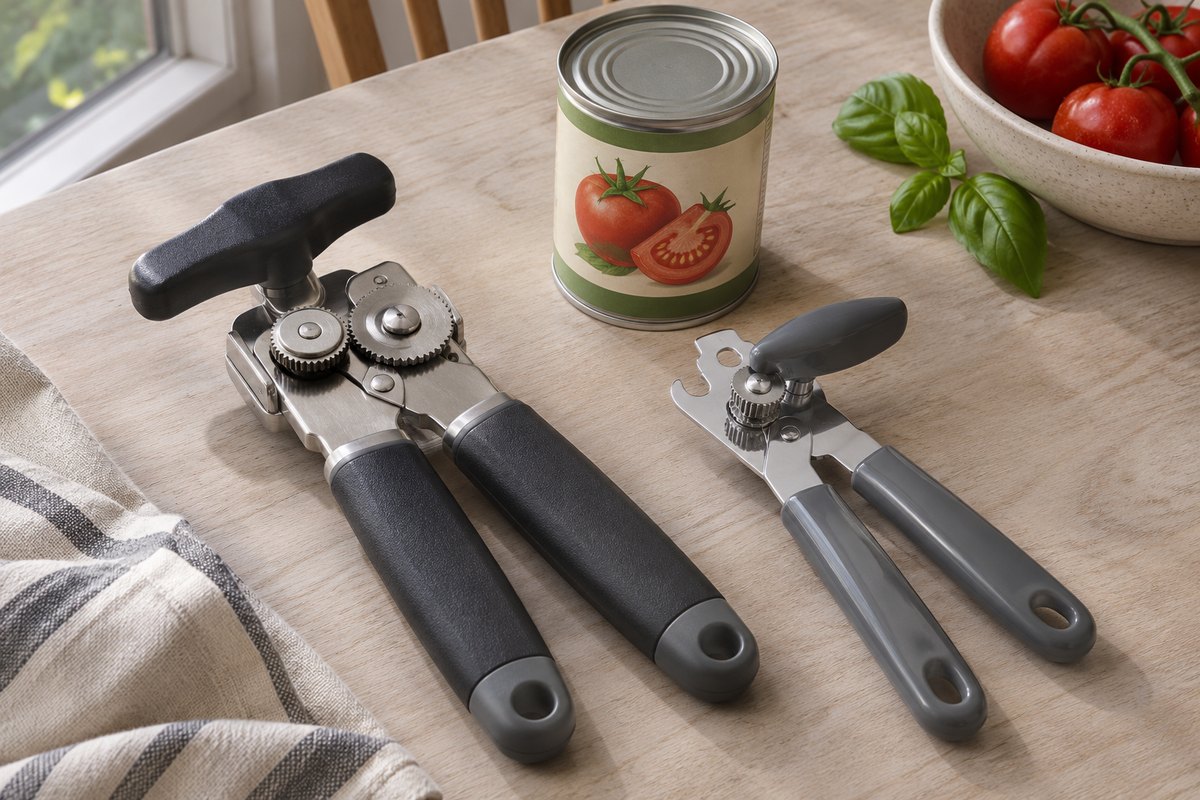
Regular and heavy-duty handheld models can ask you to make the same motions. One hand keeps the two handles together and the other turns the knob. A longer or thicker handle can feel better, but it can also take up more room or make the grip span less comfortable. This is why the most useful comparison is with a representative can, rather than holding the two tools loose in a store. Look for a photo or instructions that show both hands in position. Our OXO and KitchenAid comparison shows what to compare in otherwise similar crank designs.
The label can also be used on units that are built around a fixed base. Those tools put the can beside a bench mechanism. They change the operating position and often specify parts and installation separately. In a household with a shallow drawer and no spare counter, these requirements matter as much as the ability to open a tall tin. Consider whether you can dedicate a spot to the mechanism before assuming the more substantial option is an upgrade.
| Design | What you gain | What to verify |
|---|---|---|
| Regular crank | A familiar drawer-stored tool | Grip span and rim fit |
| Heavy-duty handheld | Possible differences in handle or knob shape | Specific fit data and whether the grip suits you |
| Mounted foodservice opener | Fixed working position and documented configuration | Approved mount, clearance and parts support |
Three examples and what is documented
We used the model descriptions and supplier specifications. The term heavy duty does not establish a comparative durability, torque or throughput figure. None of the handheld options below is presented as a verified solution for every oversized can.

Regular household crank: OXO Good Grips Manual Can Opener And Bottle Opener Soft Easy-Grip Handle
OXO describes cushioned handles, an oversized knob and a steel cutting wheel. This is a conventional choice for compatible pantry tins. Compare it if the movement of a normal crank works for you and you want a comfortable grip.
View on Amazon (opens in a new tab)
Handheld model marketed as heavy duty: Zulay Kitchen Manual Can Opener Heavy Duty Patented Stainless Steel Black
The listing for this Zulay model describes a large knob, steel blade and soft-touch grips. Those are useful features to compare with the OXO. The available listing does not establish a specific large-can height limit, a duty cycle or lower turning force.
View on Amazon (opens in a new tab)Fixed foodservice alternative: Edlund 11100 #1 Old Reliable Manual Can Opener
The supplier lists Edlund 11100 #1 for cans up to 11 inches tall. Edlund describes a replaceable base insert. Verify the full can fit and mounting instructions. A dedicated bench setup is a substantial change from keeping a handheld opener in a drawer.
View on Amazon (opens in a new tab)When you should keep a regular opener
For the cook who opens a few normal tins each week, check that the head engages the rim cleanly and that the knob and handles still feel comfortable. If that covers the job, buying a heavier tool adds little. If the current tool has gone stiff or slips after years in the drawer, follow the care directions and inspect it before deciding you need an industrial mechanism. The maintenance guide helps distinguish dried residue from a tool you should take out of use.
If keeping both handles closed is the difficult part, a second version of that same arrangement may leave the hardest motion unchanged. You might get more out of a locking or powered design. Check the complete sequence including setup, stopping and lid release. See how powered and manual models change the hand movements. If you are satisfied with the controls but dislike taking the lid away, compare the side-cut and traditional approaches instead.
When a permanent base makes sense
Record the tallest and widest unopened cans you buy and the number of times they appear on your menu. Check whether you can get the full can into position and remove it without reaching across another appliance. For a single party recipe, two smaller tins may give you the same quantity with the opener you already own. If you use the larger tins each week, a fixed mechanism may justify the bench space. Our large-can selection guide compares documented clearance and working positions.
Put a bowl beside the proposed mounting spot and work through the route from shelf to counter and back. The opened can must be supported again after you release the tool. Also check what sticks out as the handle moves and where a second cook would be standing. The operating diagram can reveal a clearance problem the body dimensions miss. Then check that the surface and fasteners match the manufacturer's installation instructions. A household with little clear bench space may prefer to change its package sizes. For repeated foodservice use, see the commercial opener comparison.
A practical comparison before you buy
Pick the actual can that motivates the purchase. Write down which step fails or gets uncomfortable: seating the cutter, holding it closed, turning, or lifting the lid. Then compare the two products against that same step. If an online description does not show the working position, find the instructions or ask the seller for the exact model. When purchasing for someone else, give them the chance to try the grip and check their space first. A larger tool is easy to spot in a drawer, but that is not the same as being easier to hold.
Also compare what you will maintain. A basic rotary opener is easy to move and store, while a bench tool may have a published procedure and replacement parts. Those parts help only if they match your model and you can obtain them. Think about how you will clean and store a spare. The best value for your kitchen is the setup that works with your containers and can be put back into service easily after an ordinary meal.
- OXO Soft-Handled design details.
- Zulay B0D8R9QRWL listing.
- Edlund #1 series documentation and supplier 11100 configuration.
Use the same comparison with a small tin as well as the largest one. If a bigger head makes it harder to see where the wheel meets a short tin, you may end up keeping your old opener for most meals. That can be a reasonable arrangement when you have one recurring bulk ingredient. It makes less sense if the large tool was meant to replace a drawer full of utensils. Count the number of packages that actually need the larger tool before you decide how much shelf or counter space to give it.
Price the change as a complete setup. For a handheld model, that may mean only the tool and any storage organizer you want. For a fixed station, check what base comes in the package, whether the manufacturer specifies additional hardware and what replacement components cost. A tool that fits is more useful than a larger model with poorly documented parts. Do not compare an opener-only listing against one that includes a base as though both will be ready for use when they arrive.
If you can borrow a conventional tool with a wider knob, try it before replacing everything. Use the ordinary compatible can you struggled with, rather than a different lid that already opens easily. Notice whether the knob is easier to grasp and whether you can keep the head seated through the full cut. If the larger grip solves that specific problem, you have evidence about what fits your hand without needing a mounted cutter.
Frequently asked questions
Does heavy duty guarantee it opens #10 cans?
No. Look for documented fit for the exact tool and compare it with your unopened tin.
Will a thicker handle make an opener easier to use?
It may change how it feels against your palm. Check the handle span on the rim and whether you can keep it closed while turning.
Why would I mount a can opener at home?
A fixed station can make sense if you regularly open large compatible cans and have a suitable installation surface.
What if an ordinary opener repeatedly slips?
Check rim fit, seating and the tool condition before seeking a replacement. Stop using a visibly damaged opener.
Do I need a commercial tool for one bulk recipe?
Smaller compatible tins can provide the quantity you need without new equipment.
The final decision
Keep a regular opener when it fits the rims you buy and you can use its controls comfortably. Choose a larger handheld model for a documented difference in grip or control, and choose a bench tool only when its fit and installation solve a recurring problem.