As an Amazon Associate we earn from qualifying purchases.
Read the stop instructions before you buy
For an electric can opener that starts with one action and finishes without a second press, shortlist the Kitchen Mama Orbit One if you want the tin to stay on the counter, or the Cuisinart CCO-50BKN if you can bring it to a fixed head. The original Kitchen Mama Auto is an alternative for anyone comfortable pressing again to stop. It has a top button, but the way it stops is different. Check for a sentence in the instructions that tells you what to do after the cut starts. That is more reliable than deciding by the words one touch on the front of a box.
This article compares the documented control sequences. We did not measure how hard the buttons are to press or test them with individual users. The choice depends on what the person finds difficult. They may want to avoid a long squeeze, a second button press or lifting a full tin. Those are different goals. The manual and electric comparison explains how a powered cutter changes the overall task.
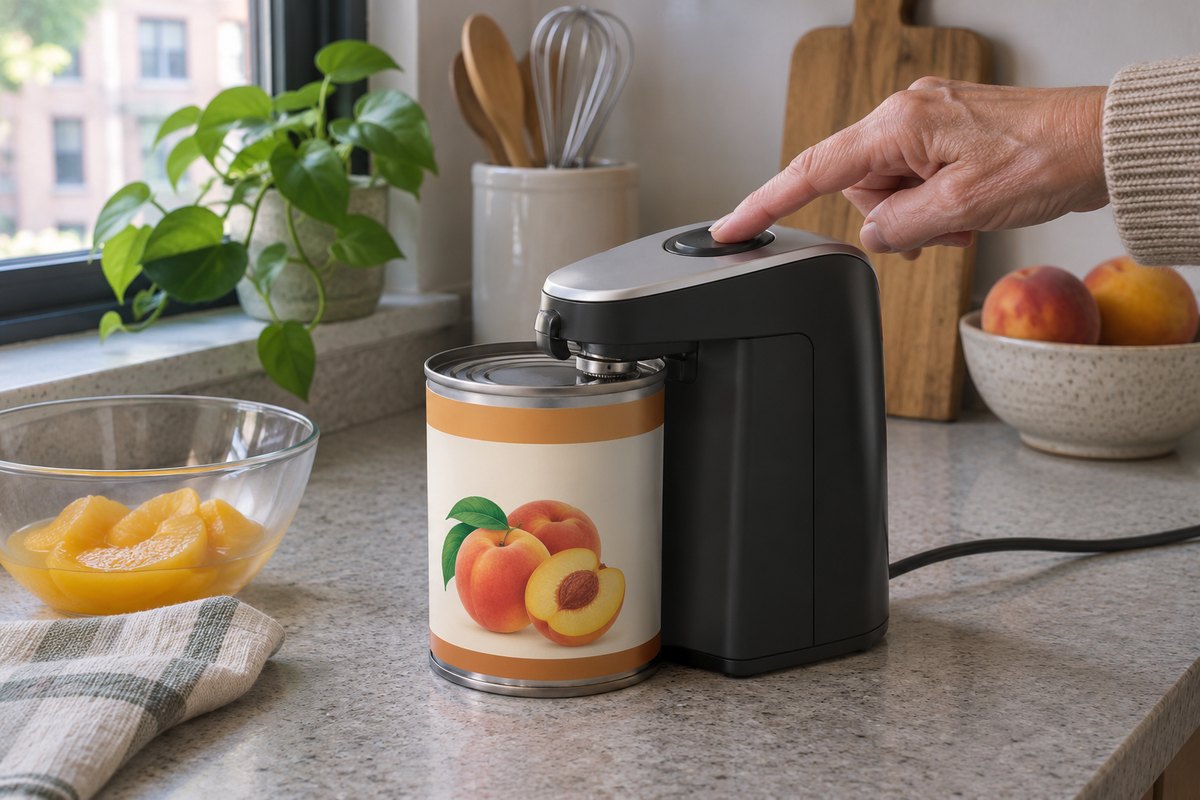
Three models with different controls
Three labels can sound like one-touch in a listing. For the Cuisinart Deluxe, bring the rim to the fixed cutting head and engage the lever; the normal cut ends automatically. The Orbit One starts at a handheld head and ends its normal cycle automatically. The original Auto manual calls for a second press. Review the listed interruption or release procedure too, since automatic completion describes a normal cycle.
Kitchen Mama Orbit One for handheld automatic stop: Kitchen Mama Orbit One Rechargeable Electric Can Opener, Red
The rechargeable model is placed on a compatible can and stops automatically as described in its directions. Check the illustrated placement and removal steps.
View on Amazon (opens in a new tab)Kitchen Mama's Orbit One product page describes USB-C charging. This is the model to compare if you can lower the tool onto the tin and want the motor to finish without reaching for the button again. Before ordering, decide where it can charge and where it will be stored afterward. If the cable lives in one room and the opener lives in another, factor in the extra trip. The battery and rechargeable comparison covers how that routine differs from a replaceable battery model.

Cuisinart CCO-50BKN for automatic stop at a fixed head: Cuisinart Deluxe Electric Automatic Can Opener CCO-50BKN
Raise the can to the head. The manufacturer says to release the lever once the blade engages. The motor stops at the end of the cut.
View on Amazon (opens in a new tab)The black Cuisinart Deluxe review spells out the lever and magnetic lid holder. A stationary unit can be useful when you want the control in the same place every time. Leave room to raise a full can, reach the lever and put the opened can down without stepping away from the worktop. If the magnet does not attract a particular lid, check the maker's handling directions and plan where the lid goes. Automatic stop removes a control step. It cannot do that last bit of cleanup.
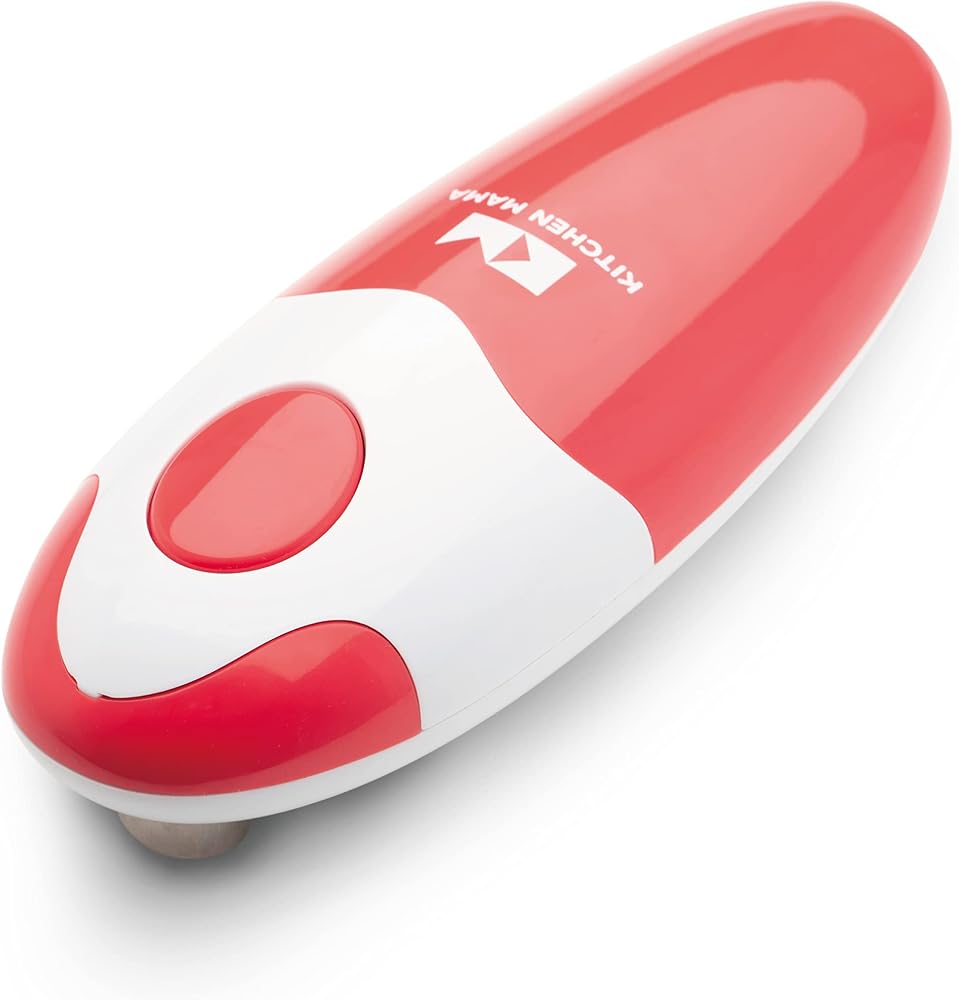
Original Kitchen Mama Auto for a separate start and stop press: Kitchen Mama Auto Electric Can Opener Battery Operated Red
The original Auto uses four AA alkaline batteries. Follow its instructions for the second press rather than relying on automatic stop.
View on Amazon (opens in a new tab)See the original Auto review for its two presses and care directions. Choose it if keeping the tin on the counter is the main reason to buy and you can comfortably reach the button twice. Some cooks prefer a replaceable battery set because they already stock AAs in the kitchen. If the extra press is the very task you want to remove, choose a model whose directions specify automatic stop.
Check the reach with a can you actually use
Put a closed can where you normally prepare food. If you are comparing a handheld model, see where the control would sit once the tool is on top. You should be able to see enough of the head and rim to tell whether you have seated it as directed. If you work seated or keep the can close to a wall, check the same view from that position. A photo from above can make the button look easier to approach than it would be in your own kitchen.
For a fixed head, check the height of the lever and how far back it would sit. A machine tucked beneath a cabinet may leave room for the body but little room for your hand or a tall can. Bring an unopened can to the proposed area and map where you would set it down when it is open. This is also a useful test with the person who will use the opener, if you are buying for someone else. The small-kitchen guide compares storage measurements with actual working clearance.
Plan for the lid and for an interrupted cut
Think about what happens when the sound stops. Automatic stop is handy only if you can then remove the machine or can as directed. Set up a place for the separated lid and leave the worktop clear. If the opener does not travel normally, use the model's instructions for stopping and releasing it. Keep clear of the moving parts and exposed lid edge. A stalled or partly completed cut needs different handling from an ordinary finish. The incomplete-cut guide covers what to check when the cut does not finish as expected.
Decide where you will keep the instruction booklet. On a shared worktop, the name of the model and a brief reminder of how to stop it can help the next person use it correctly. Keep the original directions for exceptions, especially release and cleanup. For a cook who opens only an occasional tin, learning a new control sequence may matter more than a small difference in price. Choose controls that are easy to find again even if a few weeks pass between uses.
Talk through the setup before making it a gift
If the opener is for another person, ask them to name the one motion they want to change. Someone might prefer to leave the tin on the counter because lifting it is the hardest step. Another cook may be happy with a stationary tool and prefer a lever they can see. Let them decide which hand reaches for the control and where the opened can should go. Read the shared-prep guide if one person will set up or maintain the opener while another uses it.
Check that the person can put the opener back after cleaning. A device that starts with one touch still needs a place where it can be retrieved, charged or fitted with batteries. The practical measure is whether the intended cook can use it during a familiar meal without moving half the things on the counter.
For a cook who cannot easily hear the motor, compare what they can see at the end of a normal cut. Check whether the position of the tool makes it clear that movement has stopped, without putting a hand near the wheel or lid. The manual may describe a sound or a change in position. If your usual kitchen is noisy, use the full sequence from the directions and wait for movement to stop before removing the can. Ask for a demonstration if you cannot tell from the booklet how the normal cycle ends. This detail is especially useful for a handheld model whose housing covers part of the lid.
If the same person opens a tall tin and short tuna can throughout the week, try the reach check with both. The taller tin can put a top button closer to where the cook normally holds a hand. A short tin may be easier to carry but harder to see under a fixed cutting head. Check the maker’s compatibility guidance instead of using a can only because it looks ordinary. A tool that works on the tall soup can may need a different approach for the tuna tin. Give the more common of the two jobs more weight when choosing the control layout.
A countertop opener also creates a cleanup step near its storage position. Check where you would unplug it and where a removable part would dry. If the area beside the outlet is also your main preparation area, leave room for the cutter to cool or dry as directed while you finish dinner.
Frequently asked questions
Does one-touch always mean automatic stop?
Read the exact manual. The original Kitchen Mama Auto has separate start and stop presses.
Which example can keep the can on the counter and stop automatically?
The Orbit One is the handheld automatic-stop example in this guide. Check the can fit first.
Does automatic stop remove the lid for me?
Plan to handle the lid after the motor stops. The process depends on the cutter design.
What should I try with a closed can?
Check your reach to the control, line of sight at the rim and where you will lower the opened can or set the tool down.
The verdict
Choose Orbit One when keeping the tin down and eliminating the second press are both priorities. Choose CCO-50BKN when a fixed head suits the kitchen and lifting the can is comfortable. Choose the original Auto when a second press is manageable and a replaceable battery set makes sense.