As an Amazon Associate we earn from qualifying purchases.
Measure the space you need to open a can
For a kitchen with little permanent counter space, start with a manual cutter if the turn is comfortable. GoodCook Safe-Cut is a drawer-friendly example. A handheld electric model such as the original Kitchen Mama Auto can also go away between meals and comes to the can. A fixed countertop model such as the Cuisinart CCO-50BKN belongs on the list when you have a workable station near an outlet and can raise a full tin to its head. Choose by the total space occupied while you cook. The smallest body in a listing may still need the most clearance around an actual can.
Take three measurements: the space where the tool will live, the space your hand needs to operate it, and the place where the opened can and lid will go. A cabinet might fit the base without leaving space to raise the lever. A shallow drawer might have enough depth for the handle and too little room for the knob to pass under the frame. Check both directions around the tool. Our corded and cordless comparison shows how the working position changes when the can moves to the head instead of the cutter moving to the can.
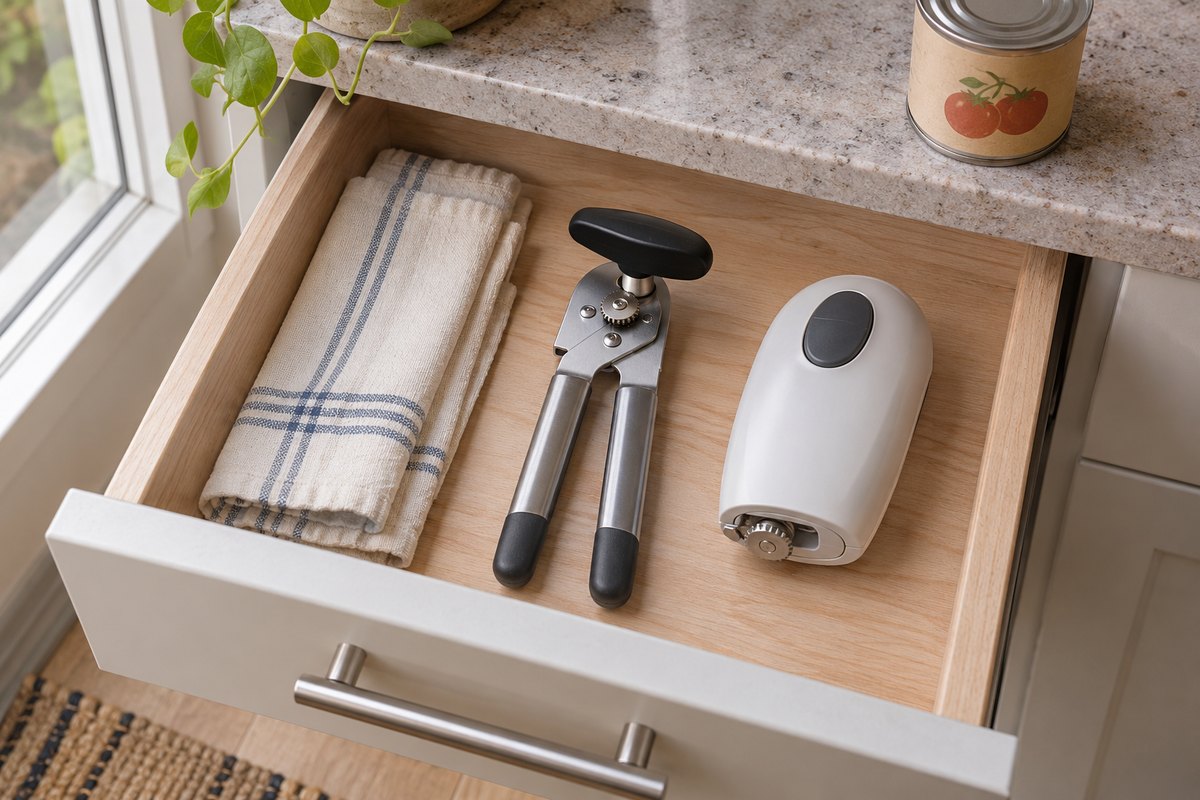
Three models for different storage routines
Use the body measurements published on the CCO-50BKN product page to mark a footprint, then hold your tallest normal tin next to the cutting position. The marked rectangle is only a storage measurement. Keep room at the head for your hand, the loaded can and removal of the detachable lever for cleaning. The original Auto instructions illustrate why a drawer-friendly design also needs a working position on the counter with room on the button side.

GoodCook Safe-Cut for a manual cutter that can live in a drawer: GoodCook Safe-Cut Can Opener With Easy Turn Knob Black
A side-cut opener for compatible tins. Give the handle, head and turning hand enough room.
View on Amazon (opens in a new tab)The GoodCook Safe-Cut review explains how the wheel seats on the outside of the rim. Consider this if you already turn a manual knob comfortably and want a tool you can move to any suitable dry area. If the drawer has a divider, check the height above it rather than just the height at the drawer face. A narrow slot can make the opener hard to lift out by its handle even when there is enough room to close the drawer. Leave the cutting head away from the side you reach into.
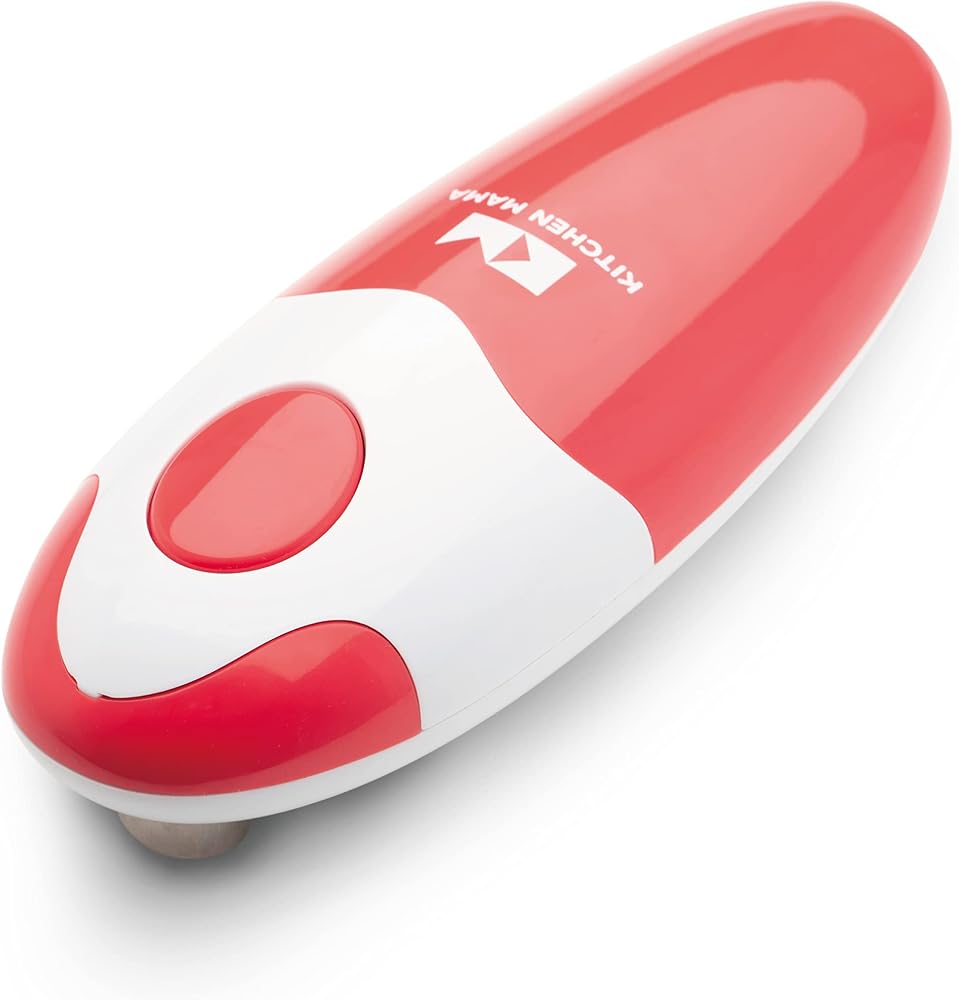
Kitchen Mama Auto for powered turning without a fixed appliance: Kitchen Mama Auto Electric Can Opener Battery Operated Red
The original battery model goes onto a compatible tin and uses a separate button press to stop.
View on Amazon (opens in a new tab)Read the original Auto review before buying. A handheld model can stay in a drawer while letting the tin remain on the worktop during the cut. Put it down somewhere clear after following the release instructions. If your counter only has space for the can and a colander, see whether there is a third spot for the housing. For the storage check, leave room to get a hand around the sides as well as enough height for the lid or drawer to close.

Cuisinart CCO-50BKN for a small fixed station: Cuisinart Deluxe Electric Automatic Can Opener CCO-50BKN
The black Deluxe body is about 4.47 by 4.62 inches, and it is about 9.35 inches high. Allow additional space for the lift and lever.
View on Amazon (opens in a new tab)The CCO-50BKN review covers automatic stop, the magnet and the detachable lever. If you have almost no drawer space but can leave the tool beside an outlet, the fixed position can be convenient. Measure a clear approach from the front as well as room to lower the can after the cut. Check how you will reach the plug for cleaning. If you would store the machine away after every meal, see whether you can move the appliance and its cord comfortably before picking it for a compact kitchen.
If the opener shares a drawer with cooking utensils, compare the widest part of its body with the opening you actually have. A shallow organizer can leave an empty-looking gap that the housing cannot pass through. A thin manual tool may go into the same drawer sideways, leaving the knob within reach at the front. The handle needs a place where you can grab it without taking out a ladle first. If a tool only fits after removing several items, give it an open slot instead of forcing it into the remaining space. This is also worth checking if you rent and the tray came with the kitchen.
Try the layout with one ordinary meal
Put an unopened can of an ingredient you use on the counter. Set out the chopping board, bowl and utensils you would normally have nearby. A low tin of tuna can put your knuckles close to the worktop as a manual knob turns. A tall soup tin can make the lift harder if you are bringing it to a fixed head. Repeat the measurement with both. A cupboard above the worktop can also hide the rim from view from the side you normally approach. The large-can guide explains how to check the working clearance for unusually tall or heavy tins.
Decide where the food goes once the cut finishes. If a can of beans is going straight into a colander, put the colander where it can stay without being held. Make room for the lid separately. A small manual cutter can work well on a different section of dry counter if the sink area is crowded. A corded appliance may work better where the bowl already sits, provided the cord stays out of the way. A useful station leaves room for the normal prep without forcing you to carry an open can around a hot pan or over a cluttered board.
Kitchen carts and pull-out surfaces can add prep room. Check that the surface is stable, level and intended for the loads you will put on it. See where you will stand while the drawer or cart is out and whether another person can still pass through. A battery model can move to a clear worktop without an outlet. A countertop machine needs both a suitable surface and a convenient plug. If you can only get enough room for the cutter by blocking the sink or the main route through the kitchen, a handheld layout may be more useful.
Account for cleanup and the trip back to storage
Consider where the tool can dry. A hand tool can wash and return to the drawer quickly if the care instructions are easy to follow in your sink. A countertop unit with a detachable lever gives you a part to remove and a housing to wipe, each according to the manual. Keep enough room beside the outlet to work around the appliance. The electric opener cleaning guide explains why the housing and removable head need different treatment. If the usual drying rack fills the only open counter, check how you would keep the opener and its parts out of the work area while you finish cooking.
A tool that moves around a shared kitchen needs a home both cooks can use. A small model may disappear in a deep drawer, while a larger body can be easy to lift from a shallow shelf. Leave its instructions where anyone using it can check the stop and release steps. If you use spare batteries, keep a matching set in a known place. If you are considering a multifunction appliance to save room, check how many utensils would truly leave the drawer. See the three-in-one comparison for a way to weigh those extras.
Try the layout when another person is using the kitchen as well. You may have enough room alone and need to move the lid tray when someone takes out a plate or uses the sink. A good location stays clear for the whole opening sequence. If you cannot find one, prepare the canned ingredient before the rest of the cooking begins. Choose a tool that can be put away or unplugged as directed before you need that same stretch of counter for another job.
Frequently asked questions
Is the appliance footprint enough to judge fit?
Include the can approach, lever movement and space for putting the can and lid down.
Which design avoids a fixed station?
A manual cutter or a compatible battery-powered handheld model can travel to a clear worktop.
What should I measure for a shallow drawer?
Check the narrowest opening above the organizer and the room to grasp the handle or housing.
Are extra functions always better for a small kitchen?
Count the tools you would stop storing and check how much room the additional function needs in use.
Compare the products with the cans you buy rather than assuming that a kitchen display reflects your routine.
The verdict
Choose GoodCook for compact manual storage, the original Auto for a powered cutter that moves to the tin, or the Cuisinart if it can stay at a useful fixed station. Check where the cook, can and lid will go before committing.