As an Amazon Associate we earn from qualifying purchases.
Choose for the jars the recipient buys
If you are buying a jar opener for an older cook, start with a condiment bottle or jar they already use. Ask them to show the part that gives them trouble. If the glass rotates, try a design with support at the base. If the lid slips through their fingers, compare a lined grip that fits the cap. If both surfaces are steady but the turn is uncomfortable, look for a powered opener with jaw ranges that match the container. The easiest gift to keep using may be a tool that improves one recurring job. That decision begins with a real package, rather than a count of features.
Think of what the person does after loosening the cap. One cook may scoop from a jar that stays on the counter. Another may pour a full sauce jar into a pot. The same opener can suit those cooks in different ways. Take weight, working height and where the opener is kept into account. The weak-grip jar tutorial covers the opening steps if you want to try changing the setup before buying. This guide compares documented mechanisms. We did not measure opening effort or run usability trials.
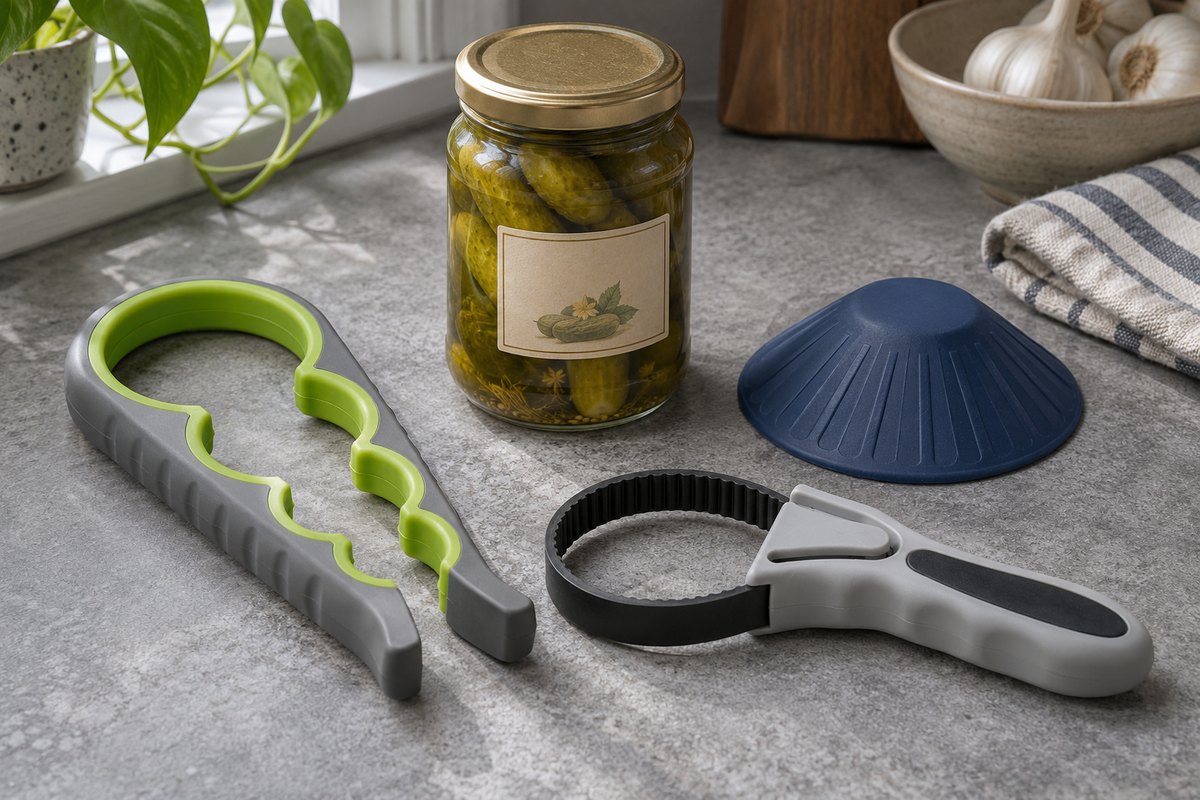
Try three kinds of support before committing
For a gift, ask for a photograph of the two jars usually left unopened. Put the OXO grip and separate pad on the shortlist if the glass is what moves, or check the Otstar grip instructions if a small cap slips between the fingers. If the gift is meant to remove the twist, use the KitchenMUH manual to check both diameters and explain the support sequence before ordering. Store the pieces at the height and location the recipient chooses.

OXO Good Grips jar opener with base pad when the glass moves first: OXO Good Grips Jar Opener With Base Pad
Check that both pieces come in the selected variant. The pad supports the glass at the base and the handle supplies the manual turn.
View on Amazon (opens in a new tab)The OXO model guide explains the separate nonslip pad. This arrangement is worth a look when the cook can turn a handle once the glass is steady. Try placing a closed jar on a flat, dry surface. Ask where the person will put the other hand while turning. A pad helps the jar stay in contact with the counter and does not clamp the glass. If the person cannot use both hands as directed, consider whether another cook can help with that stage or whether a different layout is needed.
Give the pad and opener a home together. If they go away separately, the pad can get buried in a drawer while the user reaches for only the lid tool. Keep them near the working area and see whether the recipient can pick them up without moving another appliance. Check the care directions for both pieces. A gift that fits a wide jar but spends most of its time in a high cupboard may be less practical than a simple accessible setup. Ask the user where they would keep it before reorganizing their kitchen.

Otstar kit for a small cap that slips under the fingers: Otstar Jar Opener And Bottle Opener For Seniors With Arthritis Weak Hands
Use the diagram for the exact kit to match the cap diameter and edge to a lined opening.
View on Amazon (opens in a new tab)See the Otstar review for how to compare the cap and included parts. Try this style when the cook already holds the glass steadily but has trouble placing their fingers around a small lid. Measure across the outside where the grip will sit. A shallow cap may leave too little contact even when its diameter looks right. Check whether the user can fit the ring without trying several openings every time. If your household only opens one difficult lid, a simpler grip may be sufficient. The budget guide gives alternatives to compare.

KitchenMUH for the turning step on a compatible glass jar: KITCHENMUH Electric Jar Opener For Seniors With Arthritis White
Measure the cap and the glass where the two sets of jaws contact them. Check the support and release requirements before buying.
View on Amazon (opens in a new tab)The KitchenMUH review covers both jaw ranges and its AA batteries. A household that uses different sizes of one food should check each container. The cap might fit on both sizes while the wider jar body is outside the documented range. This tool supplies the turn after you position it. You still need to lift the housing off after reset. The instructions call for support with both hands on small or tall jars. If a caregiver usually handles setup or battery changes, read the caregiver comparison before deciding how to share those tasks.
When checking a product in person, remember that the recipient will have to reach the grip with the jar already in place. Hold the unopened jar where they normally work and ask where they want the tool to sit. A tall jar may be easier to approach from a standing position, while a small one on a deep counter can be hard to see. Do the same check with the lid tray off to the side. If a grip is lightweight but blocks the view of the cap, compare a different shape or find a working spot with a clearer view.
Walk through lunch before choosing a permanent setup
Set an unopened jar on the worktop with a saucer for the lid and a clear patch for the tool. Think about the normal working position. Someone seated may see the cap clearly near the front and have trouble reaching a cabinet mount at the back. If you are considering a mount, hold a closed jar at the intended height. Check whether the person can comfortably raise it, turn it and lower it. The mounted and handheld comparison explains how the installation position changes the task.
Open the lid, as directed, only after arranging the places for the glass and the tool. If the opener is for a shared kitchen, ask whether the person would like help with the first seal or with every opening. A helper who can loosen a new lid may be able to leave the jar closed according to the storage directions so the recipient can use it later. If the difficulty returns every time, a tool that can stay near the worktop makes more sense. Avoid changing the whole kitchen for a demonstration. Try the setup during an ordinary lunch, with the plate, spoon and other food already nearby.
Check how you will judge the purchase before the return deadline. Ask which jar the recipient actually opened with it. If they used it once and put it away, find out whether they had trouble retrieving the tool, fitting the cap, doing the turn or lifting the glass. Those answers point to different changes. If the body is too wide for powered jaws, changing the battery routine will not help. If the grip fits the cap and the only issue is finding it in a drawer, a different storage spot can solve the problem without another purchase.
If the jar is too heavy to raise after it has been opened, think about the package size before buying the opener. The same sauce may be sold in a smaller jar or another container. Check its lid before changing what you buy. A smaller container can reduce the carrying job even when the cap still needs the same gripper. If the person mostly scoops from an upright jar, put the serving bowl or plate close enough to reach without carrying the glass. Choose a spot where they can set down the tool first and return to the food without reaching across it.
A motorized opener adds routine maintenance. Check whether someone can change its batteries as directed and whether there is a reachable place to store it. For a manual tool, ask how the gripping surface should be cleaned after a sticky lid and where the tool can dry. If the recipient is comfortable with one routine and would avoid the other, give that preference as much weight as the cap fit. An opener that remains ready at the start of breakfast is more useful than one that requires somebody to unpack it or move a crowded tray first.
Frequently asked questions
What should I buy if the glass spins?
Try base support on a dry worktop and check how you are meant to steady the jar.
Which measurements matter on a powered model?
Check both cap diameter and the body where the outer jaws sit.
When is a manual grip enough?
Try one if you can supply the turn but need better contact on a compatible cap.
How should I test an opener I am giving as a gift?
Use a familiar jar in the recipient’s kitchen and check retrieval, operation and removal separately.
Check the selected package again at checkout, particularly if the seller shows several versions.
Our verdict
Start with a pad if the body rotates, a fitted manual grip if the cap slips, and a powered unit if turning is the obstacle. Confirm the fit for the jars they actually buy and make room for setup, lid removal and cleanup.