As an Amazon Associate we earn from qualifying purchases.
The short answer
Buy an electric jar opener for the person who will use it between meals, not just for the person who will set it up the first day. Choose a model with published limits for both the cap and the glass body. Then check who can position it, start it, take it off and get it free if it stalls. The KITCHENMUH has more detailed instructions than the other powered examples here. A worktop grip and pad can be a better backup if the glass turns but the person can still twist the lid.
Watch what happens with one familiar jar
Ask the person to show you which movement is difficult, using an intact jar they open regularly. They may find it easy to hold the glass but hard to pinch the lid. Or they may have enough grip on the lid, only to find that the glass turns across the counter. A powered opener is primarily a way to change the twist. Before buying it, see whether the person can bring the tool to the cap and line it up without having to hold the jar in the air. Try the motion from the place they usually prepare food rather than from a standing position that is more convenient for you.
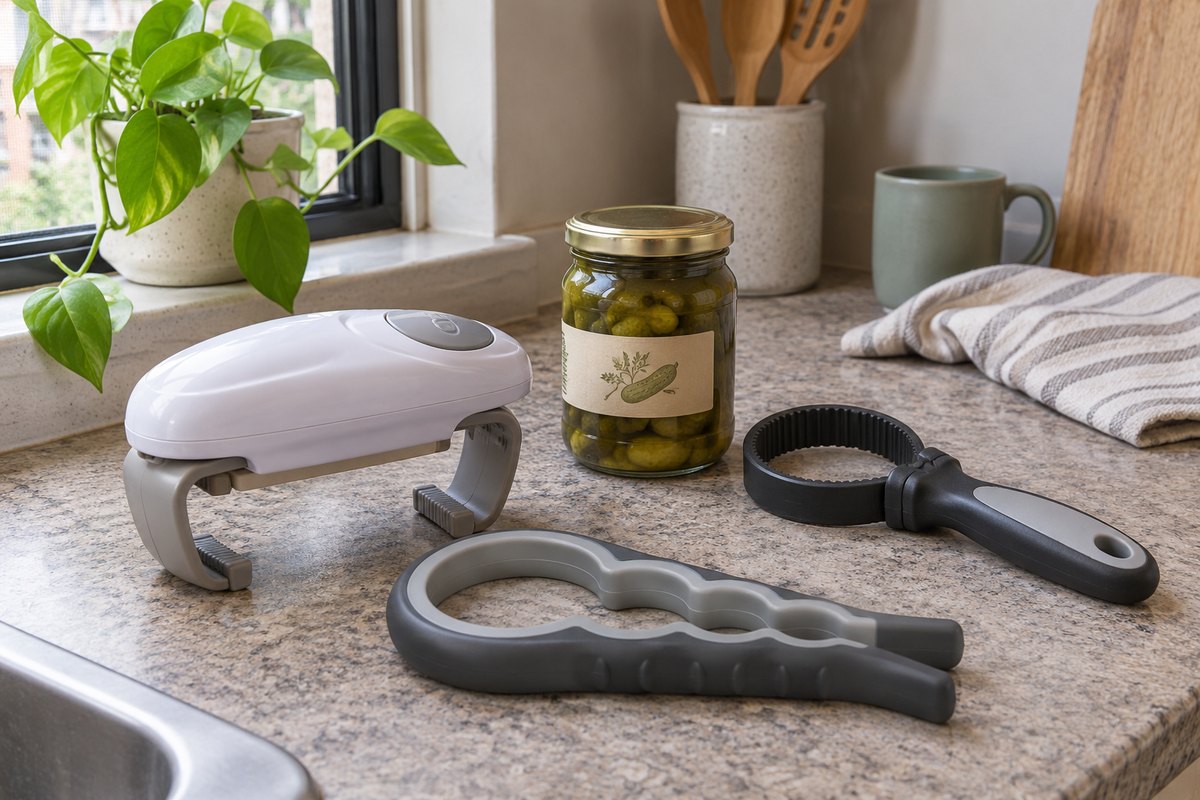
Decide what assistance they want. Some people want to open the jar independently and are happy to ask someone else to change the batteries. Others prefer that a caregiver handle stubborn seals while they prepare everything else. These arrangements call for different priorities. In the first, placement and release need to work for the person alone. In the second, you may put more weight on reliable fit across the jars used for several meals. See our one-handed jar opener guide for what to check if only one hand will be available.
Measure the glass as well as the cap
A jaw-operated tool may grip the lid with one set of jaws and the jar with another. Measure across the cap and across the part of the glass that meets the outer jaws. A tall jar with a wide shoulder can be outside the body range even when its cap is within the lid range. Check a small condiment jar and the wider sauce jar you ordinarily buy. Keep those dimensions with the shopping list. They are more useful than package size or whether the label calls the jar family size.
The KITCHENMUH instructions for the cited model give a cap range of 1.2 to 3.5 inches and a body range of 1 to 3.5 inches. Both figures matter for that tool. If another listing gives a cap range but omits the body range, ask the seller about the exact item before buying it for a wide jar. Compare fixed and handheld alternatives if none of your regular jars match the powered design's published fit.
Leave a short card with the jar names and measured cap and body diameters. List which jars cleared both checks in the KitchenMUH instructions and who will remove the tool if it stops mid-cycle. A jar that falls outside the body range gets its own plan, such as the OXO base pad and handle for a turn the caregiver can already make. This helps a second caregiver avoid guessing from the size of the lid alone.
| Check | Why it matters | How to verify |
|---|---|---|
| Lid and body diameters | Separate jaws need separate fit | Measure the glass and metal cap |
| Starting and releasing | A motor does not line itself up | Read the exact model instructions |
| Backup | Cells or fit can interrupt the task | Try a suitable counter-height option |
Product options and documentation
The comparison starts with a powered tool whose jaws and release procedure are documented, followed by two manual alternatives. The backups ask different things of the person opening the jar. The lined grip gives that person a wider contact surface at the lid, while the OXO kit addresses a jar that slips across the counter. Neither option removes the turning action, so agree who will do it.

Powered option with documented fit: KITCHENMUH Electric Jar Opener For Seniors With Arthritis White
The manual identifies separate inner and outer jaws and describes a press-and-hold sequence. Its battery compartment takes two AA cells as specified in the booklet. Start with this option if its stated dimensions cover the jars you use and the control sequence is practical for the person operating it.
View on Amazon (opens in a new tab)
Otstar lined grip for a caregiver opening a compatible lid: Otstar Jar Opener And Bottle Opener For Seniors With Arthritis Weak Hands
A manual backup for the person doing the turning. The <a href="https://manuals.plus/asin/B07QVWJ6VN">instructions archived for B07QVWJ6VN</a> give the lined openings a 1–3 inch range. Use it only if the person opening the jar can keep the base steady while turning. For a wide lid, check the separate seal-loosening feature and its directions.
View on Amazon (opens in a new tab)
Worktop backup if the glass slips: OXO Good Grips Jar Opener With Base Pad
OXO puts a separate nonslip pad beneath the jar and a handled grip over the lid. This can help if the person can turn the handle but struggles to keep the jar from spinning. It leaves the turning motion to the user. See <a href="/oxo-good-grips-jar-opener-with-base-pad-review-b002dwa6km-worth-it-in-/">the base-pad review</a> for the setup.
View on Amazon (opens in a new tab)- KITCHENMUH B07P1SKJV4 instructions and fit limits.
- Otstar B07QVWJ6VN instructions for the lined grip and seal hook.
- OXO Jar Opener with Base Pad specifications.
Agree on what happens if the jaws stop
Keep the instructions with the opener, including the page for releasing it. Check the exact release procedure when setting it up, before a jar is ever caught between the jaws. If it stalls, leave the jar upright and keep fingers away from the moving parts. Use the maker's instructions and ask for assistance if the jar cannot be released in control. Do not substitute a release motion from another brand just because the housing looks similar.
Put spare cells of the specified type in one place and show everyone who helps where they are stored. A battery compartment can have a different grip requirement than the opener's start button. For someone who does not want to change batteries, make that an explicit part of the handoff. If the tool is used only on weekends, remember that opening the drawer and finding the instructions is part of using it. Keep the device separate from loose utensils so it can be retrieved without reaching past sharp objects.
Make the first session useful
Set the jar down where the operator can see the lid and has room to put the device aside after release. Use a jar that falls comfortably inside both ranges. Point out where the instructions describe the start and release controls. Let the person try the setup if they want to, and ask which movement still feels awkward. A successful opening done entirely by a caregiver does not establish that the next opening will be manageable without help. Read our worktop setup guide if most of the difficulty comes from positioning or stabilizing the jar.
For families sharing the kitchen, keep the nonslip pad and the lid grip together if you choose the manual backup. If you are buying mainly for occasional jam jars and want to spend less, see the under-$15 guide. For a wider look at what different tools change, compare the jar opener roundup. Twist lids and regular steel tins need different mechanisms. Our can and jar opener comparison explains why the two tasks should be evaluated separately.
Before you leave the tool in the kitchen, note which two or three jars you checked and where the fit instructions are. That gives another caregiver something concrete to work from. Write down the opener model, the specified battery type and where the box or booklet lives. If the usual brand of sauce changes, compare the new jar before using the same setup. A replacement jar can have the same capacity and a different lid or shoulder. Those differences are easier to check at the grocery stage than when a meal is under way.
A joint shopping trip can also uncover a simpler answer. If the person wants to open a single condiment jar without help, choose around that size rather than buying for every possible jar. If the item they find difficult is sold in a smaller jar that they can hold or in a different package they prefer, compare that option before paying for a new appliance. This is particularly useful when the powered opener would take up the only clear bit of worktop. The person using it should have the final say about which arrangement is convenient.
After the first week, ask which jars the opener actually helped with and where it was left between uses. If it was difficult to retrieve or too awkward to center on a cap, change the setup before buying another powered model. Move it to an easier shelf or clear the worktop first. If the jaws still do not fit the jars you use, keep those measurements when comparing alternatives. A documented fit matters more than a claim about power.
Frequently asked questions
Do I measure the lid or the jar?
Measure both. On models with inner and outer jaws, the lid can fit while the body is too wide.
Does the KITCHENMUH work with every jar?
The cited directions list a 1.2–3.5 inch lid diameter and 1–3.5 inch body diameter. Check the exact model and measure your own jars.
Can the caregiver change batteries separately?
Yes. Agree where the specified cells and instructions will be kept so an infrequent battery change does not interrupt regular use.
What if the opener is stuck on the jar?
Leave the jar upright, keep away from moving jaws and follow the exact model release instructions. Get help if you cannot keep the jar stable.
Is a manual backup useful?
It is useful if the operator can turn a handle and needs help stabilizing the glass. If the twist is what makes opening difficult, choose a backup that changes that step.
Our verdict
Start with a powered model whose instructions show how both jaws fit your usual jar and what to do if they do not release. The KITCHENMUH is easier to evaluate because its instructions give two dimensions and describe the button sequence. Choose an alternative only if the exact variant supplies the information you need. Keep a simple worktop backup if a pad and handled grip are already comfortable for the person who will use them.