As an Amazon Associate we earn from qualifying purchases.
Measure the lid and the glass before you order
Choose the KitchenMUH electric jar opener when you want a motor to supply the twist on a glass screw-top jar. The inner jaws act on the lid and the outer jaws grip the jar body. The instructions associated with B07P1SKJV4 give a supported lid diameter of 1.2 to 3.5 inches and a body diameter of 1 to 3.5 inches. A familiar cap can fit while the body beneath it is too broad. Check both dimensions on the actual jar and read the exclusions before buying for a particular ingredient.

KitchenMUH electric screw-lid opener: KITCHENMUH Electric Jar Opener For Seniors With Arthritis White
Uses two AA batteries. Check the exact model and look for separate lid and body limits in its booklet.
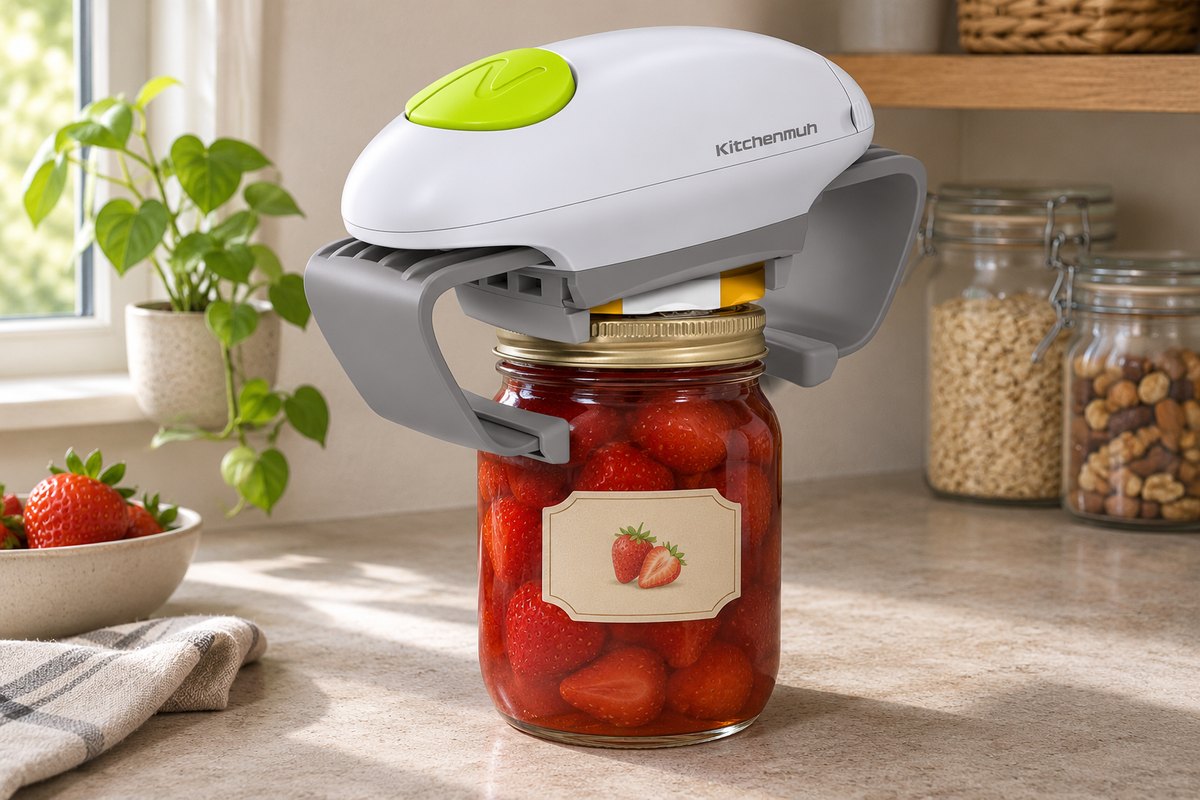
This review uses the archived instruction booklet for the listed ASIN. We did not measure torque, cycle time or performance on specific grocery brands. The catalog and retailer may describe different colors, so compare the unit you receive with the booklet rather than applying instructions from a photo. The tool addresses opening compatible glass screw-top jars. If your usual problem is closing the lid securely after breakfast, that operation is still yours to plan.
Use both measurements and look at the shape
Measure straight across the cap where the inner jaws would contact it. Then check the body where the outer jaws will land. A jar with a narrow neck and a broad shoulder can be within the limit at one height and outside it immediately below. Look at the placement diagram to understand where the two sets of jaws sit. If the sizes are near the limit or you are unsure where to measure, write down the dimensions and show the supplier a side view of the unopened jar before you buy.
Use the exact closure type as a second filter. The booklet covers regular and vacuum-style glass jars with screw tops for household use. It excludes certain shapes and materials, including irregular bodies where the jaws would grip. A flexible plastic bottle, pull-tab tin or rectangular jar can require a different tool even when you can measure a width in the published range. See the can and jar tool comparison if you are buying for more than one kind of closure.
Keep notes for the containers you buy repeatedly. Store those notes with the manual so they are easy to find. A sandwich pickle jar and a larger jar from the same brand may share a cap while the wider body takes the larger jar out of range. If someone else shops for you, give them the package size and both measurements. Check again when the store changes brands or the supplier changes the shape. A fit statement based on one size of jar should stay attached to that size rather than to the name of the food. This also makes it easier to pick a manual backup if one container lies outside the electric tool's limits.
Follow the sequence through reset
The opener takes two AA batteries. Follow the polarity in the compartment and check the instructions for the cells allowed. Put the jar on a dry, level surface and center the machine as the diagram shows. The control starts the jaws closing. The opener turns the lid and the jaws return at the end of the normal cycle. Wait for that reset to finish before lifting the housing away. The loosened lid still has to come off separately. Set out a place for both pieces before you start.
The manual says to use both hands to support small or tall jars during opening. Keep that requirement in mind if you are selecting the opener for a cook who uses only one hand. Ask for help when the exact directions require more support than you can provide. See the one-handed jar opener comparison for the difference between powered turning and support throughout setup and release. Do not pull a stuck device off a glass jar. Use the instructions for stopping and releasing the opener if it fails to reset as expected.
If the grips slide, check the manual's troubleshooting steps. Wipe the lid, body and contact surfaces dry as directed. A drop of water or sauce on the side of the jar can be hard to see. Look for a suitable position on the counter rather than increasing the pressure on a jar that has already moved. The weak-grip opening guide discusses how to tell whether the glass, lid or tool is slipping.
Check the rest of the meal
A powered turn helps only if the cook can get the tool onto the jar and take it away. Try arranging a closed jar in the place where it will be opened, with a clear patch beside it for the housing and another for the lid. A crowded breakfast counter can leave room for the jar and none for the machine when it comes off. Give the opener a storage space where someone can pick it up without reaching around other utensils. The battery compartment itself may ask for a thumb-and-finger grip, so agree who will change the cells if that movement is difficult.
Think about the full jar after the lid loosens. If you need to pour sauce, open it near the receiving bowl or pan while leaving a clear path to set the machine down first. If you normally scoop a small amount, put the spoon within reach so the jar can stay upright. The caregiver guide to powered jar openers covers how one person can help with setup, lifting or battery changes while the other handles the parts of the recipe they prefer.
Two manual layouts worth comparing

OXO Good Grips jar opener with base pad: OXO Good Grips Jar Opener With Base Pad
A manual option when you can turn a handle and want better contact below the glass.
View on Amazon (opens in a new tab)The OXO base-pad guide explains why the jar's support can make as much difference as the lid grip. A pad under the glass can help if the jar rotates while the cap is still. You still provide the turn. A cook who can easily move the handle may prefer this to finding a home for a larger machine and its batteries.
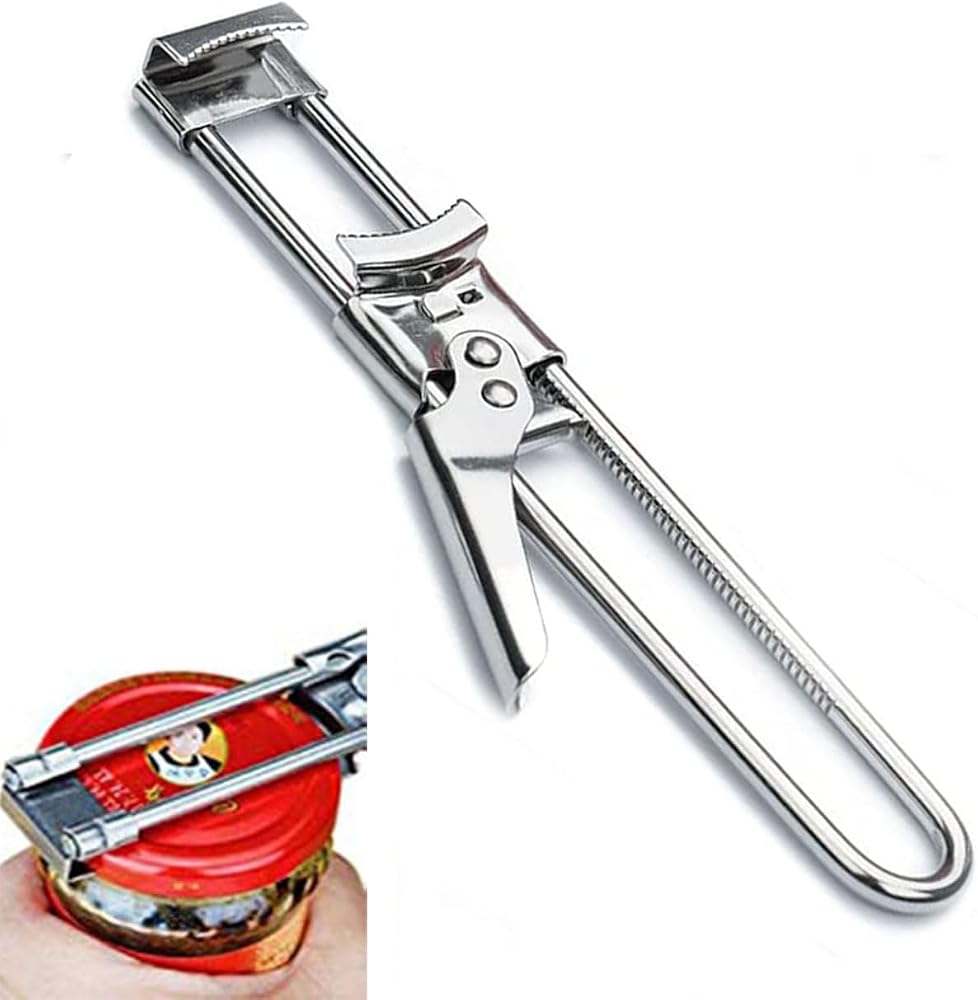
Master Adjustable for a manual lid grip: Master Jar And Bottle Opener Adjustable Multifunctional Stainless Steel Can Opener Silver
Verify the jaw span on the specific lid and plan to steady the glass separately.
View on Amazon (opens in a new tab)The Master review covers its adjustable head. Compare this when the cap is hard to pinch but the jar body is easy to hold. Ask the retailer about supported dimensions if they are missing. If your struggle is with the turning force rather than lid contact, check whether the powered model fits the jar before assuming a manual handle will solve it.
If you are buying the opener for someone else, ask them to choose one jar they already open often. Compare both measurements together. Put that unopened jar beside the bowl or plate normally used with its contents. See where the person would put the machine after it stops. If they would then need help carrying the jar, plan that step separately. A tool can be useful when a caregiver takes care of battery changes and the user handles their usual jars, provided the model instructions allow the necessary support.
A mounted grip is another option if you can lift a full jar and turn it at the installed height. Try that reach with a closed jar before making holes under a cabinet. See the comparison of cabinet-mounted and handheld tools for the implications of moving the jar instead of bringing the tool down to the counter.
Frequently asked questions
Will it fit a three-inch lid on a four-inch jar?
The documented body limit is 3.5 inches, so that glass would exceed it.
Does it use AA batteries?
The booklet specifies two AA cells. Check the retailer for what the package includes.
When can I remove the machine?
Wait for the jaws to reset after the cut and follow the model’s removal instructions.
Does it work with one hand on every jar?
The booklet calls for both hands to support small or tall jars.
The verdict
Choose KitchenMUH for a supported screw-top glass jar that fits both jaw ranges, when you can place the tool and lift it off after reset. Pick a different setup if the glass body is outside the limit or the support requirements call for help you will not have.