As an Amazon Associate we earn from qualifying purchases.
The short answer
You need both tools only if you regularly struggle with two different closures. A typical electric can opener cuts a steel tin at or near its rolled rim. A jar opener grips and turns a separate screw cap on glass. A pull-tab aid is a third design. It gives you leverage on the ring without adding a cutting wheel. Look at the packages you use on a regular shopping trip before choosing which tool earns a spot in the kitchen.
Identify the closure before you shop
Take an unopened can of beans, a jar of sauce and an easy-open tin if you have them. On an ordinary steel can, the lid is joined to the body at a raised seam. A cutter needs to sit in the position intended for that seam. On a screw-top glass jar, the cap comes away by turning it relative to the glass. A handle or motor can help do that without cutting either part. A pull-tab lid has a ring and a scored path. The ring is the part a dedicated helper grips. These differences matter more than the words opener or multifunction on the box.
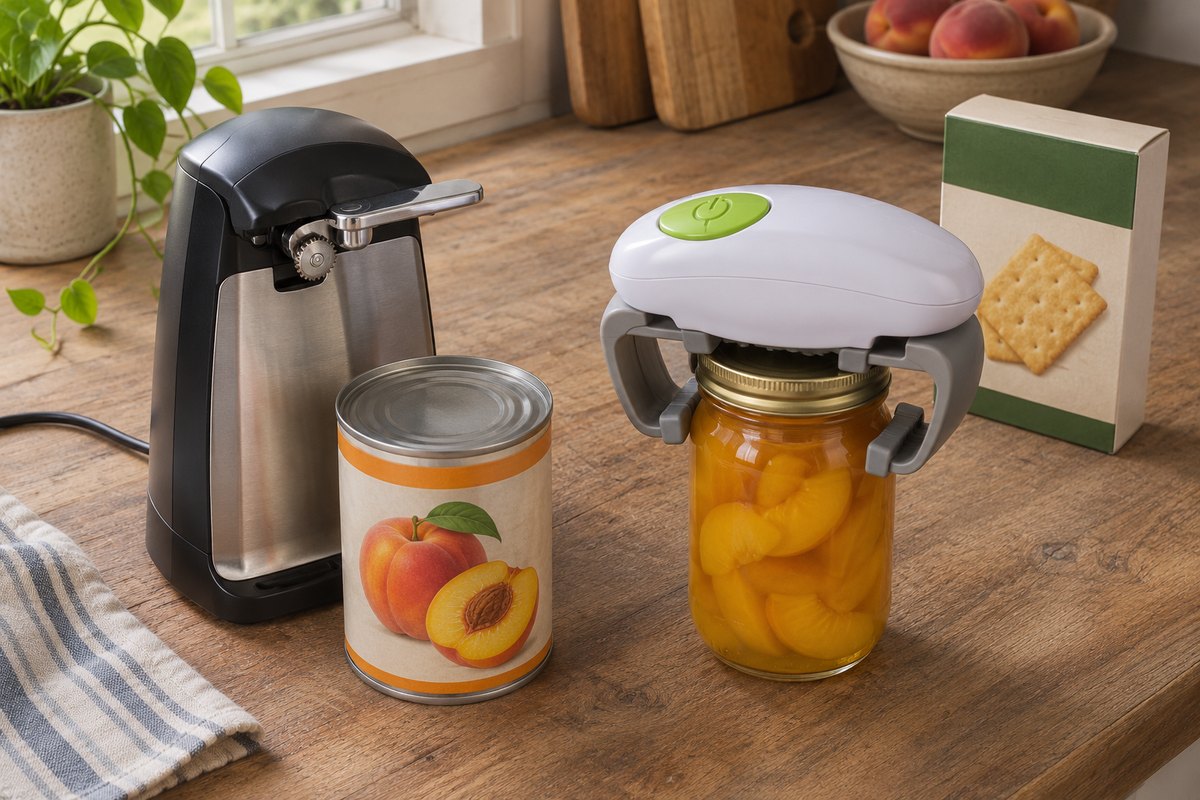
A small can and a small jar can look similar in a pantry photo. They may both have a circular metal top, but it is the edge of the top that tells you which mechanism to use. If every regular tin you buy already has a ring, consider whether you need an easier way to lift that ring. If your favorite tin has a plain lid, keep a compatible cutter available. For a broader list of the checks to make before buying, see our five-step shopping checklist.
| Closure | What the tool does | Typical example |
|---|---|---|
| Plain rolled rim | Cuts at the metal rim or lid | Plain tin of beans |
| Threaded cap | Grips and turns the lid | Glass jar of pasta sauce |
| Pull tab | Lifts the existing ring | Easy-open tin |
Three products that show the difference
We use the product pages to compare what each design is intended to do. The examples are not ranked by grip force or speed. Follow instructions for the exact version, and make sure the container is compatible before trying to open it. A feature for one closure does not make the rest of the package compatible.
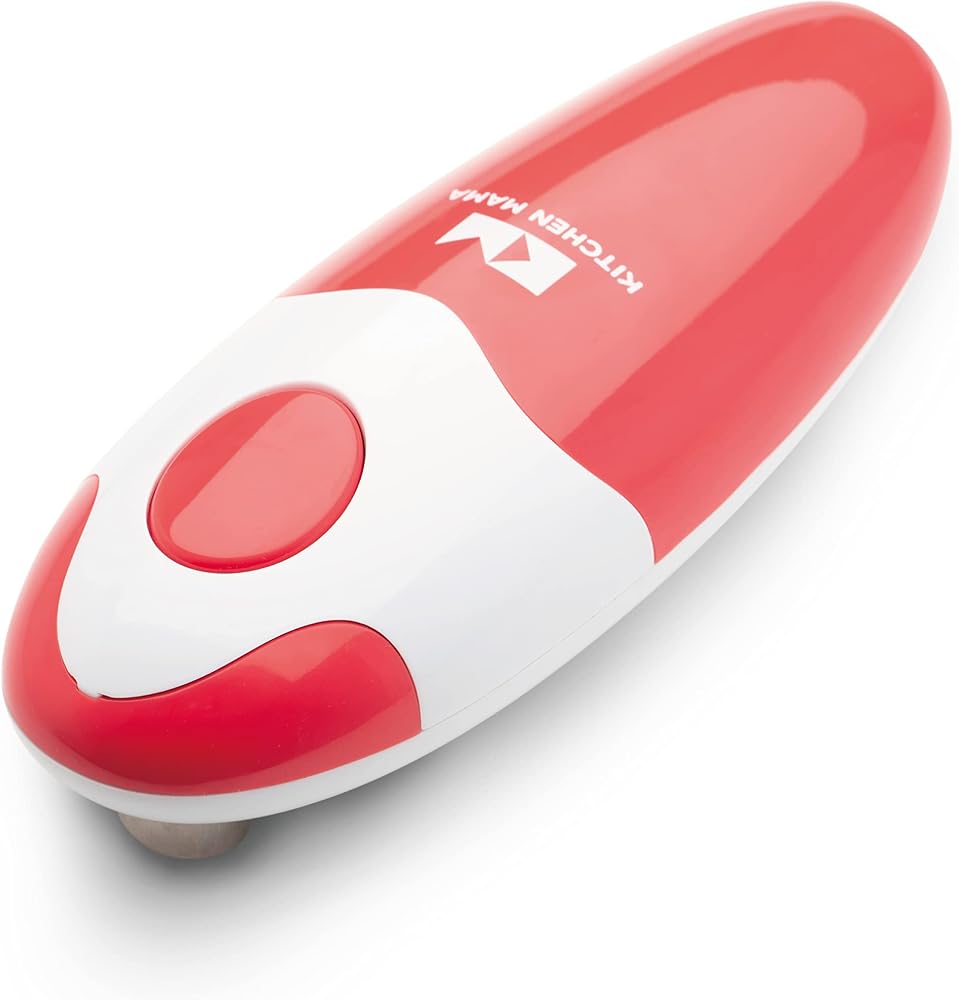
For plain metal tins: Kitchen Mama Auto: Kitchen Mama Auto Electric Can Opener Battery Operated Red
The original handheld Auto uses four AA alkaline batteries and a cutting mechanism that travels around the side of the can. Its instructions call for a press to start and a second press to stop. It is a cutter for compatible metal rims. Use a lid grip for a glass jar.
View on Amazon (opens in a new tab)
For twist lids: OXO grip and base pad: OXO Good Grips Jar Opener With Base Pad
The pad goes under the glass jar, while the handled opener grips its lid. OXO describes using it to loosen a screw lid by turning it. It does not provide the mechanism used to cut a sealed steel tin. See the <a href="/oxo-good-grips-jar-opener-with-base-pad-review-b002dwa6km-worth-it-in-/">OXO base-pad review</a> for fit and positioning considerations.
View on Amazon (opens in a new tab)
For pull tabs: Jokari lever: Jokari Ring Pull Can Opener For Soda And Food Cans Arthritis Aid Black
The maker describes a hooked, rocking tool for lifting ring-pull tops. It needs an intact tab to engage. Consider it if reaching under the ring is the difficult part and you can still steady the tin. Keep a proper cutter for plain lids.
View on Amazon (opens in a new tab)- Kitchen Mama Auto cutter and battery details.
- OXO jar grip and pad directions.
- Jokari ring-pull tool description.
Decide which problem happens most often
A person who buys canned tomatoes and beans with plain lids may use the can opener several times a week while opening a sauce jar only occasionally. In that kitchen, put the money into a cutter that seats securely on the tins you buy. If the repeated turn of a manual crank is the difficult part, compare a handheld electric or fixed countertop design. Our electric versus manual comparison helps distinguish the motions those tools change. If the style of the cut bothers you, see the comparison of traditional and side-cut designs.
Someone who mostly cooks from jars may need only a lid grip. Notice what happens when you try to open one. If the jar turns with the lid, a dry nonslip pad can be the simplest thing to try. If the glass stays put and your hand slips on the lid, look for a grip that fits the cap and leaves you room to turn. You can also compare a powered jar opener if rotation remains difficult after you steady the base. Read the budget jar opener guide if you want to start with an inexpensive option.
When a grocery order alternates between tab and plain tins, keep both tasks on the list. A lever for a ring is still useful even if you keep a cutter for other packaging. Check the cutter's instructions before assuming it works on a pull-tab top. The ring and the shape of the lid can affect how an opener sits. If you change brands regularly, look at the can itself as you unpack, especially when taking meals somewhere you will not have your usual kitchen tools.
When two small tools make sense
A combined tool can save space if you can identify a working part for each closure you open. Look at the instructions for each feature in the kit. A metal notch made to pry a crown cap is different from a rubber ring that turns a screw cap. A hook meant for a tab is different from a cutting wheel. Our bottle-opening feature guide explains how to evaluate the extras. Buy around the two functions you actually need, and check that adding the second feature has not made the primary control awkward to reach.
In a small kitchen, two compact tools can be easier to put away than a single large appliance. In a kitchen where several people cook, you may prefer a fixed spot for a regular steel-can cutter and a grip in the drawer for jars. There is no need to buy both at once. Start by fixing the problem that delays meals most often. If the next meal reveals a different closure that you still cannot open comfortably, choose the second mechanism with that exact container in hand.
Think about a backup for the tool you use most. If an electric cutter relies on batteries, a manual cutter may be useful provided you can operate it comfortably. If neither is easy to work with, an alternate recipe using a pouch or a container you can already open may be more practical. Avoid treating another opener as a backup if it addresses the wrong closure. A jar gripper in the utensils drawer cannot replace a missing cutting wheel when you are about to cook with a plain-rim tin.
Before buying, write down the packages you have trouble with and the point where you stop. For a jar, that might be when your fingers slip across the cap. For a tin, it might be when the cutting head will not stay on the rim. For a pull tab, it might be when you cannot get a finger under the ring. That short list gives you something specific to check in the instructions and makes it easier to ignore a long list of unrelated features.
Test the plan against one meal instead of buying around the whole pantry. For a quick pasta dinner, for instance, you might have a sauce jar and a plain tin of tomatoes. Put each container next to the tool you would use, then decide where the lid will go and where the pot will sit. If you can manage the sauce jar with a pad you already own, the only purchase you need for that meal may be a cutter. If both packages still interrupt the job, you have a concrete reason to keep two tools.
Pay attention to packaging changes when stocking up. A multipack that looks like the one you buy normally may use a different lid. Check the packaging before committing to a case of cans or taking it to a rental kitchen. Put the opener beside the items that depend on it while you pack. With jars, make sure the cap fits the grip and the glass can be held steady. With plain tins, make sure you have a tool made to cut the rim.
Frequently asked questions
Can a regular electric can opener open a glass jar?
A normal can cutter is designed for compatible metal rims. Use a tool that grips and turns the screw lid on a glass jar.
Do I need a cutter for a pull-tab tin?
If you can open the intact tab as directed, you may not need one for that tin. A tab aid helps lift the ring. Verify cutter compatibility separately.
Is a bottle cap lifter also a jar opener?
A pry-off cap and a screw lid use different motions. Check which part of the tool is intended for the closure you use.
What can I try if the jar and lid turn together?
Set the intact jar on a dry nonslip pad on a level worktop. If the glass stays in place but the cap still slips, compare a lid grip.
What should I buy first if I use both cans and jars?
Address the package you use most often or the one that interrupts cooking most often. Make sure the tool fits that actual container.
Our verdict
The right number of tools comes from your pantry. Keep a cutter for plain tins, a grip for twist lids and a tab lever only if you regularly need help with rings. When two closures cause problems, look for a dedicated mechanism for each. If one closure is responsible for nearly all the trouble, start there.