As an Amazon Associate we earn from qualifying purchases.
Buy for the cap you actually open
A can opener with a bottle-cap lifter is worth considering if you regularly open both plain-rim food tins and glass bottles with pry-off caps. If you mostly buy drinks with threaded plastic caps, look for a cap gripper that fits them. Check your bottles before paying for the extra feature. A cutting wheel runs around a metal tin. A cap lifter works under a crimped bottle cap. A threaded lid calls for a tool that can hold the outside of the cap while you turn. Those are three different jobs even when a seller calls all of them opening.
Take a can from the cupboard and a bottle from the fridge. Look at where the tool would contact each one. A bottle that resembles the one in a store photo can have a different cap. Read the package directions before trying a lifter, particularly if it is a twist-off closure. The guide to common closures explains why a metal can, bottle and screw-top glass jar need different mechanisms.
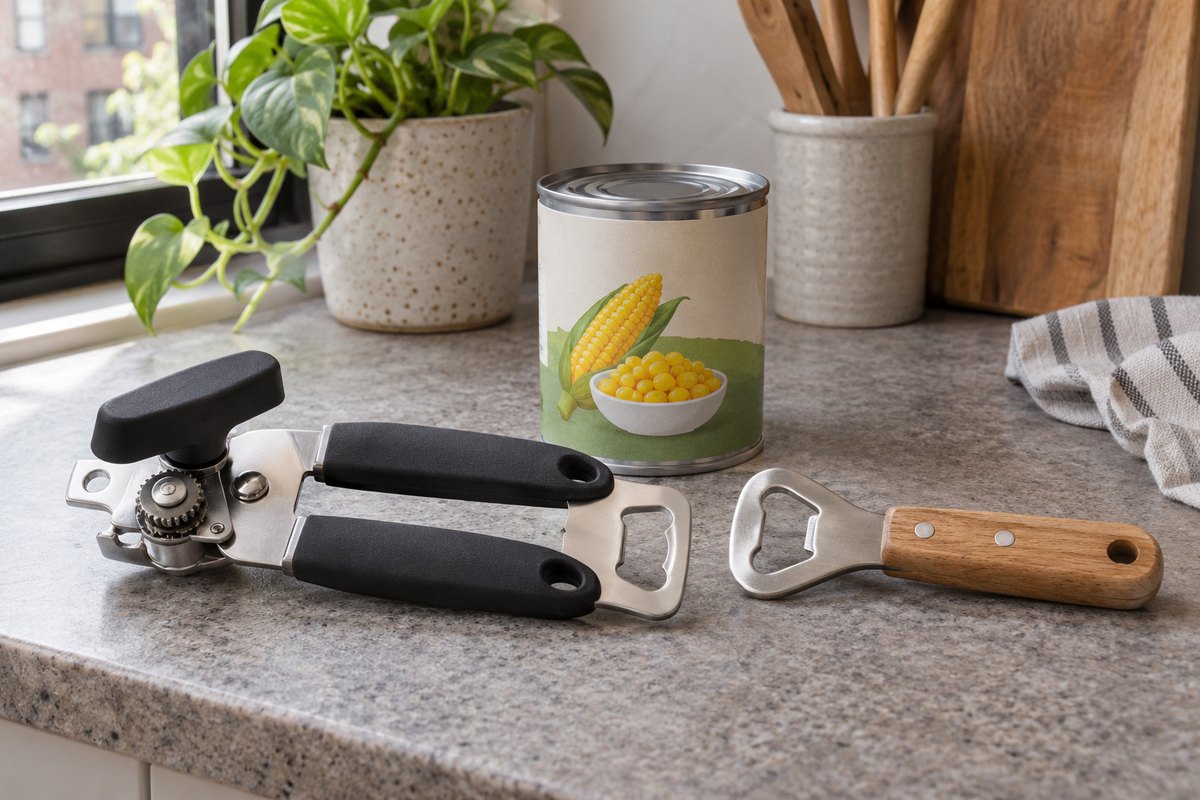
Decide whether the two functions belong together
A combined tool can free up space in a rental kitchen or camper where two utensils would otherwise take up the same small drawer. Count that saving only if you would leave one of those utensils behind. On a weekend trip where the canned food is all ring-pull and the drinks have pry-off caps, the can cutter may stay unused. If you cook with plain tins and also open bottles at the same table, a combined tool has a better chance of replacing something. The camping and RV guide covers other considerations for a kit you move often.
At home, compare where you do both jobs. A cook may open tinned tomatoes in one room and bottled drinks outside. If the main opener usually stays beside the stove, carrying a cutting tool back and forth may be less convenient than keeping a separate cap lifter next to the drinks. If the two jobs happen within reach of one drawer, check how the combination fits there and whether the cap hook is easy to find. The right storage location matters more than saving a slot you rarely use.
If the combination appears more expensive, compare it with a cutter that has the grip and cut you would buy anyway. Count the cap lifter you already own as zero for this decision. A combination may still be worth choosing if the prices are close and the tool is comfortable. If you pay substantially more, make sure it replaces a separate tool or eliminates a small inconvenience you actually encounter. See the budget can opener comparison when the cutter matters more than the extras.
Frequency matters more than an awkward cap you remember from one party. Look at the bottles from the last few shopping trips. If you serve drinks from crown-capped bottles only a few times a year, the lifter on a corkscrew may be enough. If the same drawer already holds both tools and their jobs happen every week, compare the comfort of a combined grip before buying. Notice how different people use the tools. One cook may hold a two-handle crank comfortably and another may already prefer a fixed electric cutter. That difference can determine whether the shared kitchen needs a separate cap key anyway.
Three products for different packages
A crimper or twist cap calls for a different contact point from a crown cap. The OXO Soft-Handled page identifies a built-in bottle opener, and the black KitchenAid KE199OHOBA retailer record documents a cap lifter in the head. The red Epic One MO5600-R page shows multiple closure functions on a separate pocket tool. If your regular can has a plain rim, keep a cutter on the list. If you only need to lift soda tabs, judge the reach of the tab feature and leave the cutter out of that purchasing decision.

OXO Soft-Handled for plain tins and compatible pry-off caps: OXO Good Grips Manual Can Opener And Bottle Opener Soft Easy-Grip Handle
A conventional manual cutter with padded handles and a built-in cap lifter. You hold the handles together while turning the knob.
View on Amazon (opens in a new tab)The OXO Soft-Handled review describes its two-hand crank and wash care. Consider it if you prefer a padded grip and can comfortably hold the handles closed. Check how the cap lifter sits in relation to the cutter when the tool is open and closed. The oversized knob is for cranking the cutter. It tells you little about how easily you can position the cap hook.

KitchenAid Classic Multifunction for another conventional crank with a cap lifter: KitchenAid Classic Multifunction Can Opener And Bottle Opener Black
Compare the black variant's grip and cap-lifter position. Check the exact model code and care directions.
View on Amazon (opens in a new tab)The KitchenAid Classic review covers its steel wheel and two-handle grip. Try both handles in their working position if you are choosing between this and the OXO. The can cutter does most of the work in a kitchen where you open tins more often than bottles. If one tool is easier for you to hold around a short tuna tin, give that experience more weight than the finish or the shape of the cap hook. A familiar knob can be useful even when the optional feature is rarely needed.

Kitchen Mama Epic One when small screw caps and tabs are the issue: Kitchen Mama Epic One Multifunction Opener Red
Consider this manual accessory for compatible caps and rings. Use a separate cutter for a plain metal food tin.
View on Amazon (opens in a new tab)The Epic One review covers the published plastic cap range. This option is for someone who searches for a bottle opener and realizes that the troublesome bottles have threaded caps. Measure those caps before ordering and check what each part is meant to do. If you regularly open plain tins too, count a separate cutter in the cost. These recommendations compare documented mechanisms. We did not measure cutting force or test the tools on particular brands of drinks.
For a real comparison, jot down the two prices for the models you would otherwise buy. Add delivery when it differs and note which pieces are already in your kitchen. If the combined model costs roughly the same and works well for the main task, the cap lifter can be a useful extra. If you would have to replace a cutter that works just to gain a hook, the relevant comparison is the price of that whole new tool against a simple lifter. Use the price for the selected variant, because a photo showing multiple colors or a bundle may not match the offer in the cart.
Inspect the extra feature in its working position
Read the manufacturer's cap-lifting diagram. Look at where the bottle will stand and how the tool reaches its cap. If the can opener's handles bump the neck before the lifter seats correctly, a small dedicated tool may suit the job better. Try the intended movement only on a compatible bottle supported as directed. Stop if the hook slips. Keep the cutter away from your hand while swapping between the two functions. If someone else uses the utensil, show them the lifter so they do not try to hook the bottle cap with the wheel.
Check cleanup too. The can cutter may have oily residue around the head when the bottle lifter is called into service. Clean it as its directions specify and keep food residue away from the drinking area and clean utensils. Give it space to dry before returning it to the drawer. The maintenance guide explains the places to check around a cutting wheel. If the two jobs rarely happen at the same worktop, using separate tools may be more convenient even when each takes a little storage space.
If you are setting up a rental kitchen, put the cutter somewhere a visitor can find it and keep the directions nearby. A combined utensil is easier to share when people can identify the cap lifter without picking it up by the wheel. Leave room to lift the handles out of the drawer without catching the hook on another utensil. In a household that uses a manual cutter as a backup, check that the person opening the cans knows where it is and can manage the squeeze and turn before choosing one for the bottle feature.
Frequently asked questions
What does the hook on a conventional can opener do?
The examples here use it to lift compatible pry-off bottle caps. Check the exact diagram.
Can a bottle-cap lifter turn a screw cap?
A threaded cap needs a tool that grips it while you turn.
Will a pull-tab aid cut a plain can?
It uses an existing ring. A plain lid requires a cutter.
When do separate tools make sense?
When the combined tool does not fit your grip, or when each job usually happens in a different place.
Choose the version that matches your usual closures and check the package instructions for both jobs.
The verdict
Buy an integrated lifter when the can cutter already fits your grip and you open compatible pry-off bottles often. Choose a separate grip if your bottles use screw caps. Keep a dedicated cutter for plain metal lids.