As an Amazon Associate we earn from qualifying purchases.
Take three packages out of the cupboard
If you want kitchen tools that require less grip, start with the packages you open most. Put a screw-lid jar, a plain food tin and a pull-tab can on the counter. Each is a different job. For a jar that slips as it turns, look at a base pad and a lid gripper. For a metal can that takes repeated cranking, compare a handheld powered cutter. For a tab you can barely get a finger beneath, try a compatible ring lifter. You may need only one of these tools. The right purchase is the one that changes the movement you struggle with at the start of an ordinary meal.
Use the last meal you prepared as a reference. Which package slowed you down? What moved when you tried to open it? If the whole jar rotated, extra leverage at the lid could just make the jar harder to keep still. If the tab is already raised but the rest of the lid is difficult to pull back, a tool that only starts the lift may solve part of the problem. A motor can replace turning a crank while leaving you to remove the lid. Our guide to can and jar closures explains what each mechanism acts on.
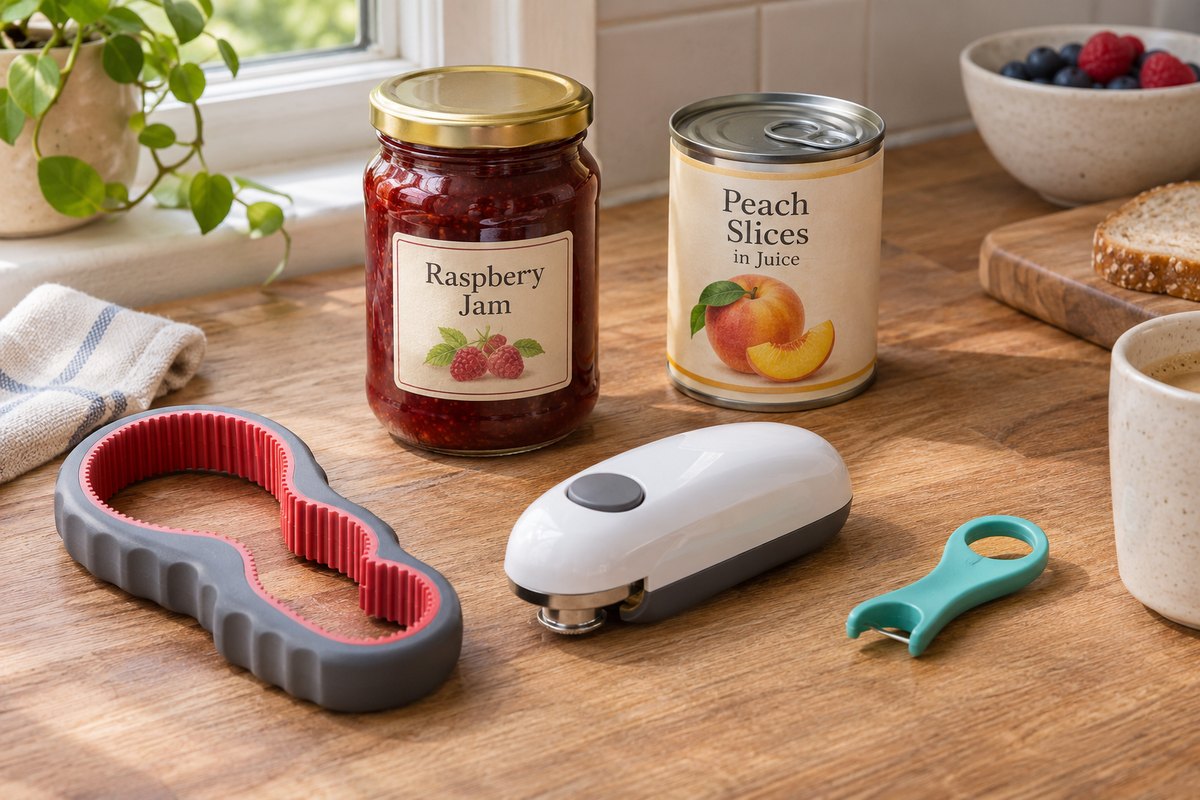
A jar tool should address either the lid or the base

OXO Good Grips jar opener with base pad: OXO Good Grips Jar Opener With Base Pad
A manual gripper paired with a separate nonslip pad. Compare both pieces with the jar you most often open.
View on Amazon (opens in a new tab)The pad lies under the glass. The gripper goes around the lid, and the user provides the turn. This combination makes sense if the jar rotates against the worktop but you can move the handle once it stays put. Measure the lid rather than the volume of the jar. A small jar can have a broad lid, and a large jar can have the same cap as a smaller version of the same food. The weak-grip jar tutorial explains how to separate a slippery body from a cap your hand cannot hold.
Think about the first opening and the second. A new jar may call for more force at the seal, while an already opened jar may need only a better grip. If you buy the same jar each week, ask whether the lid is a problem every time or mostly on a fresh jar. That answer changes how much setup you are likely to tolerate. Someone who needs help once a week may prefer a simple tool near the prep area. Someone who struggles to move every lid may want to compare a powered option with a documented fit. The KitchenMUH review shows why a powered gripper can have separate limits for the glass and the lid.
Before buying a tool for several containers, measure just the two lids that cause problems most often. If the closest opening on the tool catches only one side, leave it out of the shortlist. A rubber lining is useful when it rests securely on the part of the cap you need it to turn. A shallow or strongly tapered cap gives it a different place to sit. If you plan to steady the glass with your hand, try that position while the lid is closed and the jar is dry. Give the handle room to move without knocking a glass or dish beside it.
A cutter should remove the movement you find tiring
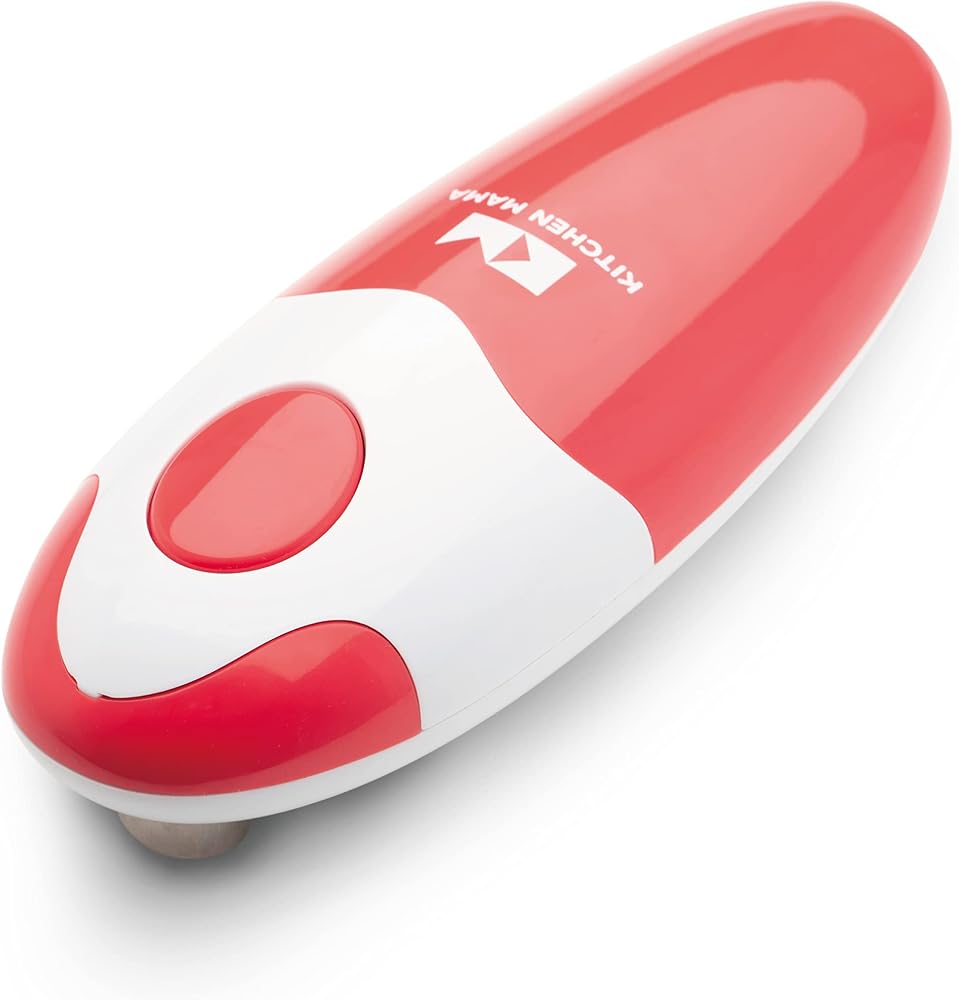
Original Kitchen Mama Auto for plain-rim tins: Kitchen Mama Auto Electric Can Opener Battery Operated Red
A handheld electric cutter for compatible tins. It uses four AA alkaline batteries and requires a second press to stop.
View on Amazon (opens in a new tab)The original Auto review covers its placement and controls. This example can take away the repeated turn while the tin stays on the counter. You still need to position the housing and put it somewhere after it comes off. Check whether you can reach the stop button again when the tool has moved around the can. If that second reach is the part you want to remove, the automatic-stop comparison covers other options. A fixed-head machine can have a visible lever and a repeatable location, with the trade-off that you bring the can to the head.
To check the worktop, set out the actual can and a bowl you would use for its contents. Look for a clear spot to put down the cutter, the lid and the opened can. If you usually open short fish tins, consider whether the housing would block your view of the rim. If you usually open tall soup cans, think about how you will support them afterward. A tool can make the cut easier without changing how much the open can weighs or how you pour it. For a detailed sequence, see how to set up a tin when gripping is difficult.
A tab lifter is for a tab you can still see and reach
The Jokari product page illustrates a rocking hook that reaches through an intact pull ring. The maker’s page offers multipacks, while the linked retail card should be checked for its selected pack. This is a different purchase from the Kitchen Mama Auto, whose cutter engages a compatible rim, or the OXO base-pad jar opener, whose handle turns a screw lid. Set one example of each sealed package on the counter before deciding which tool you need most.

Dedicated pull-tab aid for an intact compatible ring: Jokari Ring Pull Can Opener For Soda And Food Cans Arthritis Aid Black
Compare how the tip reaches under the ring and what the package says about lifting the lid.
View on Amazon (opens in a new tab)Start with the kind of tab you actually buy. Some rings open a small drink opening. Others peel back an entire food lid. Check that both the container and the tool directions support the movement you plan to use. Keep the container upright on a stable surface and give the raised lid somewhere to go. A tab aid is especially worth considering when getting a fingertip under the ring is what stops you. If the ring has broken off, check the package for an alternate opening method. Use the plain-lid and pull-tab guide to determine whether you need a suitable cutter or another ingredient.
Check where you would place a hot pan or a colander while the opener is running. That can determine whether you use a portable cutter at the cooking area or open the tin on a separate counter. For a cook who usually works sitting down, the ability to move the unopened tin and tool closer can matter. Leave enough space to see whether the head engages. If the kitchen is shared, keep the can tool beside the tray used for finished lids. The habit is easier to repeat when the two items travel together.
Keep only what earns a place beside the worktop
Map the rest of the task before buying. Who will take the opener out, wash it as directed and put it back? Where will a loose lid go when both the sink and the counter are busy? If a tool has two pieces, keep them together so someone can use the setup without searching. If it has batteries, choose a place for a matching spare set. Make the opening step easier at the place where you cook, including when another person has used and cleaned the tool. See the shared-kitchen guide if one person often sets up the tool for another.
If you are buying several tools at once, match each to one package that is already in your cupboard. Keep the directions nearby for the first few uses. Consider how the setup works during an ordinary meal, with the other ingredients and utensils already out. A large assortment of special tools will be little help if the one you use most ends up difficult to reach. Give that one the easiest spot. These examples use the documented designs. We did not measure hand force or conduct user trials.
At the grocery store, check how the packaging opens before choosing a larger size. A familiar food can change from a tab to a plain rim, or from a glass jar to a carton. If only one container holds up the meal every week, buying the same ingredient in packaging you can already open may be the simplest change. Compare the label, amount and price before switching.
Frequently asked questions
What should I try if the jar turns before the lid?
Check the base. A suitable pad can support the glass on a dry worktop while you turn the lid as directed.
Which tool cuts a plain metal lid?
Use an opener made to cut the rim of that can. A jar gripper and a tab aid are for other closures.
Does a motor handle the whole job?
Check placement, stopping and lid removal separately. The motor replaces turning the wheel.
Will a tab lifter help after the ring breaks?
It needs a compatible intact tab. Use any alternate method provided on the package or choose a replacement.
The verdict
Start with your most troublesome closure. Choose base support when a jar rotates, powered turning when a plain can takes too much cranking, or a tab aid when a compatible ring is hard to lift.