As an Amazon Associate we earn from qualifying purchases.
Start with the lid removal you want to make easier
If you are choosing a side-cut opener after a stroke, compare how you will get the lid off after the wheel makes its turn. A built-in set of pliers may help when you can operate a manual crank. A handheld electric cutter can take away the crank and let the can stay on the counter. A countertop side cutter puts its control in a fixed spot, while you still bring the tin to it and return it to the counter afterward. Choose the arrangement that fits the movement the cook wants to do, and plan help for the remaining part if needed.
A side cut separates at the outer seam. The label says where the wheel acts, and the manual explains what you do with the loose lid. This distinction matters after a change in hand use. Someone may be able to start a motor but need help moving the detached lid. Someone comfortable using pliers may prefer to have another person make the cut. The American Stroke Association meal prep guide includes adaptive openers and nonslip kitchen aids. Choose a setup that fits the person’s own recovery guidance. We compared documented mechanisms without testing recovery outcomes or hand force.
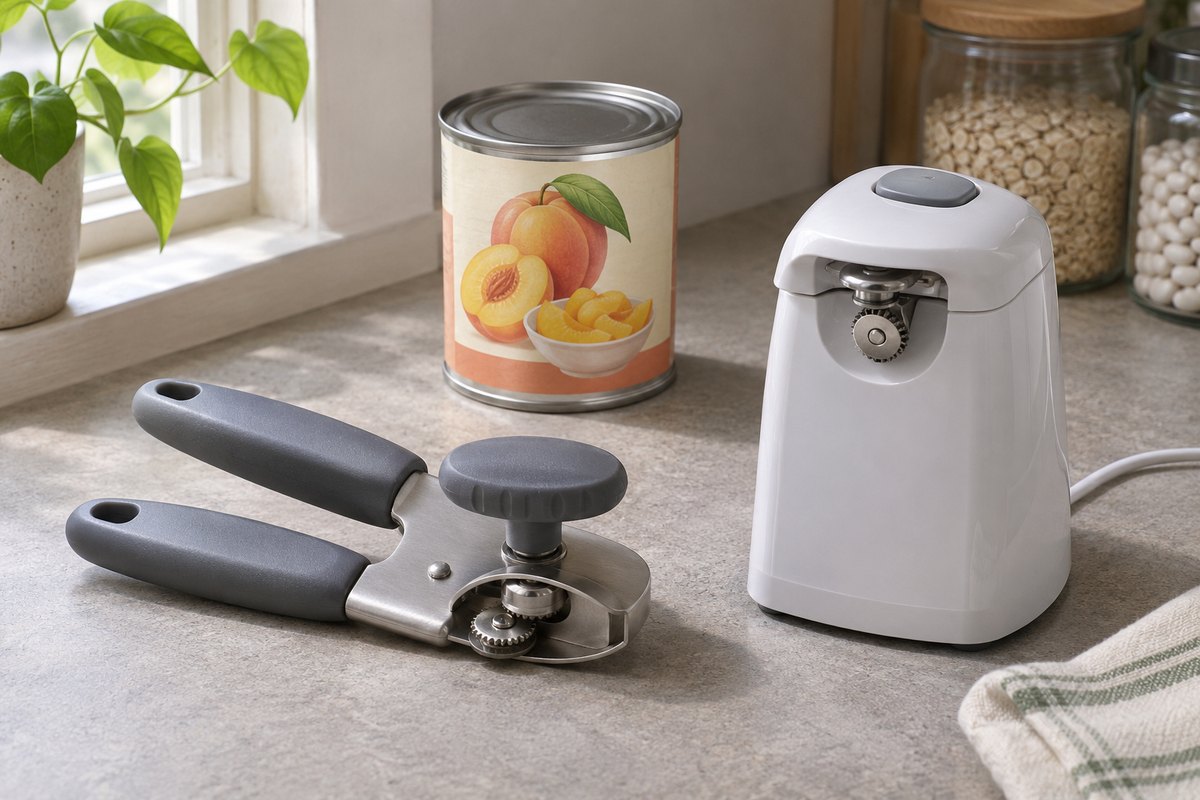
Manual side cut: see whether the pliers are worth the crank

OXO Smooth Edge for a manual cut and dedicated lid pliers: OXO Good Grips Smooth Edge Manual Can Opener No Sharp Edges Soft Grip
The wheel works below the rim. Read the directions for turning the knob and repositioning the tool to lift the lid.
View on Amazon (opens in a new tab)The OXO product page and diagrams explain the separate lid pliers. Consider this model when the cook can turn a crank or another person prefers to do the cutting. After the turn, look at how the pliers come to the edge and where the lid will go. Rehearse the reach without an open can first. A lid lifter is helpful when the cook can reach it and operate it without also having to support a loose tin.
A manual tool may also stay closer to the cook than an appliance stored in a high cupboard. Check where it fits and how you can pick it up by the handle. If you are choosing between different cutting heads, the side-cut buying guide compares the grip and lid-removal steps. A new side-cut head can sit differently from an old top-cut model, so keep the supplied placement diagram within reach. Use a closed tin to check the turning position before opening food.
Compare the turning motion on a short tin and a taller one. A low can puts your hand closer to the counter and may limit the view from a seated position. A taller can may make the rim easier to see while placing the crank farther from the hand that steadies the can. Adjust the work area before deciding how the tool feels. Keep the required cutter orientation the same. If the tool supplies lid pliers, check the position in which you can set the opener down after using them. This can be easier to plan with a closed can and an empty tray.
Handheld electric: bring the tool to the can
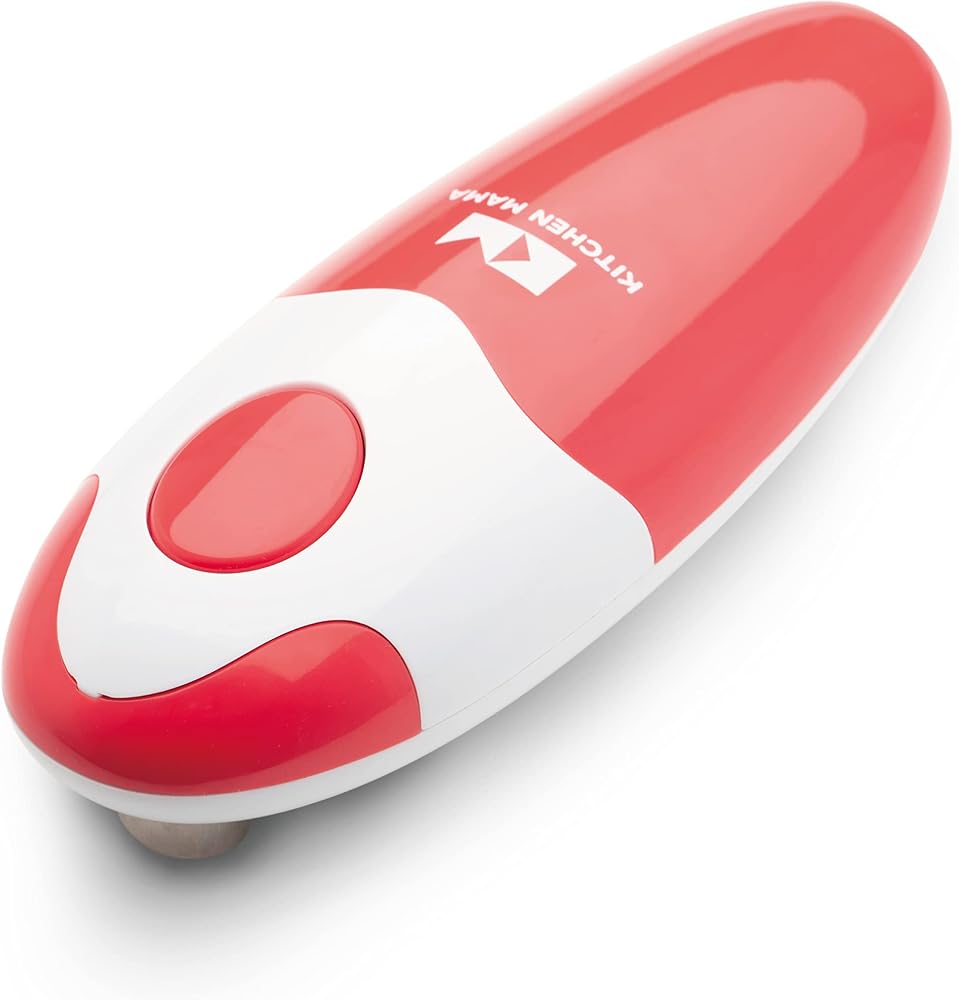
Original Kitchen Mama Auto when the can should stay on the counter: Kitchen Mama Auto Electric Can Opener Battery Operated Red
The battery-powered original uses one press to start and another to stop. Check exact rim fit and the removal step.
View on Amazon (opens in a new tab)The original Auto review explains how the cutter seats and when you press the button again. That layout removes the repeated turn of a manual knob. It still asks the cook to position the housing and lift it away as directed. If the original difficulty was holding a full tin, leaving it on the worktop can help. If the problem is reaching the stop control once the housing turns, compare a model with documented automatic stop.
Put the tool on the side of the work area where the user can retrieve it and set it down after opening. Think through the remainder of the meal. If the user will stop the motor and someone else will remove the lid, put the can and housing down securely before the helper approaches. For another example of arranging the entire sequence with one hand, see the one-hand walkthrough. The tool can change one motion while leaving the transfer of the ingredient to be planned separately.
Check where the removable lid will land if the tool comes away with it. A piece of cut metal near a bowl or hot pan is harder to manage than one placed directly into a free tray. Leave a place on the same side of the can as your preferred hand. If you cannot lower the housing while keeping the lid clear of the food, ask someone to help with that step. When comparing two handheld cutters, check their full release demonstrations. A video ending at the sound of the motor stopping leaves out the part of the job you may need most.
Countertop electric: check the lift and the steady press

Hamilton Beach Smooth Touch for a side cut at a fixed station: Hamilton Beach Smooth Touch Electric Can Opener With Easy Push Down Lever
Confirm the exact suffix. The 76606ZF instructions call for holding the lever during one turn and releasing it to stop.
View on Amazon (opens in a new tab)The Smooth Touch review covers the lever and the separate lid removal. Check whether the cook can hold the lever down comfortably for the cut and then lower the can to the counter. If maintaining that pressure is difficult, read the automatic-stop comparison before choosing by the look of the lever alone. A familiar fixed point can make a control easier to find, but the approach and release depend on the can and the available support.
Use a closed tin to check the position in the kitchen. If the machine will sit below a shelf, allow room for the hand to reach the lever and keep the clear landing area directly beside it. Measure the space below the head separately from the height of the appliance. If the arrangement is for a shared workstation, agree who will lift and who will remove the lid. A tool is useful only when those tasks can be finished without reaching over the cutter or carrying the tin farther than needed.
Before buying, note the can size and exact model number beside the task you want to make easier. A caregiver buying a replacement can use those notes to check the suffix and the current instructions. If you regularly use two different can shapes, confirm both. This is especially worthwhile for a household switching from a standard wheel to a side cut. The head may contact a different part of the rim, and a size that worked on the old design does not establish fit on the new one. Keep a backup ingredient ready for the first few meals while the setup is still unfamiliar.
Choose a way to pause and get help
Pick one familiar can and try the reach for each side of the cut before buying. Put a lid tray beside it. Check where the opener and the food will go. If the lid remains attached, stop and follow the exact directions for releasing the tool. Keep your hand clear of the metal and avoid trying to break the lid off. See the incomplete-cut guide for checks after the tool is stopped. End the session if you cannot support the can securely, and ask someone to handle that step.
If a helper is usually there, put the closed can, cutter and tray where the cook prefers to work. Talk through which step they will do. You may find that the manual pliers are a useful part of the setup even if the other person handles the crank. For household routines like this, see the shared-prep guide. Practice with an ordinary recipe and a spare ingredient nearby so the cook can stop without delaying the meal.
Frequently asked questions
Does side cut tell me whether a tool is one-handed?
Check placement, the cutting controls and how the lid is lifted. The term describes the position of the wheel.
Which design uses built-in lid pliers?
The OXO Smooth Edge uses separate pliers on the tool to pick up the detached lid.
Which option keeps the tin on the counter?
A compatible handheld cutter comes to the tin while it is supported on the worktop.
What if the lid stays attached?
Stop as directed, keep your fingers away from the edge and get help if you cannot support the can and release the tool.
The verdict
Choose manual pliers when you can manage the turning or arrange help. Choose handheld electric if keeping the can on the counter is the priority. Choose a fixed side cutter when the lift and sustained press are manageable. Check release and lid disposal before committing.