As an Amazon Associate we earn from qualifying purchases.
Spend more only when the mechanism changes your work
A manual can opener under $20 can be enough when you can turn a knob comfortably, open ordinary tins and want a tool you can put in a drawer. Spending more makes sense when it buys a different operation you will use, such as powered turning or a control you can release once the cut starts. The budget is a ceiling. Check the exact option and its delivered price before treating any of these examples as a fit, especially when the same page displays several models.
Think about the last time you wanted to replace an opener. If you could turn it easily but disliked the loose disk falling toward the food, changing to a manual side cut may cost less than switching to a motor. If you found yourself stopping several times because you could not keep turning, a motor can change the job. If the can was unusually tall or had an unfamiliar rim, begin by checking compatibility. Paying more does not establish whether a can fits. The buying checklist explains which parts of the task to compare before you look at price.
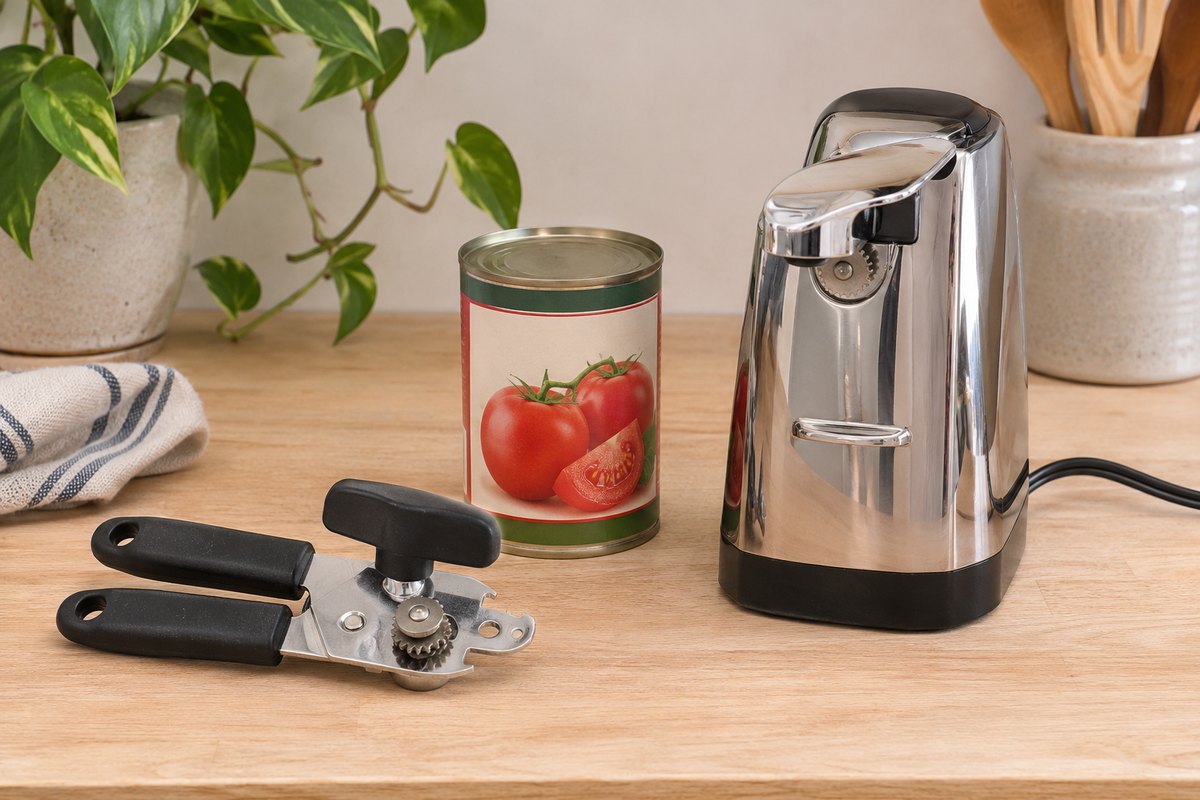
What a modest manual budget can buy

GoodCook Safe-Cut for manual side cutting: GoodCook Safe-Cut Can Opener With Easy Turn Knob Black
A drawer-friendly example if the lid edge is the reason you are replacing a conventional cutter. You still supply the turning force.
View on Amazon (opens in a new tab)The GoodCook was $11.73 in the site's catalog snapshot. Treat that figure as a record of the example, since the exact offer can change. Check the placement and lid-removal steps in the GoodCook review. A side cutter changes what you handle after the turn. Someone who likes their existing handles and is comfortable with the disk left by a top cut could save money by staying with the same design. The budget guide compares conventional crank options if that is what you need.
A low price leaves room to make a wrong assumption about the tool. For a manual opener, look at the grip in its working position. A handle that feels comfortable on a store display may sit differently once the opener is seated around a can. Think about where your knuckles pass on a short tin. If you already know that a small knob is the problem, compare the size and position of the knob. If you cannot maintain the hand position through a complete turn, a different knob on the same kind of tool may give you little benefit.
What powered turning changes
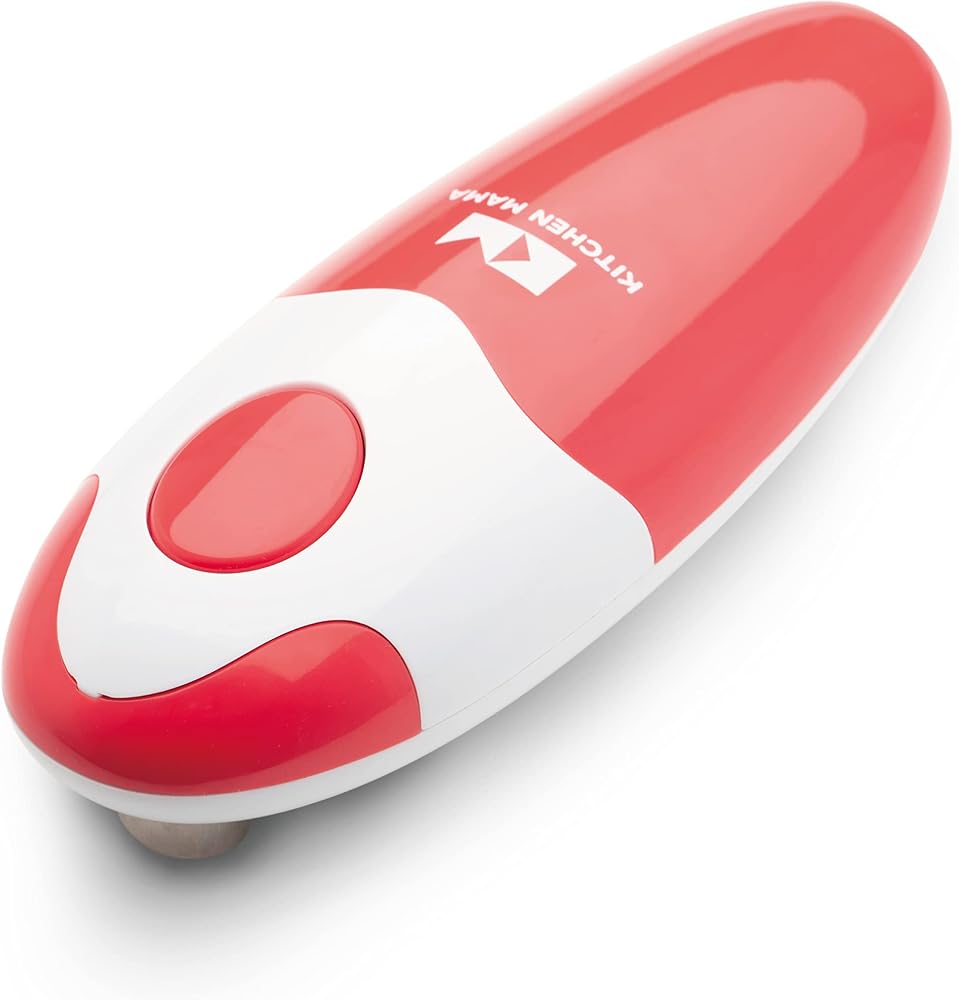
Kitchen Mama Auto for a powered cut with the can on the counter: Kitchen Mama Auto Electric Can Opener Battery Operated Red
The original Auto uses four AA alkaline cells and a separate press to stop. Check the exact version and add any batteries you need to the purchase cost.
View on Amazon (opens in a new tab)The original Auto was $29.99 in the catalog snapshot. It is an example of a powered model that stays in the drawer between uses. The can can remain upright on the counter while you position the handheld body. You still need to put the opener on correctly, stop it as directed and lift it away. See the original Auto review for its start and stop controls. If you sometimes take the opener camping or move it between kitchens, count the cost of spare batteries and make sure you can open the battery compartment.

Cuisinart CCO-50BKN for a fixed head and automatic stop: Cuisinart Deluxe Electric Automatic Can Opener CCO-50BKN
The black Deluxe stops after cutting and uses a detachable cutting lever. Compare the exact delivered price with your ceiling.
View on Amazon (opens in a new tab)The Cuisinart removes repetitive cranking and uses a different stop sequence. You bring the can to the head rather than lowering a handheld tool onto it. If you can lift a full tin and have a spot near an outlet, that can be a useful change. The CCO-50BKN review explains the limits of the magnetic lid holder and how its lever comes off for cleaning. The catalog has no verified price for this example, so check the delivered price of the black model. A fixed head can fit below your ceiling when on sale, and some electric models can fall below $20.
Compare the cost of a normal week
For occasional cooking, a manual tool may spend most of the year in a drawer. Its day-to-day cost is taking it out, turning it and cleaning it. When a meal regularly starts with several tins, replacing repeated turns with a motor can make a noticeable difference to that routine. You will still handle each tin before and after the cut. Set out the cans your household normally opens for a meal and see where each one would go. That exposes the difference between a machine that saves several turns and one that merely adds another item to a crowded counter.
Calculate the price of the tool you would actually order. Include delivery, batteries you do not already have and any separate item you would still need. If a manual model fits your tin but you also want to open jam jars, leave some of the budget for a suitable jar gripper. Buying a more expensive can opener does not necessarily cover that second task. The comparison of jar and can tools shows why a screw lid needs a different mechanism.
Counter space has a practical cost. A machine that stays beside an outlet may be ready whenever you need it. If you must clear a surface, retrieve the cord and put the machine away every time, compare those actions with taking a crank from a drawer. In a shared kitchen, ask where the next cook can find the machine and whether that person can lift a can to it. The compact opener guide explains how to measure the storage space and the working area separately.
Compare offers as they appear at checkout for the exact versions. The original Auto manual identifies four AA alkaline cells, a recurring cost that belongs in that comparison. The Cuisinart Deluxe page identifies an outlet-powered fixed head and the automatic stop. Your spending ceiling may be the same for both options, but the added cost buys different work. If the problem was where the lid releases, a manual side-cut model can address it without buying a motor.
Make a return decision while you can still change it
Before ordering, choose one ordinary tin and one awkward but intact tin that you buy frequently. Confirm both are supported in the instructions. When you get the tool, try them when you have time to look at the cutting head and follow the lid-removal steps. Judge the action you had hoped to improve. If the newer tool starts readily but still leaves you unable to handle the lid, reconsider the cutting path or removal mechanism rather than assuming a higher price will fix the problem. We compared published operating details and the available catalog prices. We did not run a timed opening or durability test for these picks.
Before you pay, verify the return terms for the exact seller. Shared listings can offer several variants through different merchants, with different shipping charges.
Give cleaning its own line on the comparison. If the countertop tool has a detachable lever, check how it comes off and where you will put the detached assembly to dry. If you pick a manual cutter, check how easy it is to see residue around its wheel. For a handheld battery version, look up how the housing is cleaned and keep the batteries dry as the instructions specify. The booklet for the exact model is the best place to verify those details. A tool that opens a tin with less effort can still add chores if each use requires clearing a drying spot or carrying an appliance to another work surface.
There is also a reason to buy a budget model even in a kitchen that already owns a powered one. A manual backup makes sense when the primary opener is away, the power is out or the batteries have run down. The backup still has to suit the person who will use it. If you cannot sustain the squeeze and turn, another inexpensive crank will leave the same problem. Consider what actually keeps the primary tool out of service and choose a backup accordingly. A second pair of batteries may be the better use of your money if a handheld opener works well and you mainly forget to keep spares nearby.
Frequently asked questions
Does spending more guarantee automatic stop?
Read the exact model instructions. Some powered models need a separate stop press.
Can a cheaper manual tool make a side cut?
Yes. The GoodCook example uses a manual side-cut head.
What should I add to the advertised price?
Include delivery and batteries if you need to buy them. Compare the exact variant in your cart.
When is a countertop model worth considering?
When you can comfortably lift the can to its head and have room to use it near an outlet.
Our verdict
Stay below $20 if a compatible manual cutter already suits your grip and kitchen. Consider spending more when powered turning, automatic stop or a different working position solves an issue you encounter regularly. Use the delivered price and the work the tool saves to make the final call.