As an Amazon Associate we earn from qualifying purchases.
The short answer
GoodCook Safe-Cut 11834 is a manual opener for people who want a different cut and release routine without buying an electric tool. It seats at the side of the rim. The product directions use a change in turning resistance to signal that the cut is complete, followed by a short reverse turn to free the tool. That sequence is the main reason to consider it. If repeated turning is the movement you want to remove, this model still leaves you with that work.
What the Safe-Cut changes
On a familiar conventional opener, the cutting wheel enters near the edge of the top lid. GoodCook describes a cutter that works into the bead from the side. When you put the Safe-Cut on a can, you are looking for the starting position shown for this model rather than the place where your old blade meets the lid. If the tool does not appear to pierce the top as soon as you place it, look at the directions before adding pressure. An intact-looking top is what this placement is intended to leave at the start of the cut.
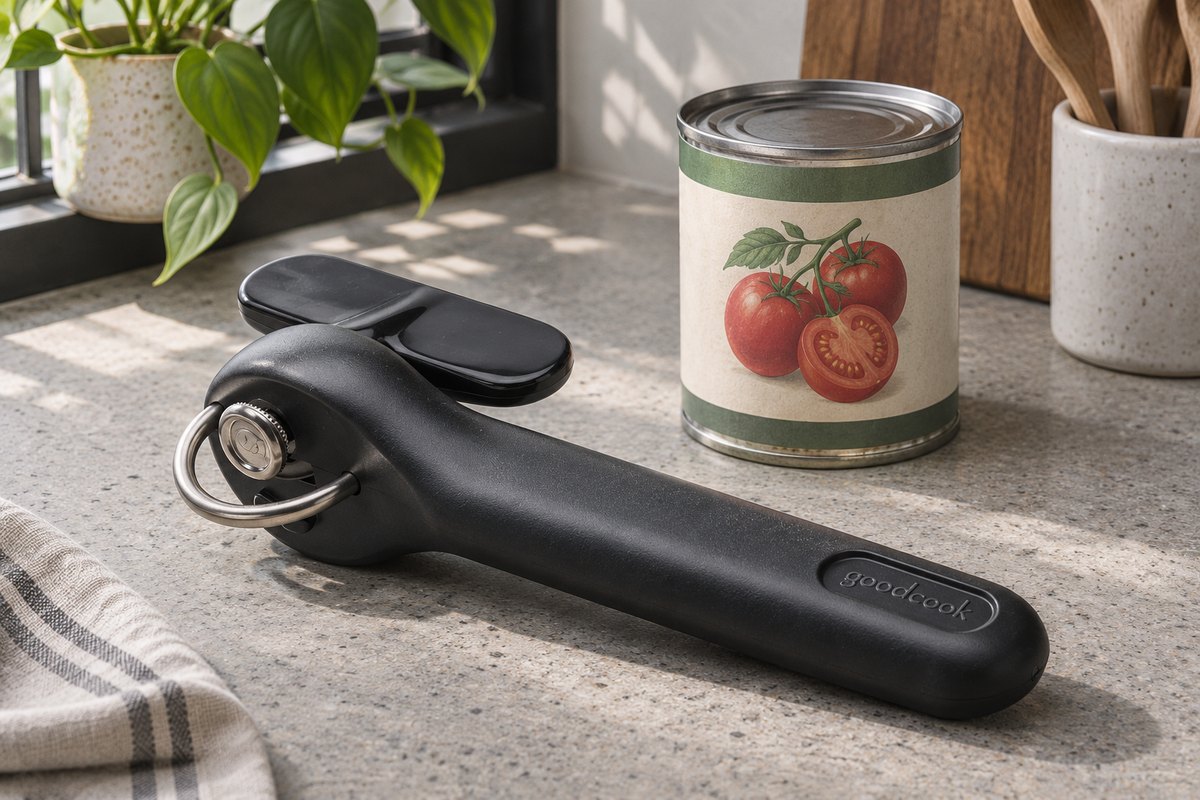

Main pick: GoodCook Safe-Cut 11834: GoodCook Safe-Cut Can Opener With Easy Turn Knob Black
Choose this manual side cutter if you want to change how the lid separates and you are comfortable turning a knob. Match the product number to the directions and check fit on the rims you buy most often.
View on Amazon (opens in a new tab)The comparison in this review comes from GoodCook’s demonstration and the directions reproduced for model 11834. We did not measure hand force, record cutting times or check every rim shape. The most informative details here are the direction in which you hold the tool and what tells you when to release it. The side-cut and traditional comparison explains why similar handles can hide different cutting paths.
How to recognize the end of the cut
Set a compatible intact can on a level worktop. The directions for the 11834 describe setting the wheel on the rim with the tool held parallel to the counter. Turn the knob so the wheel can engage the bead. Pay attention to the initial resistance. When the resistance changes at the end of the cut, the listed directions call for reversing the handle about a quarter turn to release the opener. Follow the label that came with your exact tool. Avoid reaching under the head or feeling around the cut with a finger.
- Sit the can upright and hold the tool in the orientation shown on the 11834 packaging. Look along the worktop to see whether you are holding the opener level.
- Turn the knob to engage the wheel from the side. If the tool will not seat or the can shifts, stop and check its alignment before trying again.
- When the cut is complete, follow the short reverse movement described in the directions. Lift the lid as directed and avoid touching cut metal.
The drop in resistance matters more than counting turns. The number of times you move your hand can depend on can size and how far you turn the knob each time. If you feel that change immediately or cannot confirm that the tool made it around the rim, stop and inspect the setup. A skipped section halfway around the can is different from a fully separated lid. See the incomplete-cut troubleshooting guide before trying to release an uneven lid.
The first time you use this design, choose a familiar tin and a time when you are not rushing. Put the can where there is enough light to see the wheel meet the rim. Clear space beside it to rest the tool and move the lid away. That makes it easier to follow the sequence without stopping to move a bowl or a pan. Our smooth-edge setup guide walks through which parts to find in the instruction diagram.
Who will find it practical
The Safe-Cut suits a cook who is already able to turn a manual knob but wants a side-cut result. Its benefit is limited if a side crank is itself difficult to manage. Someone shopping for less hand effort should consider how they seat the head, hold the tool in position and turn the knob. Be especially careful with reviews or descriptions that use easy-turn without explaining the starting position. Ordinary grip comfort and the force needed to cut a particular can are different things.
A narrow kitchen can suit a drawer-stored hand tool better than a dedicated appliance. Check where you will put it next to the can rather than comparing its body length alone. The knob needs room as you turn it, and a jar or utensil crock can interfere with the working side. For daily use, keep the instructions with the first box of compatible tins or return to the manufacturer demonstration if someone else in the household uses it differently.
If you only open a few plain-lid cans a year, your familiar cutter may already be the easiest option to use. A new side-cut design is worth learning when it changes a regular nuisance, such as managing the lid at the finish. If you are browsing chiefly to stay under budget, compare the exact variant and price in our can openers under $15 guide. That guide compares this model with two conventional options in the same catalog price range.
There is also a difference between feeling less resistance and knowing the lid is ready to lift. That change is useful when you have felt the wheel travel around the whole rim. If the tool shifts while you are turning, set it down and work out where it moved. A tool that loses contact can also feel easy to turn. Do not use that feeling alone as a reason to pull on the lid. For a first use, a familiar round tin lets you focus on how the tool sits rather than making you learn a new position on an unusual rim.
For a shared kitchen, leave the package directions with the utensil until everyone knows which way it sits. Otherwise the next person may approach the lid as they did with the previous crank and conclude that the wheel will not grip. If your household switches between two designs, keep the side cutter in a consistent place and label it by how it works. That is especially useful if another person is opening a can while you are using the main prep area. Both tools can be useful when people prefer different motions, but each should be used in the position its own instructions show.
Alternatives when you want a different control
The OXO Soft-Handled gives you a conventional wheel and a padded two-handle grip. It is worth comparing if you prefer to keep the motion you know and want more room to hold the handles or knob. See our comparison of standard rotary tools for how to judge knob clearance on the tin you actually use.

Alternative: conventional hand crank: OXO Good Grips Manual Can Opener And Bottle Opener Soft Easy-Grip Handle
OXO lists cushioned handles, an oversized knob and a steel wheel. Keep it on the shortlist if the conventional cut and lid release already work for your kitchen.
View on Amazon (opens in a new tab)The Hamilton Beach Smooth Touch offers a countertop side-cut approach. It changes the operation more than switching between manual cutters. You have to bring the can to a fixed head and have room for the machine near an outlet. If repeated turning is difficult, use the comparison of powered and manual motions before deciding whether that trade is useful.

Alternative: powered side-cut design: Hamilton Beach Smooth Touch Electric Can Opener With Easy Push Down Lever
Hamilton Beach documents a side-cut blade and a lever held through the cut on model 76606ZF. Match the retailer's suffix to the manual and check whether you can support your full can at the head.
View on Amazon (opens in a new tab)- GoodCook Safe-Cut manufacturer demonstration.
- 11834 placement and release directions.
- OXO Soft-Handled specifications and Hamilton Beach Smooth Touch model instructions.
Frequently asked questions
Does GoodCook Safe-Cut click when it is done?
The listed directions describe a change in turning resistance. Do not rely on an audible click.
Why does it leave the top unpunctured?
The cutter engages the bead from the side rather than cutting into the lid in the conventional position.
How does it release from the can?
The directions for 11834 specify a short reverse turn after completing the cut. Follow the directions for your own unit.
Do I still have to turn a knob?
Yes. This is a manual cutter. Compare a powered design if repeated turning is the problem.
Is it suitable for a glass jar?
It is a cutter for compatible metal can rims. Use a dedicated grip for a glass jar screw lid.
Our verdict
Choose the Safe-Cut if you want a simple hand-operated side cutter and can use its knob, feel when the cut finishes and perform the reverse release. Keep a traditional opener if you prefer its familiar placement. Choose a powered alternative if turning is the motion that makes the job difficult.