As an Amazon Associate we earn from qualifying purchases.
First, watch what the opener is doing
If an electric opener sounds slower than it used to, look at the can before buying batteries or a replacement. A motor that slows on several familiar tins points to a different problem from a cutter that pauses at the same spot on one unfamiliar rim. A motor can also sound normal while the cutter loses its grip and makes little progress. Stop if the tool stalls or slips repeatedly. Use the model's stop and release instructions, keeping your hands away from the cutting area. Only check the power supply, alignment or cutting head once the opener has been released as directed.
Compare it with the last time it worked normally
Think back to the last can that opened without trouble. Did you change the brand of food, the size of the tin or the tool's power source? Did the problem begin after the machine was cleaned or after it was taken out of storage? These details help you pick the first check. A larger can can take longer to open because the cutter has farther to travel. That alone tells you little about how the motor is performing. For a useful comparison, look at how the opener behaves on the kind of tin it previously handled.
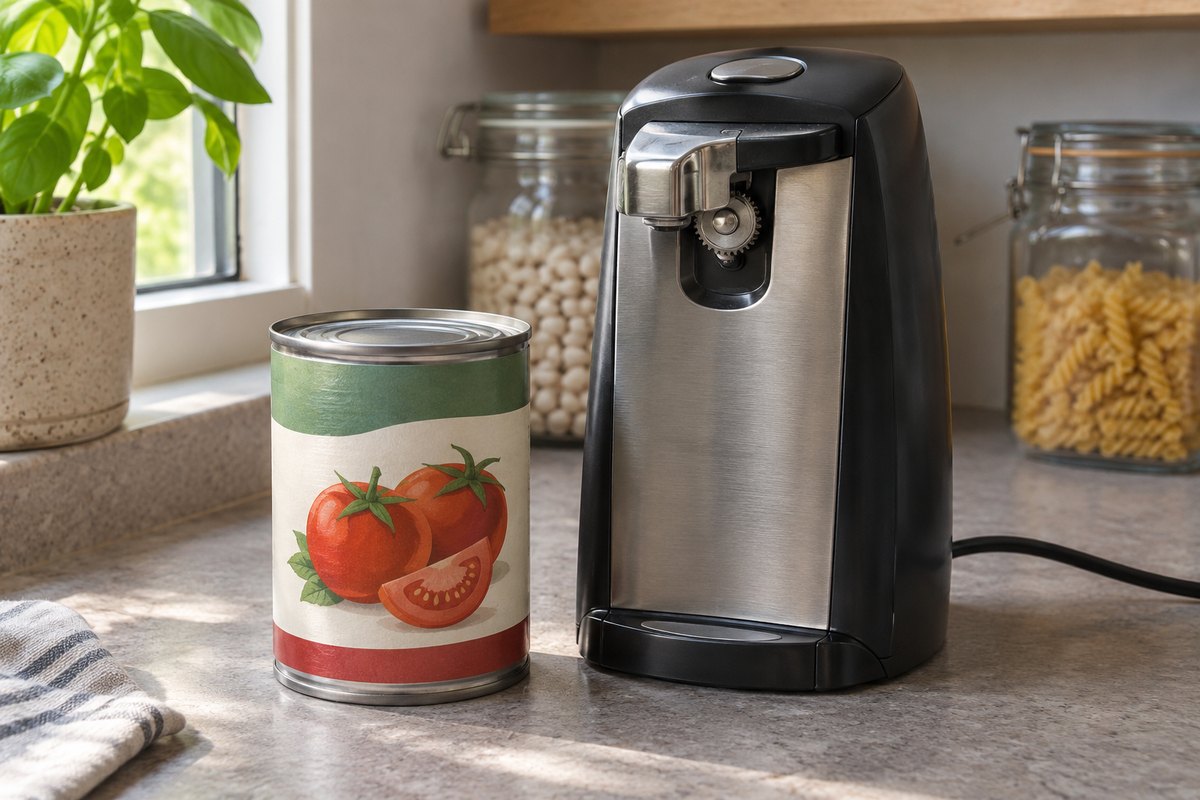
Watch for a hesitation that occurs once per circuit. If the sound changes at a particular point on the rim, the shape or seating may matter more than power. On a countertop machine, also check that the can has clearance to move and is not brushing the counter or another object. If the head has already left any part of the lid cut, move to the incomplete-cut guide for the next decision. This guide is about finding the cause of slowing, which is best done after the opener is safely clear.
| What you notice | Check first |
|---|---|
| Slower on several familiar tins | Specified batteries or manufacturer service directions |
| Head hesitates at one point on one tin | Rim shape, seating or working clearance |
| Motor sounds normal but cutter does not advance | Engagement with the rim |
Check power on the exact model
On a replaceable-cell opener, consult the manual for the battery type, count and orientation. Kitchen Mama's Auto support material lists weak batteries and incorrect installation among the checks for a powered opener that struggles. Use a complete set of fresh cells of the type specified, rather than keeping some old cells in the tool and adding new ones. Check the battery door and its latch while the unit is clear of the can. If the door cannot close or you see leakage, consult the manufacturer about the next step.
A cordless opener can use removable batteries or have a rechargeable power system. Find the model identifier before assuming that a slow tool needs charging. The name Auto 2.0, for example, does not establish that it uses a charging cable. Our battery-powered opener guide lists the cell requirements for the Kitchen Mama examples. The corded and cordless comparison explains what to verify on each type.
For a plug-in machine, look up the operating and maintenance instructions before testing anything near the drive gear. Check for visible cord damage with the machine unplugged. If the cord is damaged or the opener makes an unfamiliar electrical sound, stop using it and follow the manufacturer service directions. A new outlet or a freshly washed lever cannot fix a damaged power cord. For normal cleaning, unplug the appliance and use only the procedures specified for the exact model.
Separate poor seating from a dirty head
Locate the drawing in the manual that shows where the rim passes between the cutting part and the drive gear. Use that view to see which side the tool is meant to approach. If the lid is grooved or the can is unusually small, check the model's supported shapes. A tool that keeps running while the can stays still has not necessarily lost motor power. It may be running without a secure grip. See the rim-grip troubleshooting guide if the opener consistently fails to seat.
Dried food around the head can make it harder to see or position the parts. Clean it only when the opener is clear of the can and prepared for maintenance as the manual directs. Some countertop models have a removable lever you can clean separately. Cuisinart, for example, says to unplug the CCO-55 before removing that lever. The removable part does not make the electric housing washable. Our electric opener cleaning guide explains which instructions to look for before starting.
- Stop and release the opener using the model instructions. Keep clear of the cutting parts.
- Check the power type, then inspect the seating instruction for the rim you were using.
- Clean as directed after disconnecting power where required. If the problem repeats, note the exact symptom for the manufacturer.
For a practical comparison, write down the can that caused the problem and what you saw just before it happened. Include whether the opener was recently cleaned, which cells were installed and whether the can could move freely. Use an unopened tin for photos of the rim rather than handling the one with a partially separated lid. Keep changes separate. If you replace batteries, clean the head and switch to another can all at once, a successful opening will not tell you which of those changes helped.
If the problem began after taking a removable lever off, inspect how that part was put back before assuming the motor has worn out. Check the manufacturer drawing and follow its reassembly instructions while the appliance is unplugged. A lever that will not return to its normal position needs attention before you present another tin to the head. If it still does not seat, stop and contact the maker.
If you are comparing replacements
Choose a replacement only after you know the difficulty that repeats. If the power supply is the part you cannot manage easily, compare another power system or a manual backup. If bringing the tin to the head makes alignment awkward, compare a handheld design. These product cards illustrate three different ways to change the setup. They do not rank speed or report timed results.

Handheld electric with published support: Kitchen Mama Auto Electric Can Opener Battery Operated Red
Kitchen Mama documents battery and alignment checks for its Auto series. Compare the original Auto if you want the can to remain on a worktop, and make sure its start and stop instructions work for you.
View on Amazon (opens in a new tab)
Fixed opener with a removable lever: Cuisinart CCO-55 Deluxe Chrome Electric Can Opener Silver
Cuisinart lists a removable activation lever for the CCO-55. Consider it if you want access to that part for maintenance and can raise a can to the fixed head.
View on Amazon (opens in a new tab)
Manual backup example: OXO Good Grips Manual Can Opener And Bottle Opener Soft Easy-Grip Handle
The OXO Soft-Handled model uses a turning knob and two handles. It can cover a power interruption if you can keep the handles closed and turn comfortably. Verify the rim fit.
View on Amazon (opens in a new tab)If the slow opener still works on your familiar tins, note what the different can looked like before you commit to a replacement. If it repeatedly struggles after you have used the specified power, followed the seating directions and cleaned it as directed, record the model and the symptom. Mention whether the motor slowed, the can stopped moving, or the housing shifted on the rim. That helps a support team distinguish the problem without asking you to open another can. For a tool you use daily, store the booklet and any spare cells in a place you can reach without clearing the prep area.
If a backup will only be used occasionally, practice with it on a fresh can before you rely on it. A familiar manual tool is helpful only when it fits the specified rim and you can operate it comfortably. An easy-open meal is another option if you cannot crank a manual cutter. See the camping and RV guide for ways to choose a backup around the food you actually keep.
- Kitchen Mama power and latching guidance.
- Cuisinart CCO-55 lever and cleaning instructions.
- OXO Soft-Handled specifications.
Frequently asked questions
Is a bigger can always slower?
It can take more time because there is more rim to travel. Compare familiar cans before judging a change in tool performance.
Can new batteries solve poor rim grip?
They help if the power is weak. The cutting head still needs to seat in the orientation specified by the manufacturer.
What if the motor runs without cutting?
Stop and release as directed. Check rim compatibility and engagement before trying again.
Can I clean a removable lever while the opener is plugged in?
Follow the manual. Cuisinart specifies unplugging the CCO-55 before its lever is removed.
When should I replace a slow opener?
Consult the manufacturer if the same trouble persists on compatible tins after the specified power, placement and cleaning checks.
Final check
A longer cut can be normal on a larger tin. Slow behavior that repeats on familiar cans is more useful evidence. Start with the thing that changed, then use the exact manufacturer's power, seating and cleaning instructions. If the tool still slows, stalls or cannot grip reliably, stop using it and ask the maker about service or replacement.