As an Amazon Associate we earn from qualifying purchases.
Inspect the container before taking out the opener
Most decisions about a dented can happen before you touch a cutter. The USDA says a small dent on a can that is otherwise in good shape is generally acceptable. A deep dent, a sharp crease at a seam, a leak or a bulge is a reason to discard the can. If you cannot tell whether the seal is sound, use an intact replacement. An opener that can travel around a damaged rim cannot tell you whether the food inside is safe.
This guide covers commercially canned food stored in its original container. It follows the USDA guidance on damaged cans and the agency’s shelf-stable food safety guide. Check the package directions for storage and handling. Home-canned food requires separate guidance about processing and seals. Do not use an opener recommendation to decide whether home-canned food was processed safely.
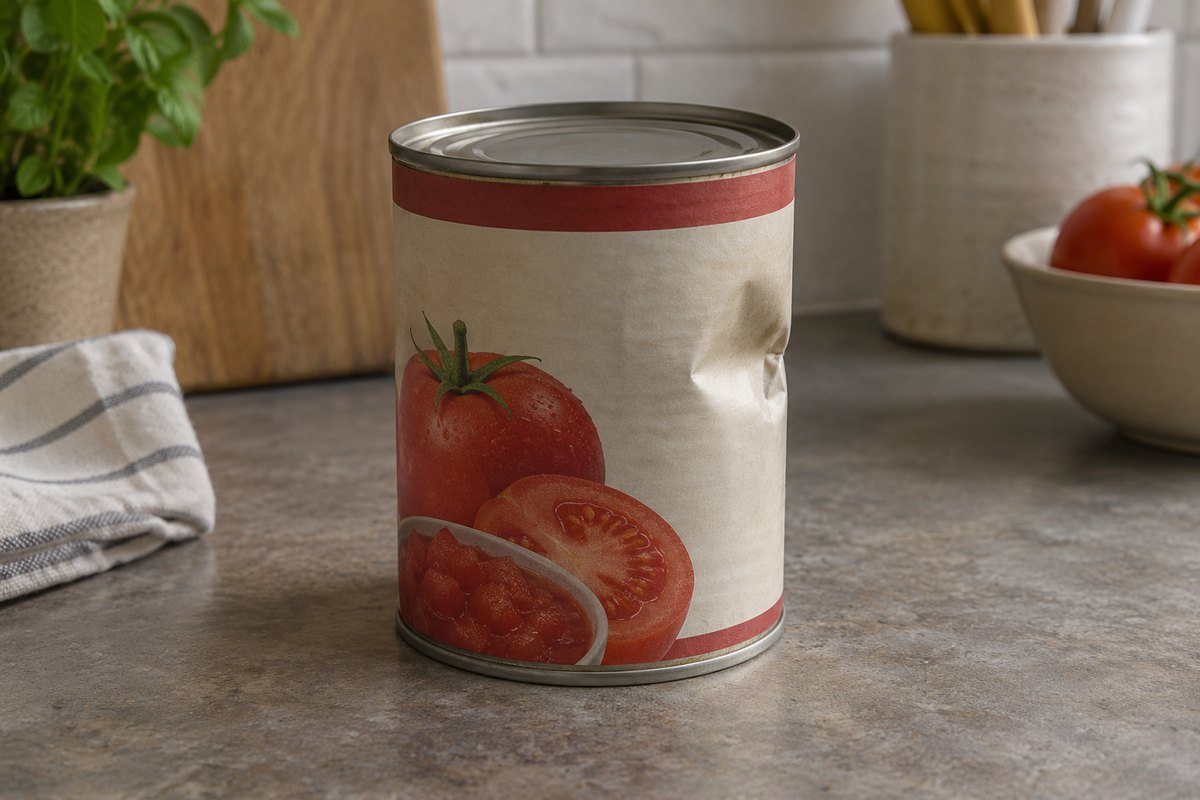
Examine the dent, the seams and the ends
- Leave the can closed while you inspect it. Check the top and bottom for outward bulging and look for leaking liquid. If it leaks, bulges or is badly dented, discard it without trying to open or taste the contents.
- Check the top and bottom rims and any side seam. A sharply creased seam or a deep dent on a seam is a reason to discard the can. Give the area where a dent runs into the rim the same attention as the deepest point of the dent itself.
- Look at the rest of the can. A slight, shallow dent in the middle of the side can be acceptable when the rest of the container is sound. USDA describes a deep dent as one large enough to lay a finger into. A deep dent may have a sharp point even when it is not at a seam.
- If the can passes inspection, check that the opener will seat on its intact rim. If you are uncertain about the condition of the can, choose an intact replacement before starting the recipe.
Turn the closed can slowly so you can see the entire side. A label can make it easy to notice the big part of a dent and miss the crease where it meets the bottom. Look along the edge in adequate light. You do not have to press on a suspicious end or run a finger along a sharp spot to inspect it. If the metal around the lid looks distorted, treat that as a container problem before you think about where the wheel would grip.
A shallow bump on the side of a can of beans is a different issue from a pointed crease joining a soup can’s rim. The first may be cosmetic when the rest of the can is undamaged. The second can affect the seal. The USDA guidance focuses on depth, shape, seam condition and other damage. The distance around a dent, taken alone, is a poor way to choose. A broad smooth depression may look dramatic in a grocery bag, while a smaller crease concentrated where metal joins can be more concerning.
Keep food safety separate from the opening problem
If the can has passed inspection and has an undamaged compatible rim, follow the normal operating instructions. Start on a well-lit counter with a clear spot for the lid. If the tool slips or will not seat properly, stop and recheck the rim and placement. Our rim-grip troubleshooting guide is for an otherwise sound container. If you see new evidence of damage or remain uncertain about the seam, set the can aside instead of trying a stronger tool.
A can that spurts liquid when it opens or has an obviously foul odor should not be used, according to USDA. Do not sample the food to find out whether it is spoiled. The absence of a smell does not establish that a suspicious can is safe. If you have already started a cut and the lid remains partly attached, keep your fingers away from the exposed metal. The incomplete-cut guide helps identify an ordinary opening failure. Use it only when there is no reason to doubt the can itself.
Sometimes a tool stalls because a can is simply incompatible. A low tin may sit awkwardly against the head of a countertop model. A side cutter and a conventional wheel also sit in different positions. See the comparison of cutting paths for an explanation of those differences. Neither path repairs a damaged seal. If you bought a replacement can and have the same trouble on an intact rim, check the opener instructions before blaming the container.
Choose a tool for the sound replacement can

OXO Soft-Handled for a conventional top cut: OXO Good Grips Manual Can Opener And Bottle Opener Soft Easy-Grip Handle
For a compatible intact can if you can hold the handles closed while turning the knob.
View on Amazon (opens in a new tab)The Soft-Handled review explains the hand positions. This is an example for a familiar, sound rim. Choose it if you are comfortable with a two-handle grip and have a place to set the lid down after cutting. If opening effort is why you were looking for a replacement, check whether holding the handles or turning the knob is the part you need to change.

GoodCook Safe-Cut for a manual side cut: GoodCook Safe-Cut Can Opener With Easy Turn Knob Black
A side-seam cutter for compatible intact tins. Follow the model’s seating and lid-removal directions.
View on Amazon (opens in a new tab)The side-cut setup guide covers how the head engages an intact rim. It can be worth choosing a side cutter when you prefer a different way of separating the lid. Use the booklet to check whether your usual can shape fits. Do not buy it on the assumption that it can open a dent that prevents another cutter from seating.

Cuisinart CCO-50BKN for powered turning on an intact can: Cuisinart Deluxe Electric Automatic Can Opener CCO-50BKN
Check that you can bring the replacement can to the cutting head. The magnetic holder works with lids attracted to it.
View on Amazon (opens in a new tab)The black Cuisinart review covers the button and removal sequence. Powered turning can help when the effort of cranking is the obstacle. It still depends on the rim reaching the head in the correct position. The three examples here illustrate different mechanisms and come from their product documentation. We did not test the tools on damaged cans.
Make the decision before the next meal
Put the sound cans you plan to use first where they are easy to reach. If you discover one questionable can during dinner prep, leave it out and switch to another ingredient or an intact replacement. That is easier when you check the pantry before you heat the pan. If several cans were crushed in the same grocery bag, look at each one individually. They may have hit different surfaces or have marks in different places. Inspect the ends and seams rather than assuming all the cans have the same degree of damage.
If the container was damaged at delivery, you can report it to the retailer without opening it. Record which item arrived damaged without handling a leaking can unnecessarily. A refund or replacement addresses the meal without requiring a second decision about a questionable seal. For an unopened can that looks normal but always gives you trouble because it is unusually tall or wide, see the guide to clearance on large cans. That is a product fit question you can investigate separately.
When you are checking groceries for another person, describe what you saw instead of saying only that a can has a dent. A shallow mark in the middle of a dry, intact can calls for a different decision than a crease in the upper seam. If you are photographing damage for a refund, take a view of the whole container and a view of the affected seam without disturbing a leaking can. When the photo or description leaves the seal in doubt, buy a replacement. It is easier to replace a single ingredient than to make a second safety judgment after mixing it into a recipe.
Frequently asked questions
Can I keep a can with a small dent?
USDA says a small dent can be acceptable when the container is otherwise in good shape.
What if the dent reaches a seam?
Discard a can with a deep dent or sharp crease at a seam. Choose a replacement whenever the seal is in doubt.
Can I taste the food to decide?
Do not taste food from a leaking, bulging or badly damaged can, or one that spurts when opened.
Will a side cutter make a dented can safe?
The cutting mechanism cannot verify the condition of the seal. Inspect the container before choosing an opener.
Bottom line
A shallow dent on an otherwise sound can can be acceptable. Discard deeply dented, leaking or bulging cans and take sharp seam damage seriously. When in doubt, choose an intact can and use the opener as its maker directs.