As an Amazon Associate we earn from qualifying purchases.
Who should buy this KitchenAid Classic?
The black KitchenAid Classic Multifunction makes sense if you are replacing a conventional manual opener and want a broader turning knob, shaped handles and a built-in pry-off cap lifter. Its two jobs during a cut are familiar: hold the handles closed around the rim and turn the knob with the other hand. If either action is uncomfortable, try the working position before buying. If your main reason for replacing an opener is the shape of the lid it leaves, compare a side cutter. A similar crank with a larger knob still makes the same kind of cut.

KitchenAid Classic Multifunction, black: KitchenAid Classic Multifunction Can Opener And Bottle Opener Black
A conventional manual can cutter with a bottle-cap lifter. Check the selected black variant and model code KE199OHOBA.
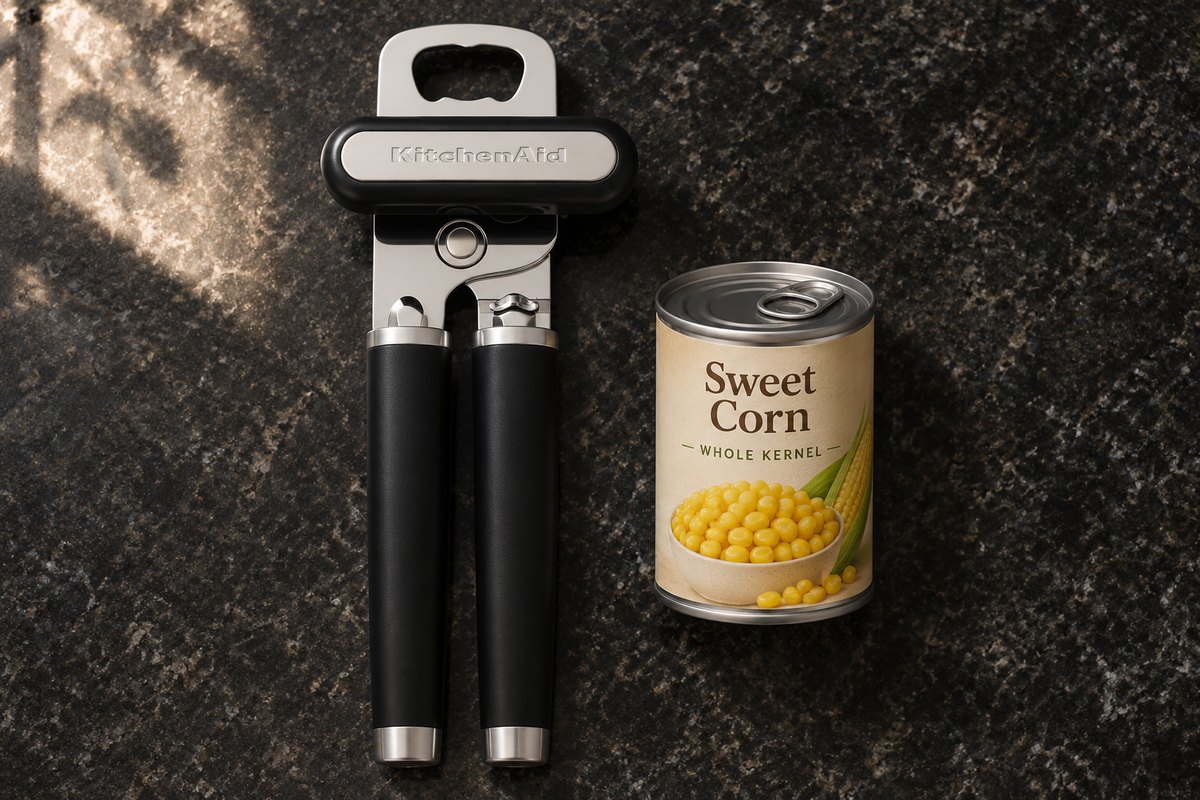
An archived listing matches B07YP2VH4B to KE199OHOBA and identifies the stainless steel cutting wheel. The archived product details also describe the built-in cap lifter. The Classic name appears in other listings, so match the model before using the instructions. We compared the listed design and other tools with different cutting heads. We did not measure crank force, record how long the wheel lasts or rank the variant by current price. A color or bundle on the same page can have a different price and model code.
How to judge the clamp and crank
Look at where the two handles rest against your hand once the head is on the can. You can like the feel of a grip when it is closed and still have trouble spreading your fingers to place it. Try holding a display sample in the orientation in which it would cut, then check whether the opposite hand can reach the entire knob. A large contact surface can help you find a comfortable place to put your fingers, but the way the rim fits and the condition of the wheel still matter. If the squeeze rather than the knob is what makes the work hard, compare a different mechanism.
Use a familiar intact tin and follow the head placement in the packaging. Start on a stable work surface. If the blade shifts or the wheel rides along the edge without cutting, stop and recheck where the head is sitting. The rim-grip troubleshooting guide covers the fit and condition checks. For a short tuna tin, give the turning hand room beside the countertop. If it hits the edge of the cutting board, move the board before trying a different tool. You may only need a few inches of space to change how the crank feels.
If somebody else will share the tool, check which hand they use for the knob. The working position may put their preferred hand on the handle instead. Someone who is comfortable steadying the head with their left hand may like the arrangement, while another person might want to turn with the left. Try the reach on a closed tin without reversing the placement shown in the directions. The guide to left-hand layouts explains which measurements and movements are worth comparing.
Compare two tins before assuming that your current cutter has worn out. If the problem appears only on a new can shape, check its rim against the placement drawing. A smooth turn on a familiar round tin tells you more about the grip than a first attempt on an unusual seam. If the current wheel looks damaged, set that tool aside. A similar replacement can be reasonable if you already like the shape of the handles and the cutting path. If a different person will be using it, ask whether they want the same layout before treating familiarity as an advantage.
The extra lifter and the loose lid
The lid cutter makes a conventional top cut. Set aside a place to put the metal disk and keep your fingers away from the cut edge. If the edge remains attached at one point, stop and follow the release instructions instead of bending the lid free. See the guide to conventional and side cuts if you regularly struggle with how the disk comes away. A padded grip can still be paired with a top cut, and the shapes of the grip and detached lid are separate reasons to buy.
The extra fitting lifts a compatible pry-off bottle cap. It is helpful if you open cans at the same worktop where you open drinks and want one tool readily available. If your bottles have threaded caps or your kitchen already has a corkscrew with a cap key, the extra feature may be of little value. Check the package diagram for where the lifter sits and how it meets the cap. Our built-in cap lifter guide covers when a combined tool saves a drawer slot.
Care and storage after opening
The listing guidance for the black variant specifies hand washing with mild detergent and drying promptly. Follow the directions supplied with the exact model. Look around the wheel for food residue instead of cleaning only the handles. Give the tool a clear place to dry, then store it by the handle with the head away from where you reach into the drawer. See the maintenance guide if you are replacing a crank that has started slipping or feels stiff.
Drawer space matters for a backup tool as well. If you usually use an electric opener, a manual backup avoids dependence on an outlet or a set of batteries. It still has to work for the person who will open the can when the powered tool is out of use. Choose a grip they can hold and turn comfortably. If the backup will travel, check that there is room for the knob and head, and bring an intact can whose rim the model supports. A compact case is only useful when the right tool is available at the meal.
In a small kitchen the can cutter and bottle lifter may be used in different places. If you usually take drinks outside, a separate cap key may still be easier to bring with the bottles. If both jobs happen at the same worktop, the combination can make room in the drawer. Wipe up any food preparation residue and clean the opener as directed before using it near drinks or clean serving items. Keeping the tool close to its more frequent job makes it easier to find when you need it.
The Mountain Hardware listing for KE199OHOBA and UPC 024131404902 specifies warm water, mild detergent and immediate drying. That is a matched retailer description for the black model. Follow the directions supplied with your own carton if they differ or if the code is different. Before settling on this opener, check where food reaches on the wheel side and whether you can clean it as directed without needing to touch the blade.
Compare two alternatives with concrete reasons to switch

OXO Good Grips Soft-Handled for another padded crank: OXO Good Grips Manual Can Opener And Bottle Opener Soft Easy-Grip Handle
Use the same working position to compare handle fit. Both designs need you to hold and turn.
View on Amazon (opens in a new tab)The OXO Soft-Handled review explains the grip and care. Compare the two if you already want a conventional cutter and care mostly about the handle. If both sit comfortably in your hand, weigh the price of the exact variants and which one can be replaced easily. If neither lets you hold the handles closed, a powered layout is the more meaningful comparison.

GoodCook Safe-Cut if you want the lid separated at the seam: GoodCook Safe-Cut Can Opener With Easy Turn Knob Black
A manual side cutter with a different placement and lid-removal sequence.
View on Amazon (opens in a new tab)Use the GoodCook review to check which way the cutter sits. The point of that change is the lid and what happens when it comes away. You still turn the knob. Choose it when the removal step is the main issue and you can seat a different head on the cans you buy.
Compare the listing with the carton and keep the printed instructions until you know the tool suits your grip. If there is a mismatch in the model number, confirm the care routine with the seller before using it.
Frequently asked questions
Which version is covered?
The black KE199OHOBA listed under B07YP2VH4B.
Does it need both hands?
Plan to hold the handles closed with one hand while turning with the other.
What does the built-in cap lifter open?
Compatible pry-off bottle caps. Threaded jars need a different tool.
Can I put it in the dishwasher?
The matched listing calls for hand washing and drying promptly. Follow the instructions supplied with the exact variant.
The verdict
Choose KitchenAid Classic if a two-handle crank suits your hand and you value the larger knob or built-in cap lifter. Compare a different cutting head or a powered model when the lid edge or sustained squeezing is the reason for replacing your old tool.