As an Amazon Associate we earn from qualifying purchases.
Set aside the opener that makes you force the turn
A can opener that feels fine for the first turn can become awkward once you have to keep the handles closed and rotate the knob at the same time. If you are opening a can with hand arthritis, begin with an intact, compatible tin on a dry counter. Set out a tray for the lid before you start. Choose a tool whose controls you can operate comfortably, and stop if the task becomes painful or unstable. A handheld electric opener lets you bring the cutting head down to the can. A countertop model gives you a fixed lever, but you have to raise the can to it.
The Arthritis Society hand joint protection guide advises avoiding prolonged or repeated tight gripping and lists electric can openers among adapted kitchen tools. Use that advice to identify which motion you want to change. If you can turn a crank but dislike the pressure where the handles meet your palm, a different grip may be enough. If the pressure comes from holding the handles shut throughout the cut, compare a mechanism that replaces that sustained squeeze. The manual and electric comparison explains the underlying movements.
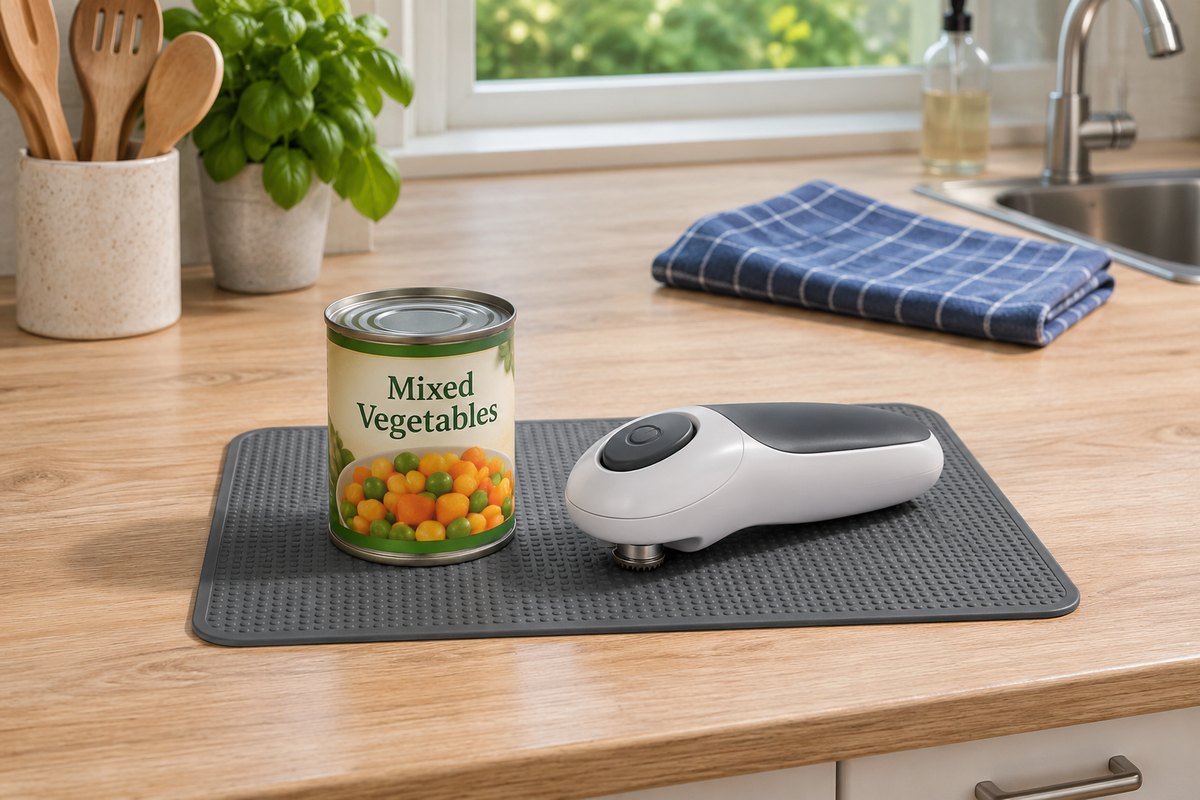
Set up the can and open it in a sequence you can repeat
- Clear a section of worktop where the can can stand upright. Bring the unopened tin, opener and lid tray close enough to reach without leaning past the cutting head. Leave a spot for the tool after the cut.
- Check how your exact opener seats on the rim. Bring a handheld model to the tin or support the tin at a fixed head as its instructions show. If the tool will not engage without an awkward reach or extra pressure, stop and adjust the placement.
- Use the start control and follow the normal cutting sequence. Keep your hand clear of moving parts. Check whether the motor stops automatically or needs a separate press. If the tool slips, use its stop and release directions.
- When movement ends, remove the tool or the can as directed. Set the opened tin down before handling the lid. Keep fingers off cut metal. Ask for help if you cannot support the can or release the cutter comfortably.
This setup is worth trying first with a can you are familiar with and a meal that can wait. A low tuna tin can put the knob close to the countertop, and a tall soup can can be difficult to lift upright when full. Check both shapes using unopened tins. If you work sitting down, see whether you can watch where the head meets the rim. The housing may cover part of the edge from that height. Change where the tin sits before moving your hand toward the blade.
Choose a tool for the movement you want to change
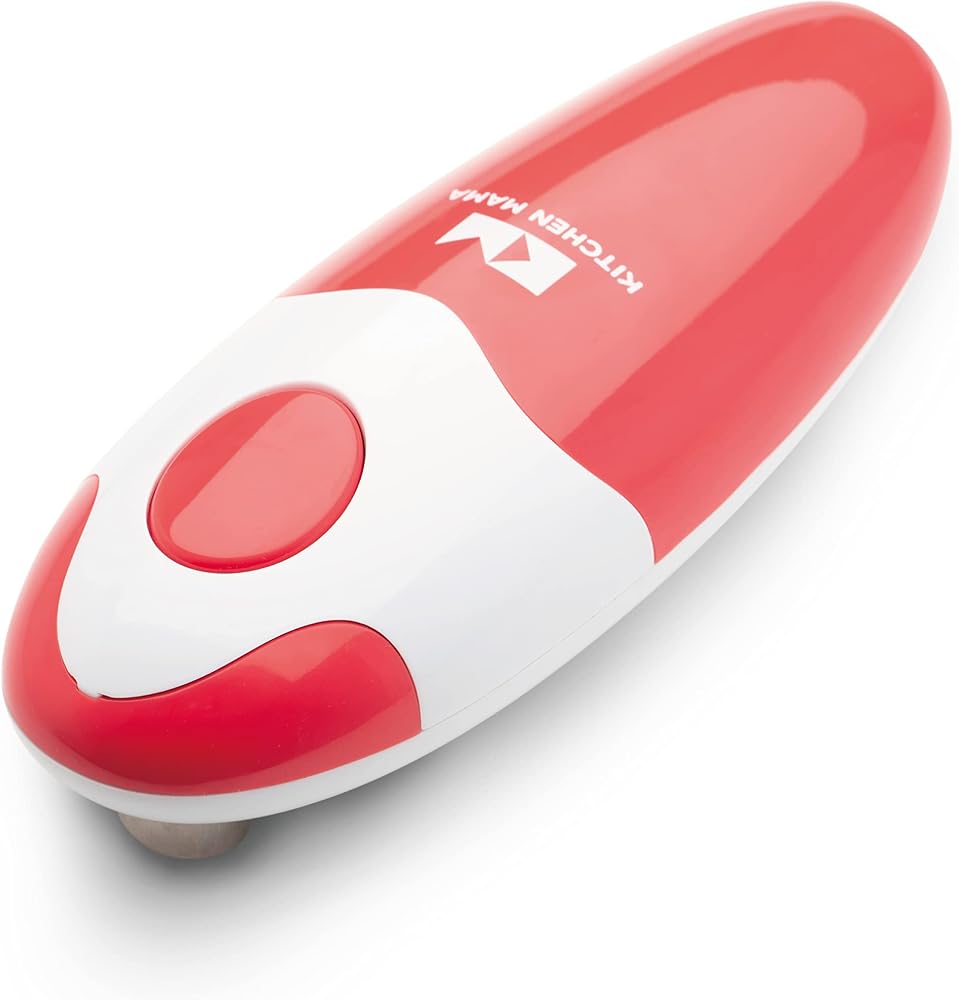
Original Kitchen Mama Auto if lifting the tin is awkward: Kitchen Mama Auto Electric Can Opener Battery Operated Red
The battery-powered tool comes down to a compatible can. Follow the separate start and stop presses.
View on Amazon (opens in a new tab)Use the original Auto instructions and review to check the stop and removal steps. The motor replaces repeated hand turning, while you still place the housing and lift it away. Check whether you can reach the control for that second press after the opener has moved. If your concern is reaching it twice, see the comparison of automatic and manual stop. A larger button or a different handle does not tell you how many times you have to touch it.

Cuisinart CCO-50BKN if a fixed lever and automatic stop suit you: Cuisinart Deluxe Electric Automatic Can Opener CCO-50BKN
You raise the can to the cutting head. The motor finishes the cut after you release the lever as directed.
View on Amazon (opens in a new tab)The black Deluxe review describes the magnetic lid holder and detachable cutting lever. Try carrying the unopened can to the intended spot and lowering it without reaching around other equipment. If the tin is already difficult to lift, consider moving the appliance to the can instead. A stationary machine makes the lever easy to find but still leaves you with the weight of the tin before and after the cut.

OXO Soft-Handled if you can comfortably hold and turn: OXO Good Grips Manual Can Opener And Bottle Opener Soft Easy-Grip Handle
The cushioned handles and oversized knob change the grip. The user supplies the squeeze and the turn.
View on Amazon (opens in a new tab)The Soft-Handled model review shows what to compare with the shape you already use. If turning is comfortable and the old handle digs into your palm, try the new shape in the working position before buying. If your hand tires while keeping the handles closed, a padded grip may leave the main problem in place. These recommendations are based on operating directions. We did not measure hand force or assess how a tool affects arthritis symptoms.
If you open several tins for one recipe, put the first lid away before picking up the next can. A stack of loose lids beside the cutter can get in the way as you put the tool down. Leave time between cans to change your grip or clear the counter rather than holding the cutter in one hand while arranging the next tin. If the first can is comfortable and the third one is not, make that part of the decision about using a motor or asking for help. The number of times you repeat a movement can matter as much as the first turn.
Plan a way out if the job becomes uncomfortable
If the cutter slips or only goes partway around, stop before deciding how to finish. Do not bend a partly cut lid or feel along the exposed metal. Read the release directions for the exact model. The incomplete-cut guide explains what to check once you have released the head. If a worn or damaged tool appears to be the cause, set it aside. Choose an unopened replacement or ask another person to help if the current can is difficult to handle.
Keep an alternative ingredient where you can reach it when a meal depends on a single can. Cartons, jars and pull-tab lids each need their own opening movement, so choose a replacement you already know you can handle. A backup is most useful on a day when your hands are already tired or the opener is unavailable. If someone usually helps with the cut, ask them to take over only once the tool is stopped and the can is supported. Keep the manual nearby so both cooks know which control releases the head.
Arrange the rest of the meal around the opened can
Decide whether you will pour, drain or scoop before making the first cut. Place a stable bowl or colander close to the can so you can move it only a short distance once open. If you sometimes need a hand with pouring but can handle the opening, arrange the handoff at the worktop. Keep the separated lid away from the bowl. When you put the opener back, check that its storage position leaves the handles or housing easy to retrieve for the next meal.
If a specific action remains difficult regardless of the opener, describe that action when you ask a clinician or occupational therapist about adaptations. For example, being able to press a button but unable to lift a full can points to a different setup from being able to lift it but needing help turning a knob. Bring the model name or a photo of the working position so the discussion can focus on the part you want to make easier.
Check where the opener goes after cleaning. A tool kept at the back of a deep drawer may require a pinch grip just to retrieve it. An electric opener stored up high creates another lift, even if you never raise the can itself. Put the tool and its directions where you can reach them before the next meal.
Frequently asked questions
Which opener avoids repeated cranking?
A powered cutter turns the wheel. Compare placement, stopping and lid removal before buying.
Can a padded handle replace an electric opener?
It changes where you grip. If holding the handles closed is uncomfortable, compare a different mechanism.
What if opening a can hurts?
Stop and set the can down securely. Get help or choose another setup rather than forcing the movement.
How do I avoid lifting a full tin to a cutter?
Compare a handheld electric model that can seat on a compatible tin on the worktop.
Bottom line
Prepare the worktop and lid tray first. Choose a powered or manual mechanism according to the action you can handle comfortably. Stop if you cannot keep the can or opener stable, and get help with the specific step that remains.