As an Amazon Associate we earn from qualifying purchases.
Check the lids before you leave
Line up the cans for your first two meals. A plain steel lid needs a cutter that fits its rim. A ring-pull tin can be opened by its tab or with a tool that lifts the ring. Bring a battery-powered cutter if turning a manual knob is the movement you want to avoid. You can use all three methods at a campsite, but they depend on different supplies and different kinds of lid. One dinner that comes in an easy-open package makes a useful fallback if the opener is missing or a rim will not fit.
Give yourself a clear place to work
Use a firm, level surface with enough room to set the opener and lid down. On a folding table, choose a spot where the tin sits without rocking or bridging a seam. Set the stove, hot cookware and bowls far enough away that you can turn the tool without bumping them. If two people are preparing food at once, give the person opening the tin one clear corner rather than asking them to hold it in the air. It is easier to set up that space before anyone lights the stove.
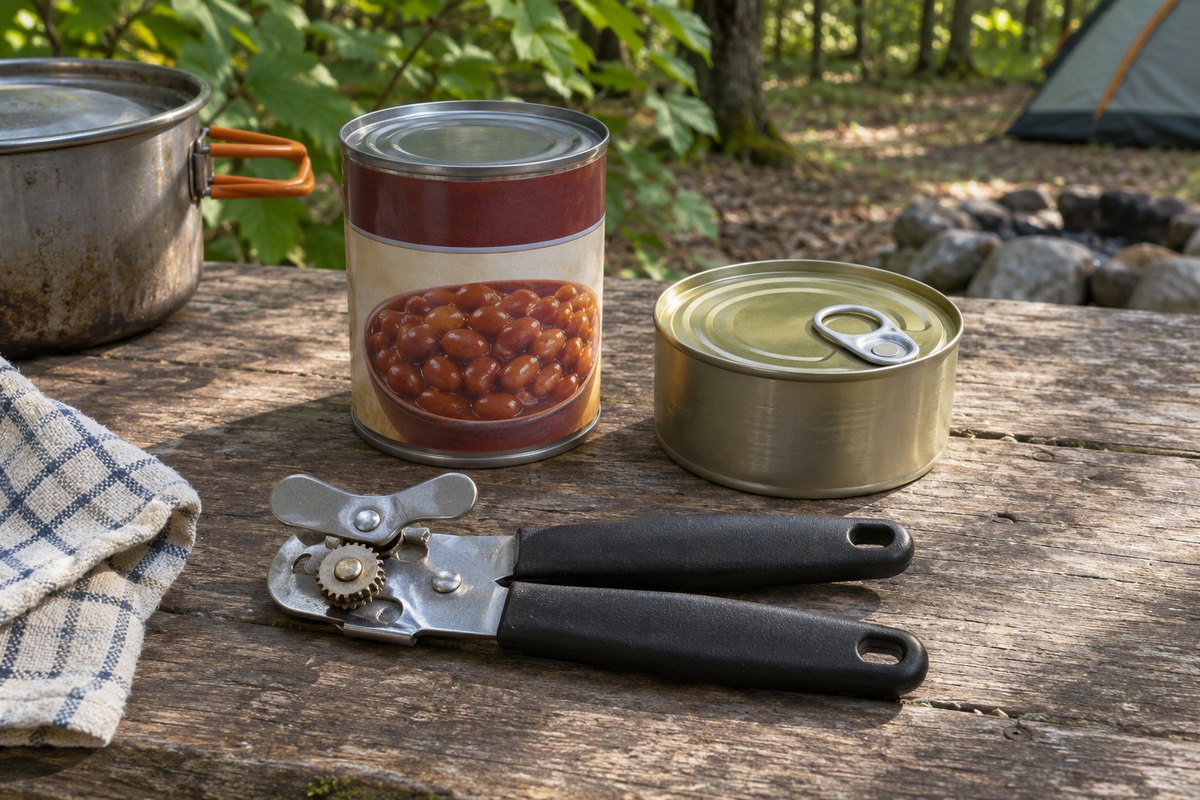
Check the container under good light. USDA advises against using food from badly dented, leaking or bulging cans. Set a suspect can aside without tasting the contents. A tin that was crushed in the bottom of the cook box should not become the test case for a tool you have never used. The guide to can damage explains how dents and seam damage affect the decision to open a tin.
- Set the tin on a firm level surface and inspect the lid and rim.
- Choose a cutter for a compatible plain rim, or a tab aid for an intact ring.
- Follow the tool instructions and clear a place for the removed lid.
- If the can is damaged or the tool cannot be safely released, switch to your backup meal.
Method 1. Use a manual cutter on a plain rim
Put the can upright and place the wheel where the manual shows. On a conventional rotary opener, close the handles around the rim and turn the knob. Leave room for your turning hand throughout the cut. A side-cut model may sit differently and have a specific reverse motion for release. Check its instructions before leaving home. If you are bringing a new side cutter for a first trip, try it on a compatible tin in the kitchen first so you know how to distinguish the end of the cut from a wheel that slipped.

Manual cutter example: OXO Good Grips Manual Can Opener And Bottle Opener Soft Easy-Grip Handle
OXO describes the Soft-Handled model as having cushioned handles and a large turning knob. It needs no outlet or batteries, but you still have to keep the handles closed as you turn.
View on Amazon (opens in a new tab)A manual opener is useful when it can live beside the ingredients in the same cook box. For a group meal, make sure the person with the opener will be there when the food is needed. If your left hand usually turns the knob, check the position from that side before packing. The left-handed setup guide covers that adjustment. For a different hand control or cutting path, compare the examples in our manual opener guide.
Method 2. Lift an intact pull tab
Look at the ring before reaching for a cutter. If it is intact and the can is sound, follow the package directions. A tab helper can give you a larger handle if the hard part is getting a finger under the ring or lifting it. Keep the tin stable and allow room for the lid to move away from the food. Use the helper in the position its maker shows. A hook only works if there is a ring it can engage.

Ring-pull helper example: Jokari Ring Pull Can Opener For Soda And Food Cans Arthritis Aid Black
Jokari describes a hooked tool that raises a compatible ring with a rocking action. It needs an intact pull tab. Keep a cutter for the plain-lid tins in the same meal plan.
View on Amazon (opens in a new tab)If a ring tears away before the lid releases, put the tin down. Do not pull on a partly separated flap. Only try a cutter if its directions allow the particular can and the lid can be handled without reaching near a cut edge. Switching to another ingredient is often easier than working on a bent lid at camp. Our guide to cutters, jar grips and ring aids explains which mechanism each closure needs.
Method 3. Bring a handheld battery opener
Set the tin on a level spot and place the tool according to its manual. The can stays on the surface while the motor does the cutting. Check the stop control before beginning. Some devices need another press after the cutter returns to its starting point. Give the tool room to travel and leave a place to set it down once you remove it. Keeping the tin on the table can be useful when you want to avoid holding two handles and turning a knob at the same time.
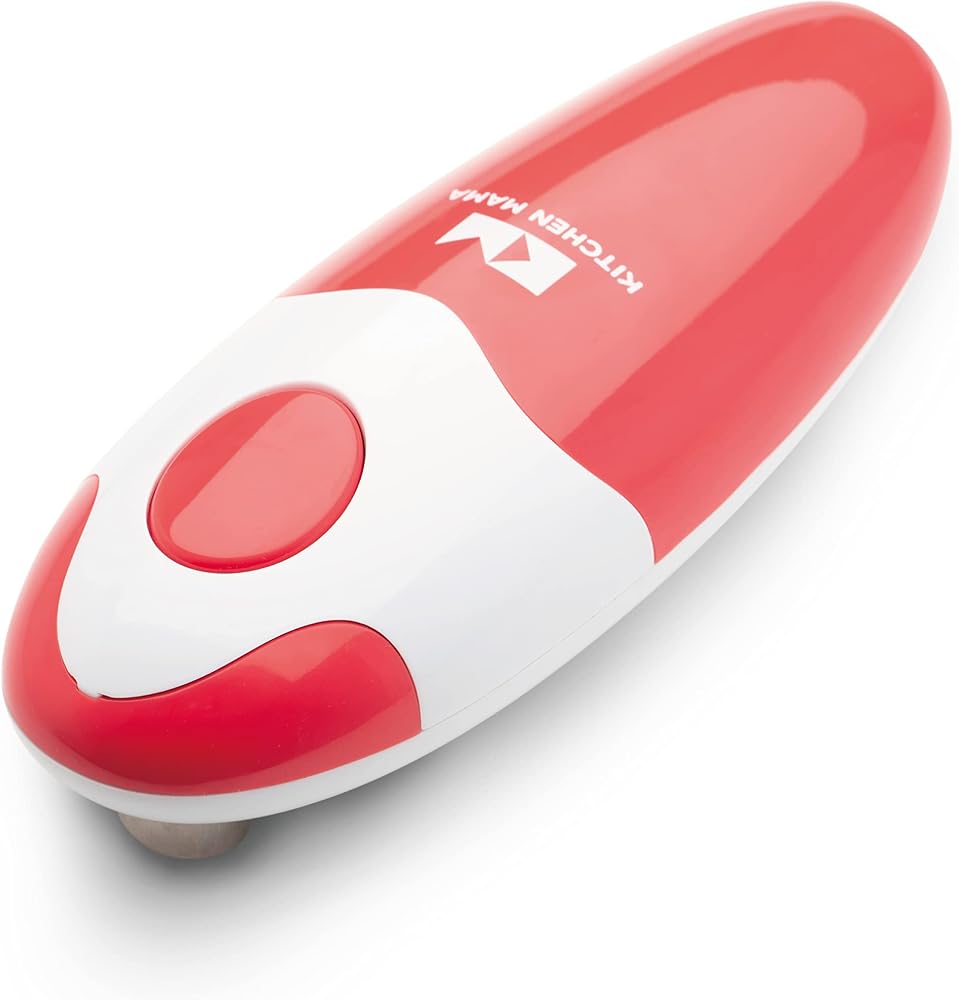
Battery cutter example: Kitchen Mama Auto Electric Can Opener Battery Operated Red
The original Kitchen Mama Auto uses four AA alkaline batteries. The manual describes separate presses to start and stop. Bring the specified cells and check rim compatibility before you leave.
View on Amazon (opens in a new tab)Put the complete spare set in its packaging or a battery case, away from loose metal utensils. If the tool stops during a cut, follow the stop and release instructions for that exact model. Do not tug on the housing or try to prise up the lid by hand. The incomplete-cut guide helps distinguish a head that lost contact from a normal stop. For choosing a tool to carry, see the camping and RV opener comparison.
Build a backup into the meal
For a weekend trip, pack the tool beside the first plain-lid can you plan to use. If dinner relies on three cans, check all three before loading the box. The package that gives you trouble might be a small can in a multipack whose full-size version has a pull ring. A photo of the front label will not tell you. Look at the lid itself and check that you can get the tool in place on the table you expect to use.
Bring a meal that uses a pouch or a different container if a cutter failure would otherwise leave you with nothing to prepare. Test that package at home as well. A tear notch or pull ring is helpful only when you can operate it. A spare manual opener is useful when someone in the group can comfortably use it. If nobody can, the alternate meal offers a more reliable fallback. This is also a useful choice for people who need to cook with one hand. See our one-handed setup guide before testing a new device outdoors.
At the end of the meal, clean the tool as its maker directs, dry it and return it to the same place. Keep the cutter and lid separate from the utensils you will handle again. If you depend on a battery opener in a camper, keep the instructions with it so the next person knows the stop and release routine.
- USDA guidance on damaged cans.
- OXO Soft-Handled specifications and Jokari ring-pull instructions.
- Original Kitchen Mama Auto operation and power details.
If you store group supplies in two vehicles, put one complete meal in the vehicle that will arrive first. Include the opener with that meal rather than sending it with the general utensils. A detachable pull-tab helper is small enough to get packed with bottles or cups by mistake. Put it alongside the tins that use it. For a shared list, write the closure next to each ingredient so another shopper knows to check the package if the brand is unavailable.
After dark, check that the rim is visible before using any cutter. Move a lantern to the side of the work area so your hands do not block the light. If the table or lighting will not let you see the tool engage, use the backup meal. Save the unopened tin for a stable, well-lit setup.
Frequently asked questions
Which method needs the least equipment?
An intact tab can work as directed without a separate cutter. If you cannot comfortably lift the ring, a compatible tab aid may help.
Can a tab helper open a plain-lid tin?
It needs an intact ring to lift. Use a compatible cutter for a plain metal lid.
What should I pack for an electric handheld opener?
Take the specified power supply, the instructions and a backup if no one can operate the manual alternative.
What should I do if the table wobbles?
Move the can to a firm, level spot before starting. Clear room for the tool and lid.
What if the only tin is badly dented?
Use another ingredient. USDA advises against using food from badly dented, leaking or bulging cans.