As an Amazon Associate we earn from qualifying purchases.
Set up the can before you pick up the cutter
For hand tremor, make the worktop do as much of the supporting as it can. Put an intact compatible can upright on a dry, level surface. Set out a lid tray and put the opener within easy reach. If positioning the tool is easier than raising a full can, try a compatible handheld electric model. If a fixed control gives you a more predictable place to reach, compare a countertop cutter after checking whether you can lift and support the can as directed. Plan the finish as well as the start. You will still need to release the tool, handle the lid and move the contents.
The International Essential Tremor Foundation's occupational therapy resource discusses adapting tasks and using nonskid surfaces to keep items in place. This guide applies the idea to arranging a can-opening station. It does not establish that any opener reduces tremor. The products below are compared by their published controls and setup instructions. We did not conduct usability trials with people who have tremor.
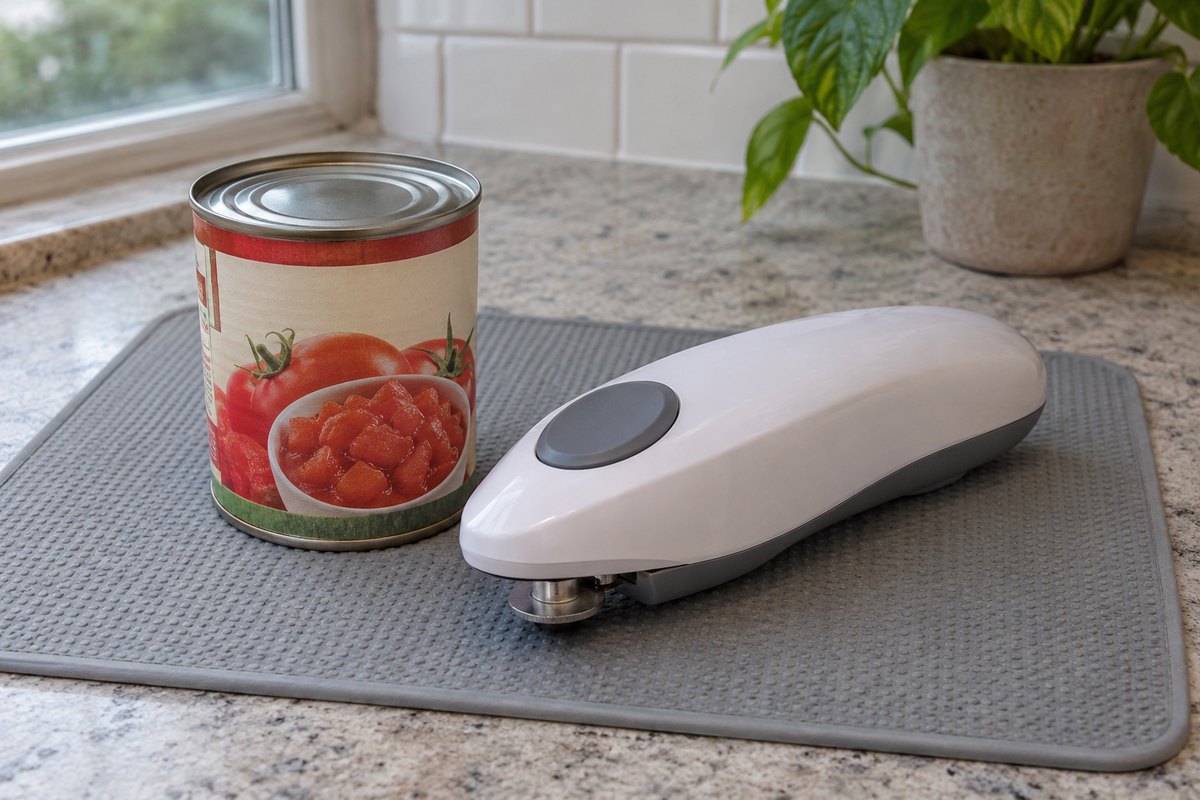
Work through one can at a time
- Start with a sound can the opener instructions cover. Clean the lid before opening and dry the handling surfaces. Clear enough room that the can and the cutter can move as intended without contacting other utensils.
- Put the can where you can see the rim from your usual working position. Set down anything else you are holding. Keep the lid tray close enough that you can move the detached lid without reaching across food.
- Seat the cutter as shown for the exact model. If the head does not settle into position, pause and reset it as directed. Avoid holding the moving head to compensate for an unstable setup.
- Use the specified control and stay with the cut. Some tools stop automatically, while others require a press or a lever release. If the cutter slips or the rim moves out of position, stop according to the booklet.
- Once movement stops, follow the release instructions. Set down the opener or can as directed and keep your fingers away from the cut edge. Ask for help if you cannot support the can while removing the tool or lid.
For the first try, choose a recipe that can wait or have another ingredient available. Do the arrangement once with a closed can. If you normally open a tin beside a mixing bowl, put the bowl in place. A clear counter in a demonstration is different from a counter already in use after dinner prep has started. If your usual spot is crowded, find a section of worktop you can keep clear until the lid is away and the food has been moved.
If the placement is easier with a second person, agree on that before you start. One cook might clear the counter and place the tool, while the other uses the control or handles the ingredient after the lid is away. Finish one part before anyone else reaches for the tin. If the helper takes over a can after cutting, set it down first and keep the lid in a separate tray. A simple handoff can preserve the parts of the task you prefer to do yourself. It also avoids having two people reach toward the same cutter when the control is still active.
Pick a tool by the action you can control
Kitchen Mama Orbit One for automatic stop with the can down: Kitchen Mama Orbit One Rechargeable Electric Can Opener, Red
The handheld USB-C model comes to a compatible can. Read the seating and removal directions.
View on Amazon (opens in a new tab)Our rechargeable and battery comparison covers the Orbit One's controls. Automatic stop removes the need to reach for a stop button after the cut begins. It can be helpful when reaching for a moving control is awkward. Check the initial placement and final removal separately. If you can lift the housing but the can moves with it, consult the release instructions or get help. Give the charger a dry storage location outside the path of food preparation.
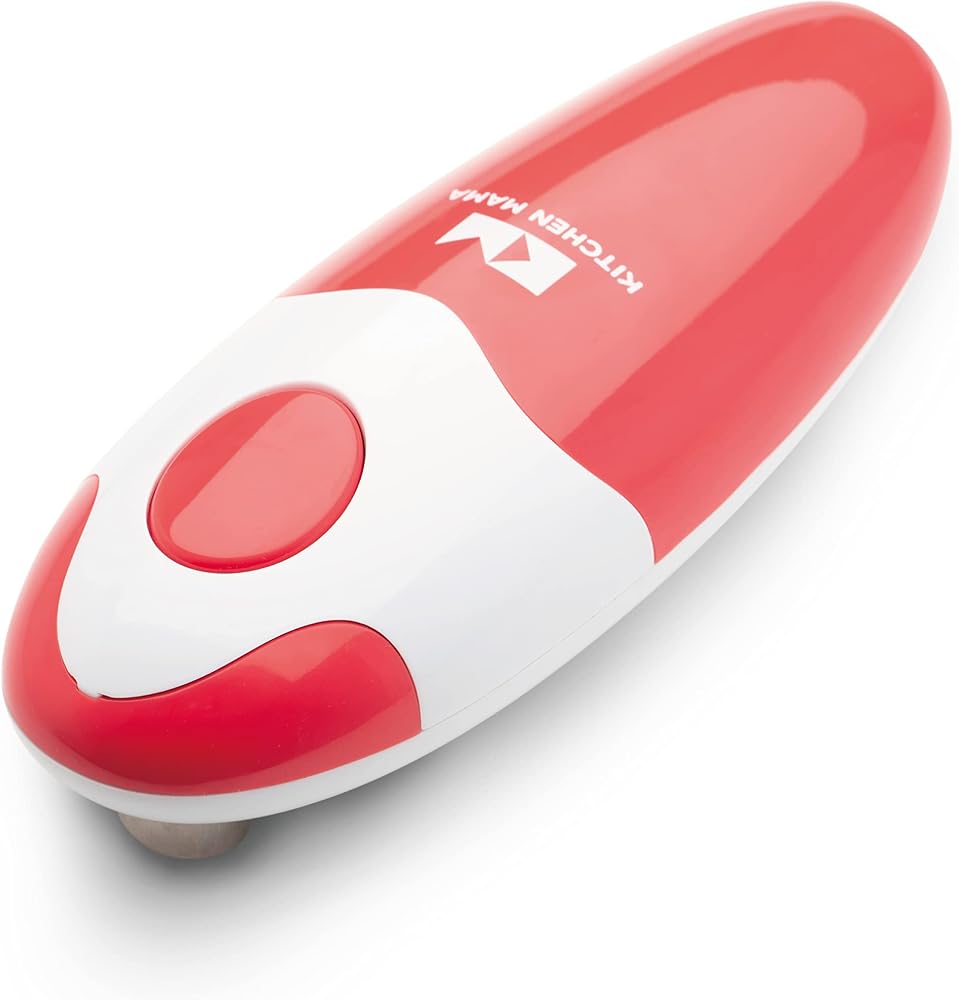
Original Kitchen Mama Auto if you can reach the button twice: Kitchen Mama Auto Electric Can Opener Battery Operated Red
A battery-powered handheld model with separate start and stop presses. Confirm the rim fit.
View on Amazon (opens in a new tab)See the original Auto review for the second press and the four AA alkaline batteries. Look at where the control will be at the end of the turn, rather than checking only whether your hand can find it at the beginning. If you cannot reach the stop button confidently from the usual position, compare an opener that describes automatic stop in its manual. The guide to one-touch controls shows examples of those differences.

Cuisinart CCO-50BKN for a fixed control if the lift works: Cuisinart Deluxe Electric Automatic Can Opener CCO-50BKN
Bring the can to the cutting head as directed. The motor stops automatically at the end of the cut.
View on Amazon (opens in a new tab)The black Cuisinart review explains how the can comes off the head and which lids the magnet can hold. A fixed tool keeps the lever in one place. Check whether you can raise the tin without tipping it and lower it afterward. Consider where the can will land if the lid is not held by the magnet. If moving a full tin through both positions is awkward, the handheld arrangement may ask for less handling of the heavy container.
Change the work area before trying again
If you are working seated, check the line of sight from the position you normally use. You may be able to see the button while the housing hides the spot where the head meets the edge. Changing the can's location can help you see alignment without leaning over the opening. Change the approach while still using the orientation in the manual. The one-handed tutorial breaks down placement, stopping and removal if your available support is limited.
Keep the power cord and spare utensils out of the working path. For a handheld tool, leave a landing area on the side you can reach most readily. For a countertop machine, check the clearance around the head and under any shelves. A tall soup tin and a shallow fish tin may need different approaches. See how to check working clearance if the footprint of the appliance fits but the position of the can is hard to manage.
Leave the cans you have yet to open away from the working area. A row of tins can take up the spot you meant to use for the electric housing. Bring one to the counter, finish the cut and move the lid before starting the next. If the station only works with everything arranged a certain way, take a photo of the empty setup so other people in the kitchen can put things back. Keep the stop and release directions beside the opener. The useful part of the arrangement is being able to repeat it when another person has been cooking there.
Stop when the cut or lid does not look right
If the head slips, keep your fingers away from the partly cut edge and follow the exact release instructions. If the lid is hanging from a strip of metal, avoid trying to snap it free. See the incomplete-cut guide once the tool is stopped. A can that you cannot release or support securely is a good reason to ask someone for help or change the meal.
When the lid is off, lower the can to a stable spot before draining or pouring. Set the bowl or colander where it can stay put while you move the can. If lifting the opened can is the only remaining difficult action, arrange help for that step rather than replacing a cutter you can use comfortably.
If you are unsure how the tool behaves after a stalled cut, contact its manufacturer with the model number and ask how to release it safely.
Frequently asked questions
Which style avoids lifting the can?
A compatible handheld cutter comes down to a can on a stable worktop.
Does an electric opener always stop automatically?
Read the exact instructions. Some models need a second press or a lever release.
What if the can shifts during cutting?
Follow the model stop and release directions. Avoid grabbing the moving housing or cut metal.
When should I ask for help?
Ask if you cannot position, support or release the can securely. You can share the difficult step after the cutter has stopped.
Bottom line
Start with stable placement, a clear view of the rim and room for the dismounted tool and lid. Choose a control you can reach and a stop procedure you can follow. If the can cannot stay supported through removal, pause and get help.