As an Amazon Associate we earn from qualifying purchases.
Choose a tool around what you can keep steady
An electric opener takes over turning the cutter. You still have to bring the can and the cutting head together, reach the control and separate the two afterward. If you can place a tool on a can that stays on the counter, the Kitchen Mama Orbit One is one option to compare. If a lever in a fixed position is easier to reach and you can lift your usual tin, look at the black Cuisinart Deluxe. The Hamilton Beach Smooth Touch is an alternative for someone who prefers a side cut and can hold its lever down through the turn.
Start with the part of your current routine that gives you trouble. If the can rocks when you first try to attach the head, look at the way it is supported during setup. If your hand has trouble returning to a moving control, compare an automatic-stop model. If the loose lid is the concern, read the removal directions. This guide compares published operating sequences. We did not measure vibration or test tools with people who have tremor. For the sequence with a tool you already own, see the worktop and opening tutorial.
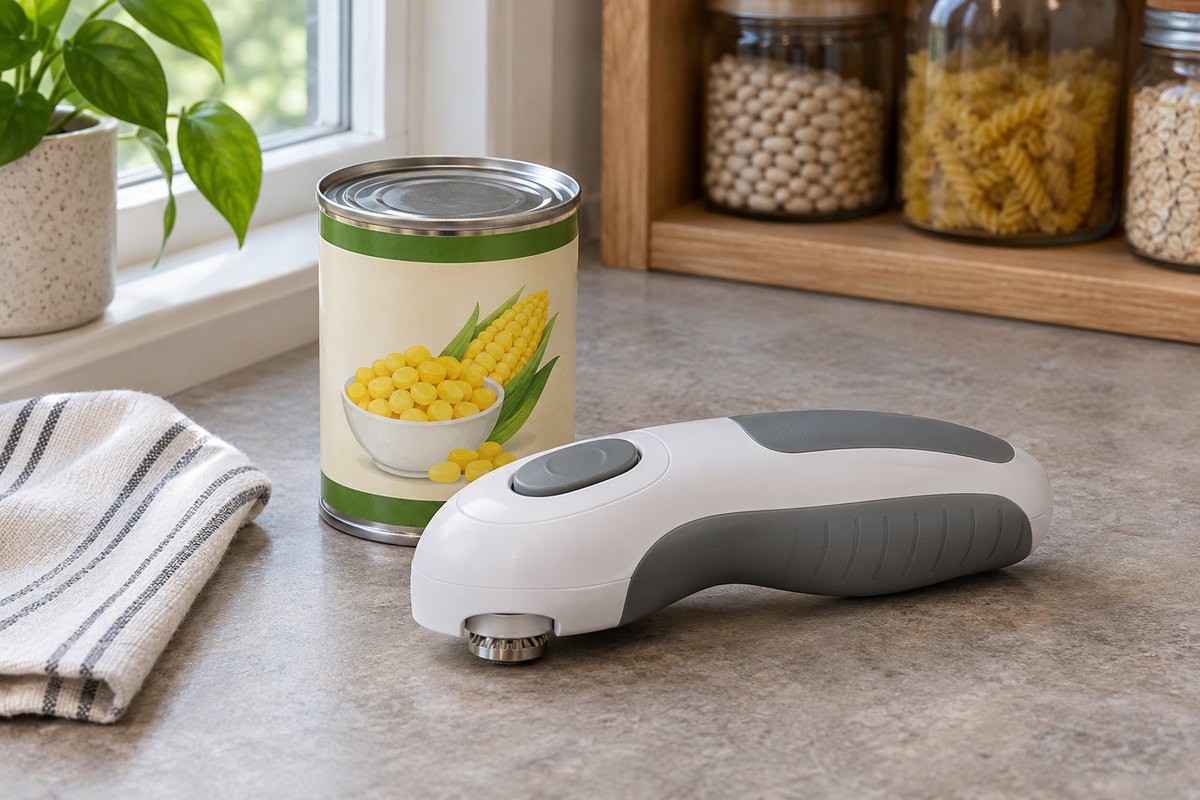
Compare three ways to support the can
Kitchen Mama Orbit One if the can should stay on the worktop: Kitchen Mama Orbit One Rechargeable Electric Can Opener, Red
A handheld rechargeable cutter with documented automatic stop. Check that you can position it and lift it away as directed.
View on Amazon (opens in a new tab)The Orbit One makes sense when you are comfortable setting the tool on a compatible tin and would rather avoid reaching back to stop the motor. Watch where your hand would go while aligning the cutter. If the housing obscures the rim, check the instructions for the visual reference you can use. Leave a clear area beside the can so you can put the tool down immediately after removal. The battery and rechargeable comparison covers its USB-C charging and what happens when you choose a different handheld model with a separate stop press.
Think about the first and last lifts as well. Picking up a closed can from the cupboard feels different from lifting a housing off a can with a loose lid underneath it. If the opener cannot be removed while the tin stays stable, pause and follow the supplier's release instructions. Before you buy, ask to see the removal step on the model you intend to order. A short product demo that ends when the motor stops leaves out the motion you need to assess.

Cuisinart CCO-50BKN for a lever in a fixed position: Cuisinart Deluxe Electric Automatic Can Opener CCO-50BKN
A corded example with automatic stop. Check the lift to the head and the removal sequence.
View on Amazon (opens in a new tab)The black Deluxe review describes the fixed head and detachable lever. At a clear station, the control remains in the same position each time you approach it. You support the can as directed when you bring it up and remove it. Try that path with the can unopened. If you cannot bring it to the head upright or lower it steadily, the stationary lever may solve one reach while leaving the lifting problem in place. The lid holder works on lids that are attracted to the magnet, so check how you would deal with a lid that stays with the can.

Hamilton Beach Smooth Touch if holding a lever suits you: Hamilton Beach Smooth Touch Electric Can Opener With Easy Push Down Lever
The documented 76606ZF makes a side cut and calls for holding the lever through one rotation. Confirm the suffix.
View on Amazon (opens in a new tab)The Smooth Touch review explains what you watch during the turn and when to release the lever. Consider it if you want the lid separated at the outer seam and can comfortably keep a hand on the lever. If sustaining the press is the reason you dislike your current tool, give automatic stop more weight. Smooth Touch also asks for a separate lid removal step. Read the comparison of lid cuts if you are deciding by what happens to the metal after cutting.
Write down who normally gets the tool ready. A battery door or a charging port can be awkward even when the opener is easy to start. If you expect someone else to charge it, choose a storage spot both people can use. Put a note with the model name and the stop sequence where the person opening cans can read it. Do the same for a fixed machine with a detachable lever. The next cook ought to know how it was cleaned and reassembled before finding that the head sits differently from the last time.
Rehearse the setup with your own cans
Use one short and one tall unopened tin. Put them where you normally cook, rather than choosing a temporarily empty stretch of counter. Check the reach from the height where you actually work. A handheld tool may be easy to start when looking down from above but harder to align from a lower seat. A fixed head may be easy to see while the height of the lift makes a heavy tin difficult to manage. Look for the first point where you would have to move the tin and another item at the same time.
Put the lid tray beside the can and leave space for the opener. If the normal worktop is crowded, see whether a different dry surface gives you a clear route. Do not wedge the can between utensils to hold it during a cut. Some designs need the can or housing to travel around the edge. Follow the manufacturer's placement instructions and leave that path clear. The compact opener guide explains why the machine footprint alone can tell you very little about the working area.
If you intend to keep the machine at a permanent station, leave room for the rest of the meal. Try the arrangement with the bowl or colander that normally follows the can. If the can has to travel from one end of a galley kitchen to the other after opening, a handheld tool may let you do the work closer to the receiving bowl. If a fixed tool already sits beside the prep area, moving the empty tray may be enough. Count the handling you do after the lid is lifted as part of the buying decision.
Compare where the can is supported during setup. The Orbit One sits over the rim while the can stays down. The CCO-50BKN gives you a fixed target above the counter. The 76606ZF also puts its control in a fixed location but requires a continuous press. At the actual worktop, test which layout lets you approach the control without crossing the can’s path. If the person can align a stationary button but not keep a raised tin aligned, that distinction can decide the purchase.
Check the controls when the normal cycle does not finish
Find the normal stop directions and the release procedure in the booklet before the first use. Some machines stop automatically after completing a cut. That is a different situation from a cutter that no longer moves while still gripping the rim. Ask the supplier how you would release the head if the can shifted or power failed. Keep the directions at the station if someone else uses it too. A control that works for an ordinary finish can be straightforward, while releasing a partly cut can still takes a deliberate handoff.
If the tool slips, stop using the model's directions and keep your fingers away from the edge. Do not try to bend a lid that stays partly attached. See the incomplete-cut guide after you stop the motor. A helper can manage just that part of the operation while you do the rest of the meal. If you routinely share tasks, the shared-prep guide covers choosing a stable place for that handoff.
On a day when the same setup is harder to use, choose a meal you can prepare without that particular can or ask someone to handle the part that needs support. Keeping another ingredient nearby makes it easier to pause instead of pushing on with an unstable container. If you compare tools again later, record which movement was the problem.
Frequently asked questions
Which design keeps the can on the counter?
A compatible handheld opener is placed onto the upright can.
Does automatic stop remove the lid?
Check the model instructions for release and lid removal after stopping.
What if reaching a button is difficult?
Compare a reachable fixed lever with a handheld model whose placement and controls you can manage.
What should I check on an unopened tin?
Try the reach, sight line and lift, and plan where the tool and lid will go afterward.
Our verdict
Choose a handheld automatic-stop cutter when keeping the tin on the counter and avoiding a second press both matter. Compare a fixed automatic-stop unit when the lift is comfortable and you want the lever in one place. Consider a fixed side cutter when you can hold its lever and the lid shape matters more. Judge the setup and release as carefully as the cut.