As an Amazon Associate we earn from qualifying purchases.
Make the opening station predictable
If hand tremor makes can opening difficult, buy for the movement that is hardest to repeat. A handheld electric cutter lets the can stay on the counter. A fixed electric cutter puts the lever in the same place each time, but requires you to raise and lower the can. A manual side cutter can work for someone who comfortably turns a knob and wants a separate way to lift the lid. These are different routes to the same ingredient. Start by checking whether the user needs help lifting the can, keeping a tool on its rim, reaching the stop control or handling the lid.
The Parkinson's Foundation daily living resource recommends consulting an occupational therapist about adaptive equipment. The products here do not treat tremor. We compared model instructions, rather than measuring vibration or testing products with people who have Parkinson's. If the kitchen user already has individualized recommendations, use those to decide what to try. The worktop setup tutorial gives a sequence to use with a tool you already own.
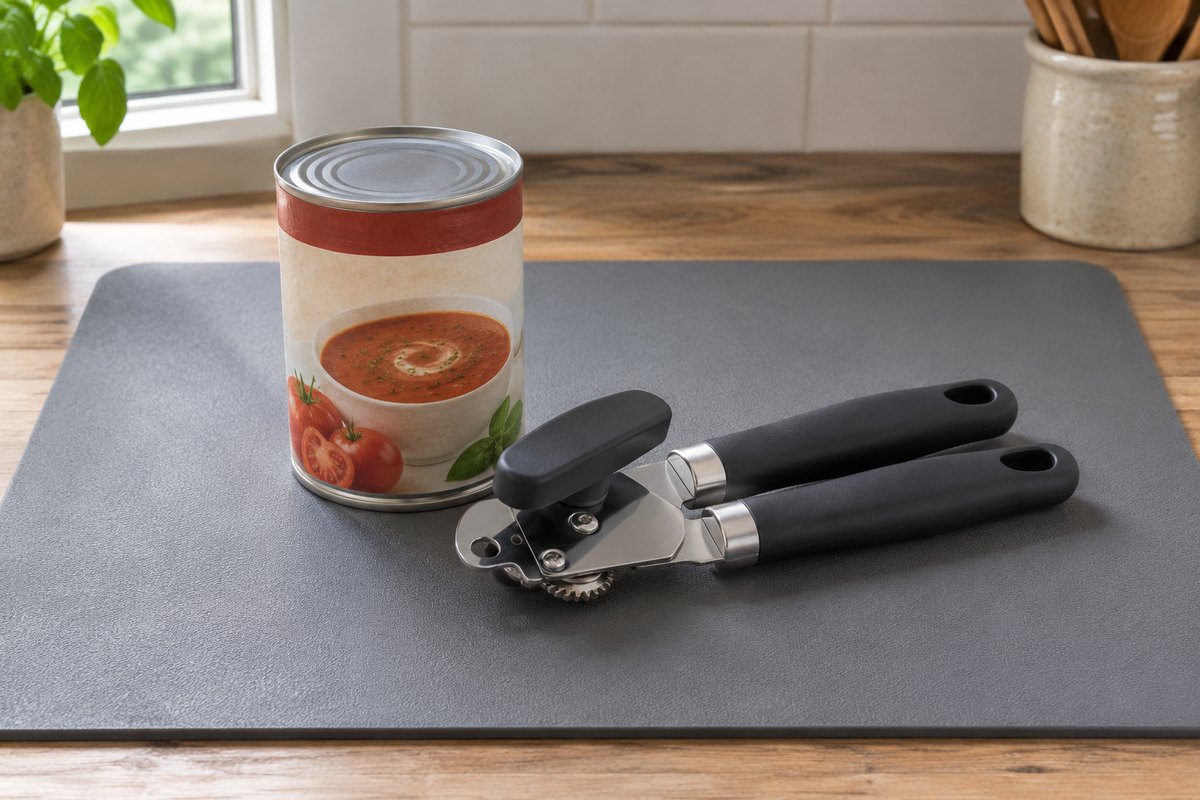
When the can is easier to keep on the counter
Pick a station you can return to after putting the groceries away. The Orbit One page describes a normal automatic stop. Mark where the opener sits beside the can so setup starts from the same position each time. The Cuisinart product page and manual describe a fixed head and removable lever. If someone frequently takes the lever off for cleaning, confirm that it is back in place before lunch prep. A motor cycle and a stable setup are separate questions.
Kitchen Mama Orbit One for handheld placement and automatic stop: Kitchen Mama Orbit One Rechargeable Electric Can Opener, Red
The manufacturer documents USB-C charging and automatic stop. Check your can fit and the removal directions.
View on Amazon (opens in a new tab)If the user can lower the tool onto a compatible can, the Orbit One lets the worktop support the tin during setup. Once the cutter starts, automatic stop removes a second reach in a normal cycle. The user still has to lift the unit away and handle the lid. Give the housing a landing spot within reach. If you cannot remove the tool without moving the can, use the release instructions and ask for help as needed. The power and controls comparison describes how the charging and stop routine differs from battery models.
Try the reach with two closed cans of different heights. A short fish tin can sit low enough that a handheld housing blocks your view of the rim. A tall can may be easier to see but have less clearance beneath a shelf. Use the maker's placement diagram for both. A large button is useful if it is where you can reach it after the tool is seated. To learn what advertisers mean by one touch, see the automatic and manual stop guide.
When a stationary lever is easier to find

Cuisinart CCO-50BKN for a fixed lever and automatic stop: Cuisinart Deluxe Electric Automatic Can Opener CCO-50BKN
Raise a supported can to the head as directed. Check the lowering step and the magnetic lid holder.
View on Amazon (opens in a new tab)The Cuisinart review describes the lever and how the machine stops after the cut. A fixed head suits a setup where the user can bring the can to the machine and has a clear place to lower it. It can also suit a household where someone else does the lift. Check what you will do when the magnet does not take the lid. A magnet holds compatible metal lids, but it cannot remove a lid made of material it does not attract.
Choose where the case will sit before comparing the catalog dimensions. A cabinet can leave enough room for the housing but obstruct your reach to the lever. Put a closed can on the empty worktop and rehearse how you will bring it up and back down. If the opened can would have to cross a busy prep area, put the receiving bowl beside the station. Check who will handle a detachable cutting assembly after cleaning and where it will go when it is dry.
When a manual cut and pickup tool suit the cook

OXO Smooth Edge for manual turning and built-in lid pliers: OXO Good Grips Smooth Edge Manual Can Opener No Sharp Edges Soft Grip
The tool cuts at the outer seam and has separate lid pliers. Check that the user can place it, turn the knob and use the pliers.
View on Amazon (opens in a new tab)The OXO product instructions show the cut path and the pliers. This layout is an option if the person likes a manual turn or a helper usually makes the cut. The lid pickup is a separate step and can be assessed on its own. Plan where you will deposit the lid after lifting it. If the continuous turn is difficult, the pliers alone will not change the cutting movement. The cut-path comparison explains why the shape of the detached lid depends on where the blade cuts.
Keep tool access in the comparison. A small manual cutter can be easy to pick up from a shallow drawer and hard to retrieve from under a tray of utensils. The corded model can stay in the same place but requires a practical outlet. The handheld model moves to the meal prep area and needs somewhere to charge or store batteries. Compare those steps with the way the user already cooks. Saving a movement at the lid is more helpful when retrieving the tool does not create an equally awkward reach.
Try the arrangement during a familiar meal
Start with one intact closed can and a recipe the person knows. Put out a separate tray for the lid and a receiving bowl for the food. Ask the cook where they want the tools and which step they want to do first. If a helper will take over part of the job, make the handoff after the cutter has stopped and the can is supported. See the guide to sharing the workstation for ways to divide setup, cutting and removal.
Check the fallback as well. If the tool slips or the lid remains attached, follow the exact release instructions and keep hands away from the exposed metal. The incomplete-cut guide covers what to check after stopping. If the chosen tool cannot be used comfortably on a particular day, use an alternative ingredient or ask someone to help. A backup package should be one you can already open according to its directions. A pull tab may eliminate the cutter but still needs grip and support.
If you test more than one tool, keep the counter and can the same for each comparison. Write down the exact step you prefer on each model. A tool can be easier to start on the first try but more difficult to release after the cut. Compare what would happen on an ordinary day when the kitchen is already in use, and give the intended cook time to try the position rather than deciding from a demonstration alone.
If you usually work from a seat, compare the tool from that position instead of leaning over the counter to see the head. A person who can comfortably reach a control may still struggle to see where the lower rim meets the cutter. Bring the closed can to the front of the worktop while leaving enough surface to support it. If that would make the counter too crowded, rearrange the tools before starting rather than moving the can after the wheel engages. Ask another cook to watch the initial placement if seeing it clearly is the issue.
When buying for someone else, leave the old tool available until they can compare the two setups. Ask where an easier movement would make the biggest difference. The answer can change with the recipe. Someone opening a short tin at breakfast may want to avoid a cramped knob. Someone cooking a batch of soup may prefer a fixed station and let another cook bring the tins to it. A comparison of start controls cannot show which arrangement will work better during those meals.
If the same kitchen handles several shapes of metal tin, save the manual's compatibility information alongside the product name. A replacement bought by another household member can look similar and still behave differently. Keep the instructions for the exact model and check the can again when the grocery packaging changes. Use the one that seats as directed on the containers you buy most.
Frequently asked questions
Does an electric opener treat tremor?
The motor changes the opening task. The product is a kitchen tool.
Which model avoids bringing a can up to a cutter?
A compatible handheld model can sit on top of the can while it is on the worktop.
Is the lid magnet a guarantee of pickup?
It only holds lids attracted to it. Plan the other removal method in advance.
What should I test first?
Try the placement, reach and release with a typical closed can at your normal workstation.
The verdict
Choose a tool according to the lift, control and release the cook can manage. An automatic stop can help without making the rest of the opening sequence automatic. Try the layout at the worktop before choosing a permanent station.