As an Amazon Associate we earn from qualifying purchases.
Check whether the tool holds the lid, the jar or both
A jar opener that grips a cap can make turning easier, while leaving someone to steady the glass. With only one hand available, separate those jobs before buying. A powered opener with two sets of jaws is worth looking at because it can grip the cap and body of a compatible container during normal operation. You still need to place and remove it, and some containers require extra support. A mounted gripper holds the lid at a fixed height while someone turns the glass. If lifting the jar is difficult, that setup may move the hardest part of the job off the counter and into the air.
Take out the package that causes the most trouble. Check the cap diameter, the curve of the body and how much the full jar weighs. Then ask whether you can carry it to the worktop, position the opener, and get the loosened lid off. The words hands free often describe what happens while a device is running. They say little about the seconds before it starts or after it finishes. Our jar-opening walkthrough explains how to distinguish a slipping base from a cap that needs extra grip.
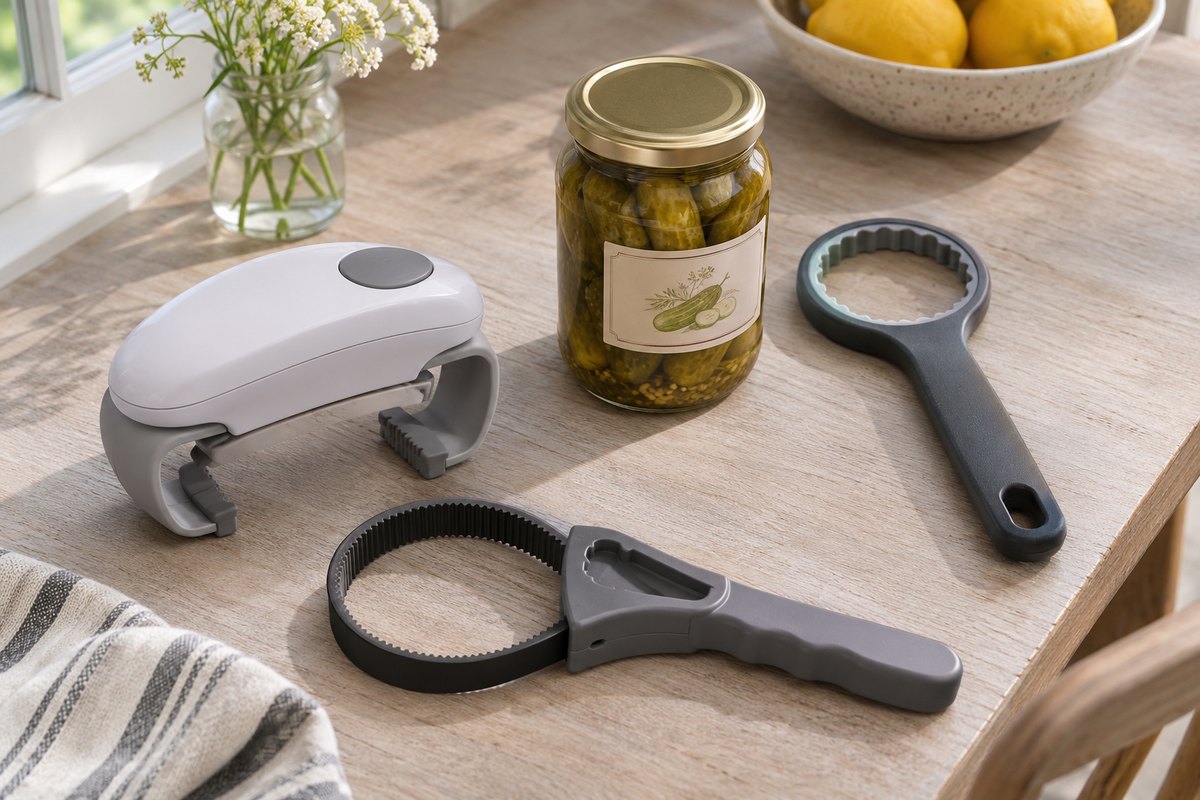
Compare the parts you still have to do

KitchenMUH for a powered turn on a compatible glass jar: KITCHENMUH Electric Jar Opener For Seniors With Arthritis White
The two sets of jaws act on the jar body and lid. Check both dimensions and the support requirements before buying.
View on Amazon (opens in a new tab)The KitchenMUH model guide covers fit, AA batteries and release. The KitchenMUH booklet specifically calls for using both hands to steady small or tall jars during operation. If most of your jars are in those categories, do not assume the powered turn makes the entire job possible with one hand. Check the exact instructions for your version. Measure the cap and where the outer jaws would contact the glass. Wait for the jaws to reset, and lift off the tool only when it can be removed as directed.

Under-cabinet gripper to explore a fixed lid position: Jar Opener For Seniors Easy Grip Under Cabinet Opener For Weak Hands Arthritis
Confirm the attachment, lid range and working height for the exact model. Check whether the method requires both hands on the jar.
View on Amazon (opens in a new tab)A mounted gripper can keep the cap from turning. The person still supplies the turn by moving the jar. As an example of how this design works, the UN-SKRU instructions show two hands turning the jar. That is a separate product from the catalog card, and its instructions should not be applied to another mount. See the comparison of mounted and handheld tools to work out whether you can use a fixed height comfortably. If lifting and turning the container together is not manageable, put the powered option or an assisted setup higher on your list.

OXO Good Grips with base pad for an assisted setup: OXO Good Grips Jar Opener With Base Pad
The pad adds support at the base. The opener still requires a person to turn the cap.
View on Amazon (opens in a new tab)The OXO guide describes the two-piece layout. It is useful for comparing a jar that stays down on the worktop with a jar held at a mount. A pad helps at the base; it does not clamp the glass in place. If you cannot steady the jar and operate the lid tool as directed, ask someone to help with the turn or compare a different mechanism. This is a practical tool for shared work when one person steadies the jar and another performs the turn, provided the motions can be coordinated without the glass tipping.
A jar can fit the diameter ranges on a listing yet still be awkward where the body narrows near the lid. Take both measurements from the closed container and compare them with the drawing for the opener. If you intend to order on behalf of another person, write the numbers down along with the food and package size. That is more useful than asking a seller whether the opener fits a medium jar. Request the supported body shape as well as the size. A clear answer can save you from having to try a poorly matched opener on glass.
Plan removal as well as opening
Set an unopened jar on a dry, level worktop and put a saucer beside it. Find a separate spot for the opener. With a powered model, rehearse how you will move the housing away without bringing the glass with it. With a mounted tool, rehearse where you will lower the jar when the cap is loose. If you need a person to help, put the jar down before handing off. Avoid holding the jar in the air while another person reaches for the lid. A clear counter gives you somewhere to pause when a step needs more support than expected.
A new jar and a jar that has already been opened can give you different problems. The first turn may take more effort on a fresh seal. A person may be comfortable getting the lid off later even if they want help with that first opening. Ask which part is worth changing. If you buy a powered tool for the first opening alone, check that you can still use it with the jar sizes you actually buy. For a range of grip and power options, see the jar opener shortlist.
In a shared kitchen, agree on the place where the jar will be set down if the opener sticks. A dry space directly in front of the cook is usually easier to reach than a gap between the sink and another appliance. If another person will handle the first tight opening, let the person using the jar choose where to leave it afterward. That may allow them to finish the meal without carrying the jar to another room. Put the tool aside before reaching for a spoon or trying to transfer the food.
Check what you do with the food next
Plan whether you will scoop or pour. A loose lid may be easy to lift, while a full pickle or sauce jar can be hard to carry with the same hand. Put the serving bowl close enough that the jar does not have to cross other equipment. If you usually buy a larger size, compare whether a smaller jar is easier to carry, hold or set down. Check the actual lid before switching sizes. The cap can be the same even when the weight and the dimensions of the body change.
Keep the device and its booklet somewhere you can reach. If the opener uses batteries, check whether you can remove the cover and replace them, or whether someone else will do that. If you are considering a mount, check whether its grip can be cleaned where it is installed. The powered jar opener guide for caregivers covers ways to share setup and maintenance when the person who uses the tool may not be the person who puts it away. These examples use documented features. We did not run single-hand usability trials.
A tool for this job should fit the container without improvised clamps or pressure against the glass. Avoid continuing if the jar tips, the grip loses contact, or the tool cannot be removed as directed. Set the jar down and get help with that step. For lids that are not screw caps, the container closure guide shows why a tab aid or can cutter works differently. A product that helps on one closure may have no useful grip on another.
If a suitable jar is only available in one large size, ask whether the same ingredient is sold in packaging you can open more readily. Checking that option may be worthwhile before installing a permanent fixture or buying a motorized tool.
Frequently asked questions
Does hands-free turning mean I can do the entire task with one hand?
Check how the jar and tool are placed, supported and removed. The motor only handles part of the task.
Can the KitchenMUH always be used with one hand?
Its instructions call for two-hand support on small or tall jars. Match the instructions to the exact model and container.
Does a pad hold the jar by itself?
It adds grip under the jar on a suitable surface. You may still need to steady the glass.
How do I check a mounted opener before installation?
Try the lift with a closed jar and check the maker’s support and turning instructions at the intended height.
The verdict
Compare powered jaws when the jar can stay supported on the worktop. Compare a mount only after checking its lift and hand requirements. Use a base pad and manual gripper as an assisted option when the user cannot steady the glass and turn it alone.