As an Amazon Associate we earn from qualifying purchases.
Buy for the step the cook wants to do
A jar opener can help someone take part in meal prep after a stroke by making a particular task easier. Start with the task the person wants to do. They may be able to hold a jar steady but need help getting a grip on the cap. They may want to turn the lid with a handle but need someone else to keep the glass from moving. They may find the turn difficult and prefer to try a motorized device. Decide that beside the usual worktop with a closed jar on hand. There is no universal tool that makes every part of opening and using the contents possible for everyone.
The American Stroke Association meal prep guide lists nonslip utensils and one-handed openers among kitchen adaptations. Use the recommendations you already have from your care team when deciding how much handling to try. An occupational therapist can help match a tool to the kitchen activities the person wants to resume. The products here are compared by their documented mechanisms and instructions. We did not evaluate rehabilitation outcomes or run trials with stroke survivors.
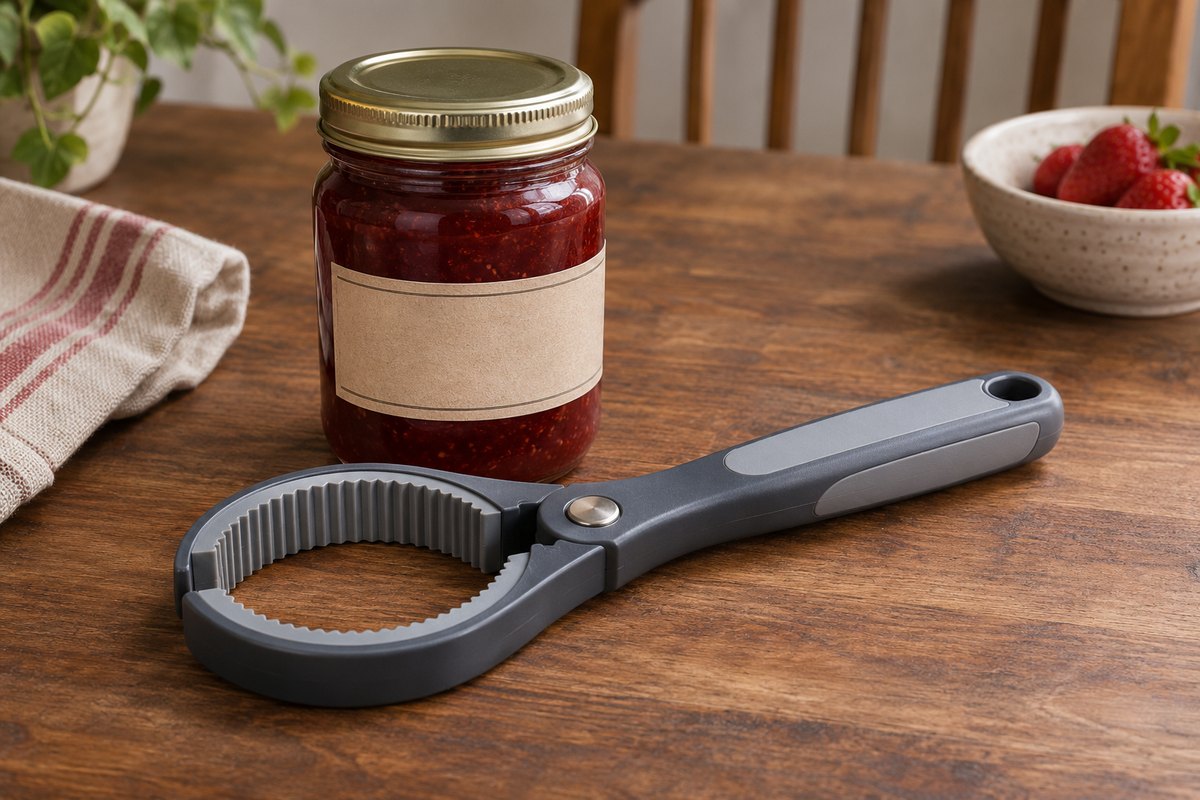
Match the tool to a specific way of sharing the work

OXO Good Grips with base pad for a jar that moves before the lid: OXO Good Grips Jar Opener With Base Pad
The pad sits under the glass and the lid tool still requires a manual turn. Verify that both pieces are included.
View on Amazon (opens in a new tab)The OXO base pad guide shows the two separate steps. It makes sense to compare if the user can turn a handle once the jar stays still. The pad adds friction where the container meets the worktop. It does not lock the glass into place. If the person cannot steady the jar and operate the handle as directed, decide whether another cook will help with that step. Try the arrangement with an unopened jar and let the user choose where each piece should be kept.

Otstar kit when the right cap is difficult to pinch: Otstar Jar Opener And Bottle Opener For Seniors With Arthritis Weak Hands
Compare the lined opening with the actual diameter and edge of the cap. The jar still needs support.
View on Amazon (opens in a new tab)The Otstar review explains how to match a cap to a particular opening. This design may suit the person who can turn a handle and struggles with the small contact area on a smooth lid. Use the closure you actually buy to check fit. If the liner catches only one edge of the cap, a stronger push may just slip. If another cook often loosens the seal first, try the smaller job of reopening the jar before deciding how many attachments you need.

KitchenMUH for a powered turn on an eligible glass jar: KITCHENMUH Electric Jar Opener For Seniors With Arthritis White
The outer jaws grip the jar body and the inner jaws grip the lid. Check both fit ranges and the handling instructions.
View on Amazon (opens in a new tab)The KitchenMUH model review covers its two AA cells and the reset before removal. Compare the lid diameter and the width where the jaws land. The booklet calls for both hands to support small or tall containers. Check whether you can place and remove the tool on the jars you use, and arrange help wherever the instructions call for support you cannot provide. For more about how these designs use each hand, see the one-hand jar opener comparison.
Compare the spot where the tool grips the jar with the spot where you would hold it. Some jars narrow close to the cap and flare outward below it. A pad can keep the base on the counter while a lid grip acts near the top. A powered tool instead needs compatible contact points at both levels. Mark the lid and body dimensions on a piece of paper, and put the name of the food next to those notes. If someone else orders the opener or buys groceries, they can then check the exact jar. A familiar label sometimes reappears on a different shape of container.
Set the worktop up for the activity that follows
If the cook will open a jar of sauce and pour it into a pan, leave a clear place for the opener and loose lid. Rehearse with the jar closed. Check the distance from the storage shelf to the worktop and then the distance to the pot. A person may be able to loosen the lid but prefer help carrying the full glass container. With a heavy jar, work close to the place where it will be used. Put the jar down on a stable surface before another person takes over, and keep the lid and tool away from the space needed to handle the food.
If the person usually scoops from a jar of jam, keep a plate and utensil nearby. An easier opening method is more useful when it leaves enough room to finish the meal without reaching past a loose lid. If you work seated, test the location from that height. Check that you can see how the grip fits and reach the tool without leaning. The weak-grip jar tutorial breaks down the choices if the glass begins to slide or the cap does not fit.
For a first trial, choose a jar you can leave unopened if the setup does not work. A tight new seal is a poor time to discover that the tray is too far away or the cook cannot tell whether the gripper is aligned. Start by rehearsing placement with a closed jar. When the user can reach and move around it comfortably, decide together whether to try the actual opening. If you can borrow or try a display unit first, ask to see the final release as well as the turn. The action after the lid loosens can decide whether a household actually uses the tool.
Try assigning just one job to the cook on a familiar recipe. With the OXO base pad, someone can place the jar on the pad while the cook decides whether the handled turn is comfortable. The Otstar instruction copy makes cap diameter the gate for its lined grips. The KitchenMUH manual copy adds body fit and a support requirement. If the cook wants to do only the last step, put an already-open jar within reach and compare whether any opener would actually add to that task.
Decide what help should look like
Ask whether the person would like help only with the first seal or with every opening. A regular helper can sometimes loosen a new jar and leave it closed according to the storage instructions so the person can finish opening it later. If they want to do the first opening, leave time to try the new setup at a quiet part of the day. Avoid rearranging everything before asking which movements they want to practice or keep. A useful tool changes a task that matters to the person using it.
Store the opener where the person can retrieve and return it. Keep the pad beside its matching grip and the manual near any powered unit. If someone else replaces batteries, make that part of the agreed routine. A cabinet mount keeps the tool in one place, but check whether lifting a full jar to that height works before installing one. See the cabinet-mounted and handheld guide for the placement checks. If the bigger issue is sharing kitchen prep across several tasks, the shared-counter guide covers ways to agree on each handoff.
Try the same task on a second day with the equipment put away normally. Retrieval is part of the test. A bulky machine can be easy to operate while it sits on an empty counter, yet difficult to lift from the shelf where it is stored. A small cap grip can be hard to find underneath other utensils. Keep the preferred tool where the cook expects it and space the pieces so they can be lifted individually. This is also an opportunity to see whether the other person needs to help less, or whether the same setup still needs a handoff.
If the kitchen has two people opening the same food at different times, decide how to leave the lid when you put the jar away. Follow the package directions. Make sure both cooks know where to find the opener and whether that particular jar fits the tool before relying on it for a meal.
Frequently asked questions
Which tool should I try first?
Check whether the jar body slips, the cap slips or turning is the hard part. Match the tool to that specific movement.
Does a powered opener always work with one hand?
Follow the exact model instructions. The KitchenMUH calls for both hands to support small or tall jars.
What should a caregiver try with the cook?
Use one familiar unopened jar and agree which steps the cook wants to do and where they want help.
Can a jar gripper open a plain metal food can?
Use a cutter designed for the metal seam. A screw-lid gripper operates on a different closure.
The verdict
Try a base pad when the glass turns first, a compatible lined opener when cap grip is the problem, or a powered tool when turning is the part you need to change. Make the decision around an everyday recipe and the person's preferred role in preparing it.