As an Amazon Associate we earn from qualifying purchases.
Look for evidence about your own cans
The most helpful review is often the one about the package you buy. A high average rating can put an opener on your shortlist, but it cannot tell you whether its wheel sits correctly on a shallow tuna tin. Start by identifying the closure and the task. Do you want to avoid turning a crank, lift fewer full cans, or get a loose lid off without putting your fingers near it? Once you know what you need, use comments to see what happens on that particular model. This guide uses three examples to show the process.
A displayed rating count may include people who left stars without writing a review. Check how the retailer labels it and how much you can actually read. Record the date if you compare two counts. A comparison based on totals saved months apart can create a misleading difference even if both figures were accurate when captured. We did not collect a live ranking for this guide or independently test the examples. The buying checklist explains how to start with a design that matches the job before opening the review section.
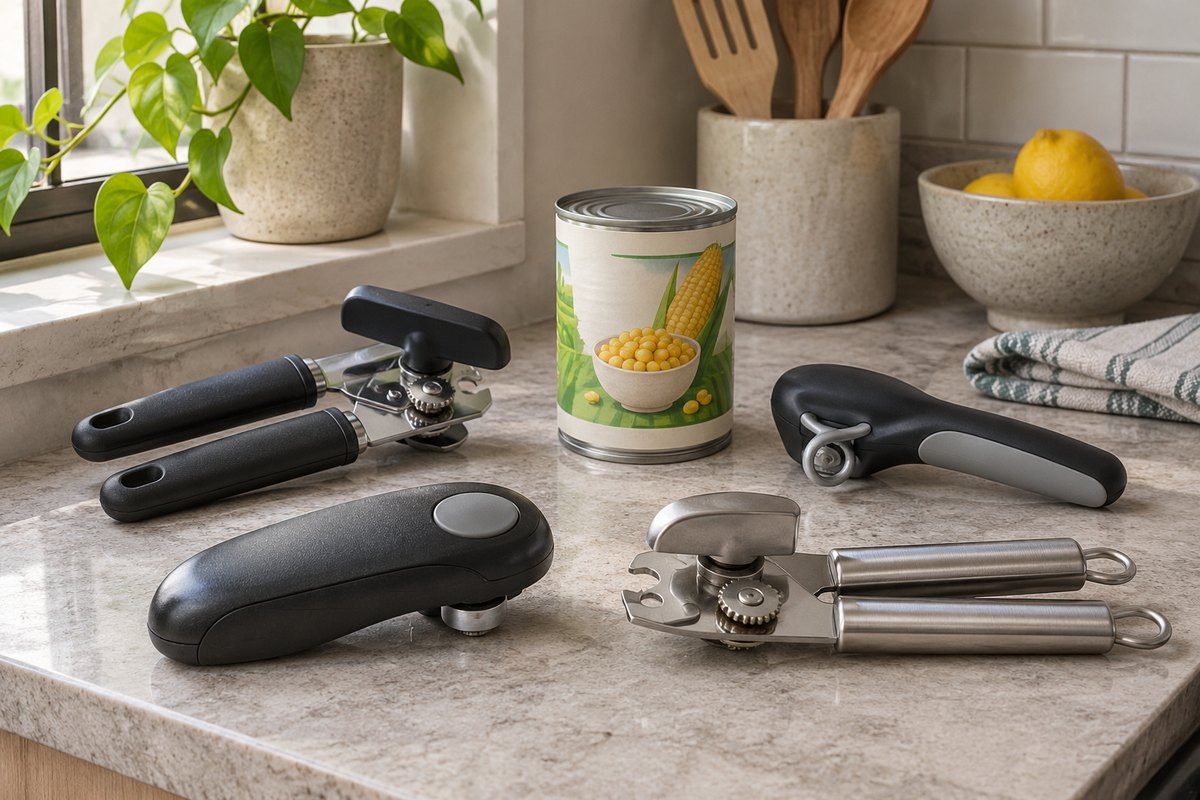
Confirm that the review describes the tool in your cart
Start with the model code and listing option. Check the review label, photo and description for that code or a feature that identifies the version. A review with a countertop base in its photo will not help you decide whether a handheld device is easy to remove. A gift set might get praised for a separate accessory rather than the cutter. Change the option in the cart only after checking whether the controls change with it.
Read the heading and one or two detailed reviews together. For a manual tool, look for the number of hands used and the position of the knob. For an electric one, look for where the can sits and how the motor stops. Details are useful because you can compare them with the exact instructions. A phrase like “the button was easy” says very little if you do not know whether the person pressed it once or twice. The guide to stop controls shows why similar names can describe different routines.
Three examples of what to look for
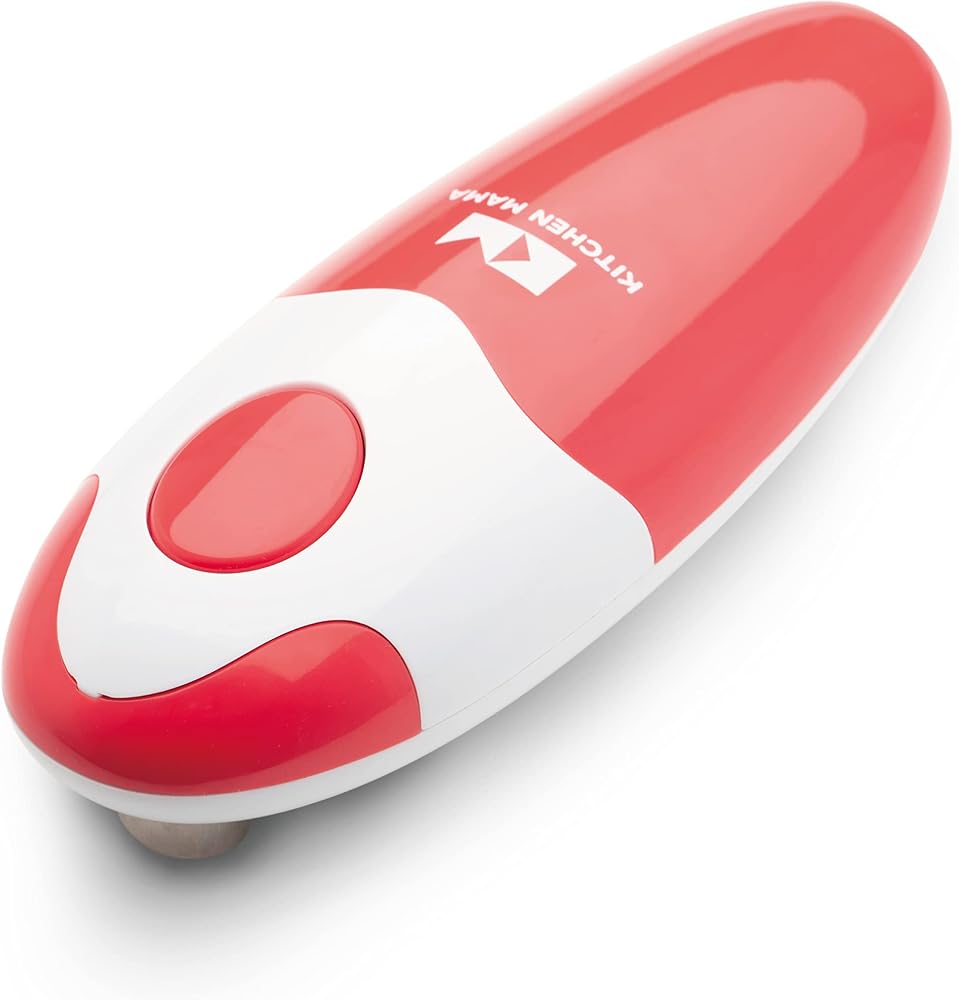
Original Kitchen Mama Auto for handheld placement: Kitchen Mama Auto Electric Can Opener Battery Operated Red
Look for comments that identify the original model and describe both the start and stop presses.
View on Amazon (opens in a new tab)The original Auto review covers its documented controls. A buyer who says the tool stopped cutting could mean that it lost its grip, ran out of power or was stopped manually. Look for a description that includes the shape of the rim and what the user did with the button. For the Auto, a comment about a different stop behavior can be a clue that the reviewer is describing another model. See the comparison of model versions before treating family names as interchangeable.

Cuisinart CCO-50BKN for a fixed head: Cuisinart Deluxe Electric Automatic Can Opener CCO-50BKN
Look for comments about placing tall or shallow cans, automatic stop and how the lid is handled after the cut.
View on Amazon (opens in a new tab)The review of the black Deluxe explains the detachable lever and magnetic holder. A review saying the lid stayed with the can could be describing a lid that does not stick to a magnet. A photo with a tin at the head can show the working position, but perspective can distort the clearance. Look up the exact dimensions or ask the maker about the type of can you use. A photograph of a model alone rarely shows the movement required to raise a full tin to it.

OXO Good Grips Soft-Handled for a conventional crank: OXO Good Grips Manual Can Opener And Bottle Opener Soft Easy-Grip Handle
Look for an account that describes the grip after the handles close and the room available for the turning hand.
View on Amazon (opens in a new tab)The Soft-Handled OXO review distinguishes this model from the locking and smooth-edge versions. Reviews that praise a large knob can be helpful if your fingers slip while turning. If holding the handles together is the issue, find out whether the reviewer had the same problem. Their experience may be less relevant if they were switching from a narrow knob and already found the clamp comfortable.
Separate a recurring mechanical problem from a bad delivery
Write down what happened and when. A box arriving with a broken tool is a different issue from a cutter that slips after normal cleaning and correct placement. A negative account can be useful if it shows the same rim style you buy and clearly identifies the head. Look for several distinct reports describing the same stage. Compare them with the manual before accepting a claim about compatibility. If the exact instructions already exclude that can, the review may warn you about the purchase even though it does not establish a defect.
Read middling reviews as well as very high or low ratings. A person who likes the tool but describes an inconvenience can help you decide how much it matters. Someone might like a fixed motor for batch cooking yet find it awkward to take apart at a crowded sink. Someone who opens a single tin while traveling may give more weight to power and storage. Our corded and cordless comparison separates those working positions. Choose the comments closest to your kitchen, even if the highest-rated model has a much larger audience.
If several people say they received a different version, save the exact item code and confirm the seller's exchange terms. That gives you a way to resolve a mismatch without putting every complaint about the order into the same category as a bad cut. In the same way, a good delivery experience does not confirm anything about the wheel. Keep the sales question and the design question separate until you have enough detail to choose the version you actually want.
Here is a hypothetical example, not a customer review: a high-rated listing contains a complaint that the opener never stops, and the review photo shows a two-press handheld model. If you are buying the CCO-50BKN, that complaint does not describe the fixed-head model’s stated stop sequence. If you are buying the original Auto, a second press is expected. In that case, look for reports that the cutter stayed engaged after the prescribed second press. You can apply the same check to the turning motion shown for the OXO Soft-Handled.
Keep a short record before checking out
For each option, note the model number, date checked, one benefit documented by the instructions and one concern described in reviews. Check the selected option one final time before ordering. If two devices are close in price, favor the one whose controls and release you can confirm. If neither device has clear instructions for your usual tin, ask for the missing information. The cutting-path guide helps specify what to ask if most of the comments just describe the lid edge.
A rating does not measure how well a tool fits your counter. Try arranging a closed tin, bowl and spot for loose lids where you normally work. If the model is corded, think about where the cord will go. If it is handheld, consider where you will set the housing after removal. Bring those observations to the review page and look for a description of the same setup. A small number of relevant written accounts can be more useful than a large count that says little about those movements.
When comparing a manual and an electric model, avoid putting every complaint into the same column. For example, a review of a manual cutter may say that the hand on the handles tires before the cut finishes. That observation is relevant to the grip. A review of an electric model may say that the cook has to raise a heavy can to the head. That observation is relevant to lifting. If lifting is the harder task for you, neither a high star average nor glowing comments about the motor should outweigh the second observation.
Look at how recent the detailed accounts are. A photo taken years ago can still help identify the style, but the listing may have changed since the purchase. Check current instructions before assuming that an old troubleshooting comment applies to the version you are ordering.
Frequently asked questions
Does the rating count equal the number of written reviews?
Check the retailer label. Some ratings have no written comment.
Should I ignore a model with fewer reviews?
Compare the accounts that identify the exact model and describe your kind of can or grip.
How can I spot a review of another variant?
Look for the model code, color or bundle label and a photo or description of the controls.
What should I trust for care and compatibility?
Use the manufacturer directions for the model and variant you plan to order.
Can I use this method if a listing combines several colors and models?
Filter to the selected version if the store offers that control. Use the model number in photos or review text when available. Skip a review whose model you cannot identify if its claim depends on a particular mechanism.
The verdict
Use the rating count to find enough detail, then decide on the basis of compatible cans and the exact operating sequence. Keep the model code in those notes. Write down which feature matters for your kitchen and confirm it with the instructions before ordering.