As an Amazon Associate we earn from qualifying purchases.
Buy for the jar and the shift
For a busy kitchen, start with a list of the screw-top jars that slow down prep and the number you open in the busiest half hour. Then ask a supplier to confirm the lid sizes, body shapes and expected rate of use in writing. A tool that works on one jam jar at home may be unsuitable for a prep station opening cases of ingredients. We did not verify a commercial-duty jar opener in our catalog. The three products below show different opening mechanisms and the checks you can use when talking to a supplier.
Make sure the container is actually a threaded jar. A steel food can with a fixed seam needs a can cutter. A lidded plastic pail may need a tool made for its particular closure. A glass jar with a screw lid needs a way to grip the lid and stop the body from rotating or tipping. If the prep list mixes jars and large tins, write two equipment requests. The commercial metal-can guide covers bench-mounted cutters. Those machines do a different job from the jaw grippers discussed here.
Write down the containers and the busiest run
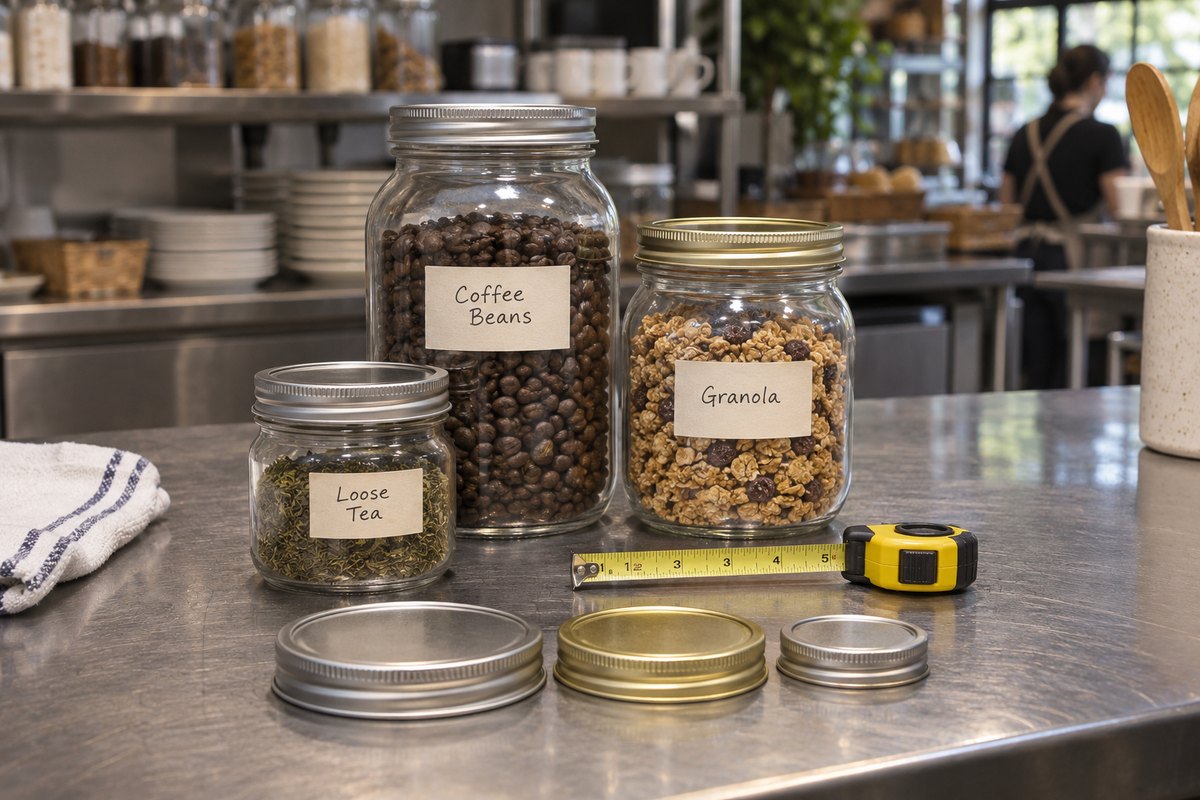
Take one unopened example of each jar to the prep area. Record the lid diameter at its widest outside edge and the body diameter where a tool would grip it. Note whether the glass is tapered, whether the cap is shallow and how much the full jar weighs. Two lids with the same diameter can leave different amounts of room for a jaw under the edge of the cap. Bring side-on photos and a scale or ruler into the supplier conversation. Ask what happens if your ingredient wholesaler changes the packaging.
Count the jars you open in a concentrated run as well as over a whole day. Opening twelve jars at once is a different workload from opening one every hour. If you are comparing powered machines, ask for the manufacturer's duty-cycle guidance, recommended pauses and procedure after a jam. If a seller can only say how many jars it opens on a battery set, ask again about repeated use and the intended setting. Battery life is useful for tracking interruptions but cannot establish whether a machine is rated for a production shift.
Keep the ingredient name and supplier code next to those measurements. The same product description on an invoice can cover a different jar after a supplier change. A backup brand may also come in a different closure even when the amount printed on the label is the same. Ask whether the equipment vendor can demonstrate on both jars before you place the order. If a rare size needs a different tool, estimate how often that job occurs. You can buy for the bulk of the work and designate a separate approved procedure for the occasional container, provided both procedures are practical during service.
Compare mechanisms before asking for a demonstration

OXO Good Grips with base pad as a manual reference: OXO Good Grips Jar Opener With Base Pad
Household mechanism reference for the purchasing checklist. The pad supports the base while the user supplies the turn. Verify suitability separately if considering a tool for paid kitchen work.
View on Amazon (opens in a new tab)The OXO model guide explains the two-piece layout. The useful comparison for a prep station is whether the jar can stay fully supported on the worktop. With a base pad, the jar stays down and the cook moves the lid tool. Ask where a clean pad would be kept and how it would be cleaned after sauce gets on it. Check the tool on the widest jar you actually buy, and check that the handle has enough room to turn without contacting adjacent equipment.

Under-cabinet gripper as an example of a fixed position: Jar Opener For Seniors Easy Grip Under Cabinet Opener For Weak Hands Arthritis
Household mechanism reference for the purchasing checklist. The lid is held at the installed tool while the user moves the jar. Check the location, attachment and lift with a closed jar.
View on Amazon (opens in a new tab)A fixed grip can keep the tool in the same place between shifts. It can also ask a cook to lift and turn a full jar well above the worktop. The mounted and handheld comparison explains how mounting height changes the job. Before installing, confirm the supplier's mounting directions and check with whoever is responsible for the premises. Rehearse the lift with the heaviest closed container. If the underside is difficult to reach for cleaning or the jar cannot be safely lowered, compare a layout that keeps the work at counter level.

KitchenMUH as a household powered-gripper reference: KITCHENMUH Electric Jar Opener For Seniors With Arthritis White
Household mechanism reference for the purchasing checklist. Its booklet limits use to household settings. The two jaw ranges illustrate the measurements to ask a commercial supplier for.
View on Amazon (opens in a new tab)The KitchenMUH booklet specifies separate ranges for the jar body and cap and excludes some shapes and materials. The model review covers the open, reset and removal sequence. Use that distinction to write better questions for a powered equipment supplier. Ask which jars the head can grip, whether it needs a pause between cycles and how you remove it if power is lost. This household unit should not be bought as equipment for repeated commercial use.
Put cleaning, training and downtime into the cost
Ask who will clean the station and what directions the manufacturer gives for the gripping surfaces, pad and housing. A grip can be easy to use at the start of prep and still cause a delay if its contact area is difficult to inspect between ingredients. Find out what comes off, where it can dry and how you will know it is installed correctly. Check the cleaning routine against your kitchen's own requirements before adding the tool. If the same utensil is used for several ingredients, give the person responsible for food safety the cleaning documentation before purchase.
Have the cook who will use it take part in the demonstration. Use representative unopened jars. Compare carrying, setup, opening, putting the lid down and moving the opened jar. For a heavy jar, the time saved on the twist can be lost if the cook has to carry it to another room or raise it to a poor mounting position. If you need to support a cook with limited grip, the jar-opening workflow gives a checklist for separating turning from keeping the container steady.
Price the whole arrangement. Include mounting, replacement pads or jaws and how long a part takes to arrive. Ask who supplies repair instructions and what the warranty covers in the intended setting. If the main opener fails at the busiest hour, know how prep will continue. You might switch to a different approved container or move the job to another workstation. If the same station also opens metal tins, the large-can clearance guide explains what to check for that separate task.
Put the actual prep station in the trial. A demonstration on a wide table can hide the clearance needed next to a sink, rack or tray. Set out the closed jars on one side and leave a place for separated lids on the other. Use the same positions in each demonstration so you can compare how far staff have to reach and whether the jar can stay upright. If the proposed placement is shared with other prep work, try the layout while that equipment is present. Move the jar to its normal next station after opening and include the time that takes.
When suppliers give you different answers, put them on the same footing. Ask each for the exact model, intended environment, approved containers and expected cadence. Record where you found each answer. A seller may describe an item as heavy duty without giving an operating limit. Keep an unanswered item open rather than converting the label into a rating. If the supplier cannot document use in your environment, pass on that model for recurring prep and continue looking.
Ask the supplier to demonstrate a complete batch on your hardest eligible jar, then show the closing-time cleanup. Record jams, changeovers and whether the same worker can release a stopped unit according to its manual. Require the vendor to confirm written commercial-duty and warranty terms for the approved configuration. Where your operation has a sanitation requirement, ask for the specific equipment documentation your purchaser needs. The cards here illustrate household mechanisms only. The KitchenMUH household manual is useful for seeing why a lid diameter alone cannot qualify a machine for purchase.
Frequently asked questions
How do I verify commercial suitability?
Ask the manufacturer to confirm intended use, expected cycle rate, cleaning directions and warranty for your setting.
Which measurements matter for a powered gripper?
Measure both the outside diameter of the cap and the body where the outer jaws would grip.
Will a commercial can opener open screw jars?
A can cutter works on a metal seam. Use a gripper intended for the threaded lid.
Is a mounted tool always faster?
Check the lift, working height and jar removal with the cooks who will use it.
The verdict
For recurring commercial work, buy only after confirming container fit, intended use, cleaning and support with the equipment supplier. The household examples explain design differences. A procurement decision should rest on the exact tools and containers that will be used during a shift.